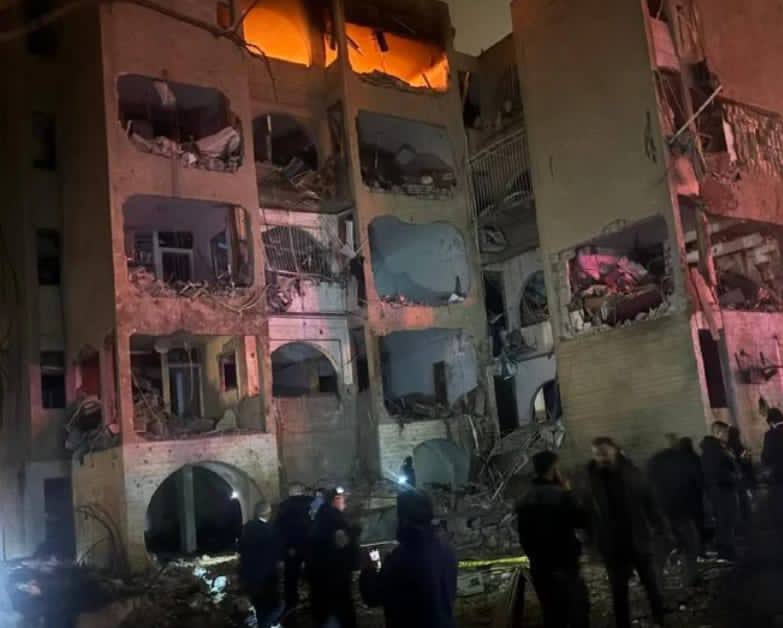
The Iranian strikes on southern Israel, in the areas of Dimona and Arad
The Iranian strikes on southern Israel, in the areas of Dimona and Arad, became one of the most tense and symbolically charged episodes of the current escalation. They demonstrated not only Tehran’s ability to project force over long distances, but also its willingness to select targets whose strategic and psychological meaning goes far beyond their immediate military value.
Southern Israel had long been perceived as relatively less exposed compared to the northern and central fronts. This perception made the choice of geography particularly significant. Dimona is not merely a town. It is a space associated with Israel’s long-standing policy of strategic deterrence, with decades of nuclear ambiguity, and with the image of a state possessing the highest level of technological and defensive resilience. A strike in the vicinity of such a symbol inevitably acquires a meaning that transcends tactical considerations.
Even in the absence of confirmed direct damage to the nuclear research center itself, the mere fact that missiles reached this geographical zone alters the perception of the conflict. In contemporary warfare, symbolic targets often outweigh infrastructural ones in strategic effect. They influence public psychology, shape international narratives, and affect the calculations of both allies and adversaries. In this sense, the strike near Dimona functioned primarily as a demonstration: it suggested that even the most sensitive and guarded spaces may be placed under threat.
Arad, in turn, reinforced this signal. If Dimona represents strategic vulnerability in symbolic form, Arad became a representation of everyday vulnerability. Impacts in residential areas, physical destruction, and the presence of casualties create a reality that cannot be neutralized by statements or statistics about interception rates. Any missile defense architecture is ultimately judged not by the number of successful interceptions, but by the number of projectiles that manage to penetrate. In this episode, that metric became particularly visible to Israeli society and to external observers.
The partial penetration of Israel’s layered defense system emerged as one of the defining elements of the incident. For decades, Israel cultivated a reputation for possessing one of the most advanced missile defense frameworks in the world. This framework is based on a multi-tiered logic: long-range interception, medium-range interception, short-range interception, complemented by an extensive early-warning network and robust civil defense mechanisms. Yet no system is absolute. Under conditions of saturation fire, mixed trajectories, and carefully timed launches, even highly sophisticated defenses may experience moments of overload.
From a military standpoint, it is plausible that the Iranian side aimed precisely to create such a condition — not necessarily to maximize destruction, but to demonstrate the feasibility of penetration. This corresponds to a classic logic of asymmetric pressure: a single proven vulnerability can reshape strategic calculations. Once repeatability becomes conceivable, the psychological weight of that vulnerability transforms into a strategic instrument in itself.
Context is essential. The strikes on southern Israel occurred against the backdrop of reported attacks on Iranian nuclear and defense infrastructure. Within such dynamics, actions tend to acquire a mirror-like character. If one side signals readiness to target sensitive nodes of the opponent, the other seeks to show that its retaliatory reach is symmetrical in principle. This does not imply equality of capabilities, but rather equality of willingness to assume risk.
In this regard, the strike near Dimona was also a message to a broader international audience. It indicated that the conflict has moved beyond the familiar boundaries of regional exchanges of force and is approaching a zone where globally consequential assets may be affected. Nuclear facilities, energy hubs, maritime chokepoints — all begin to appear within the spectrum of potential pressure points.
The response of international organizations and foreign governments reflects this shift. Even without verified damage to nuclear installations, concern remains elevated. In contemporary risk frameworks, the possibility of radiological incidents is treated not as a localized contingency but as a development with transboundary implications. Consequently, attacks in proximity to such infrastructure are interpreted as a significant step upward along the escalation ladder.
From Tehran’s perspective, the selection of such targets may be understood as an attempt to rebalance psychological leverage. Israel has traditionally relied on a doctrine of technological superiority and preemptive capacity. Demonstrating that sensitive zones can still be reached undercuts the aura of invulnerability and strengthens the narrative of resilience and retaliatory potential. In prolonged confrontations, episodes of this nature help shape the narratives that later inform negotiation positions.
Yet this logic carries inherent risks. Strikes affecting civilian areas invariably provoke international criticism and may deepen diplomatic isolation. They can also provide the adversary with additional justification for expanding military operations. Strategically, this dynamic risks producing an escalation spiral in which each demonstration of force necessitates an even more emphatic response.
For Israel, the episode represented a test not only of military preparedness but also of political endurance. Penetrations into depth — particularly near locations bearing high symbolic weight — intensify domestic scrutiny of leadership decisions. Questions arise regarding the adequacy of defensive measures, the proportionality of escalation, and the broader costs of sustained confrontation. Israeli crisis management traditions, however, have historically emphasized rapid restoration of narrative control: through visible retaliatory capacity, transparent investigation of defensive failures, and reinforcement of protective systems.
Placed within a wider strategic landscape, the incident illustrates a transformation in regional conflict patterns. The Middle East is increasingly characterized by the centrality of precision-guided missiles and unmanned systems as tools of coercion. These instruments lower the immediate threshold for the application of force, as they enable the infliction of damage without the prompt deployment of large ground formations. Simultaneously, they elevate systemic instability, since remote strikes are easier to repeat and more difficult to eliminate entirely.
Another dimension concerns maritime and energy security. Parallel tensions surrounding the Strait of Hormuz and warnings about potential attacks on regional energy infrastructure contribute to the sense of a single, interconnected crisis space. In this context, the strikes near Dimona and in Arad can be interpreted as elements of a broader signaling strategy aimed at demonstrating that the conflict may extend beyond strictly military domains into the foundations of economic resilience.
Looking ahead, the episode may accelerate several trajectories. It may intensify investments in missile programs and defensive technologies. It may increase the urgency of diplomatic mediation efforts designed to prevent direct attacks on nuclear facilities. It may also reshape public perceptions of war as a phenomenon no longer confined to frontlines, but capable of manifesting suddenly within deep civilian rear areas.
Ultimately, the strikes near Dimona and in Arad did not constitute a decisive turning point, yet they marked a moment of considerable symbolic and psychological weight. They highlighted how narrow the margin has become between calibrated demonstrations of force and the onset of uncontrolled escalation. They underscored the vulnerability of even the most protected spaces. And they revealed that in contemporary conflict, the strategic significance of an event lies not solely in its material impact, but in the position it occupies within the collective consciousness of societies, decision-makers, and international actors.
For this reason, analyzing these strikes requires moving beyond metrics of damage and interception. It entails understanding the evolving grammar of warfare itself — a grammar in which symbolism, technology, psychology, and politics are intertwined so tightly that each impact functions simultaneously as destruction and as communication.
Related Articles
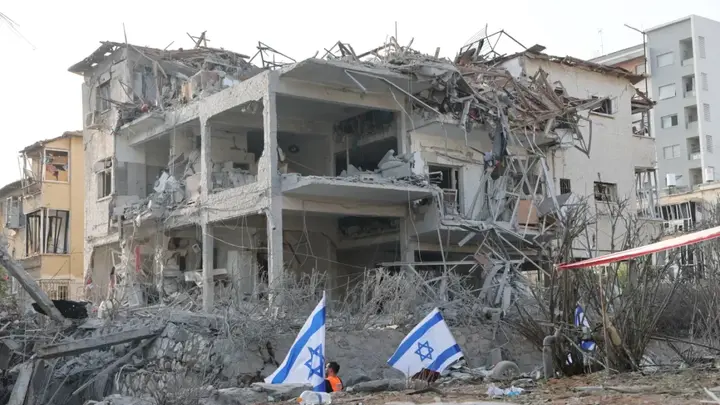
Washington, Tel Aviv and Tehran: How the Iranian Crisis Is Beginning to Reshape the Entire Middle East
23 May 2026
Read more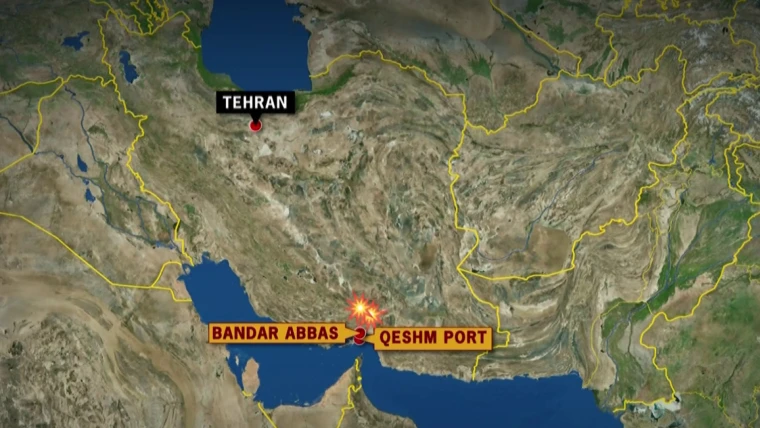
Ceasefire Under Fire: What Is Happening Around Iran and the Strait of Hormuz
8 May 2026
Read more
“Between War and Negotiations”: The Second Phase of U.S.–Iran Confrontation as a New Strategic Reality
26 April 2026
Read more
What Is Happening in Iran and Israel on March 23
22 March 2026
Read more