Ceasefire Under Fire: What Is Happening Around Iran and the Strait of Hormuz
The situation around Iran has sharply escalated again following reports of a confrontation between U.S. and Iranian forces near the Strait of Hormuz — one of the world’s most important maritime routes for global energy supplies. The incident has become the most serious test yet for the fragile ceasefire between the United States and Iran, which had generally remained in place since April 8.
According to U.S. Central Command, on May 7 Iranian forces attacked three U.S. guided-missile destroyers — USS Truxtun, USS Rafael Peralta and USS Mason — as they were transiting the Strait of Hormuz toward the Gulf of Oman. CENTCOM said Iran used missiles, drones and small boats in the attack, but the American ships sustained no damage. In response, the U.S. military said it carried out “self-defense strikes” against Iranian military targets, including missile and drone launch sites, command posts and intelligence facilities.
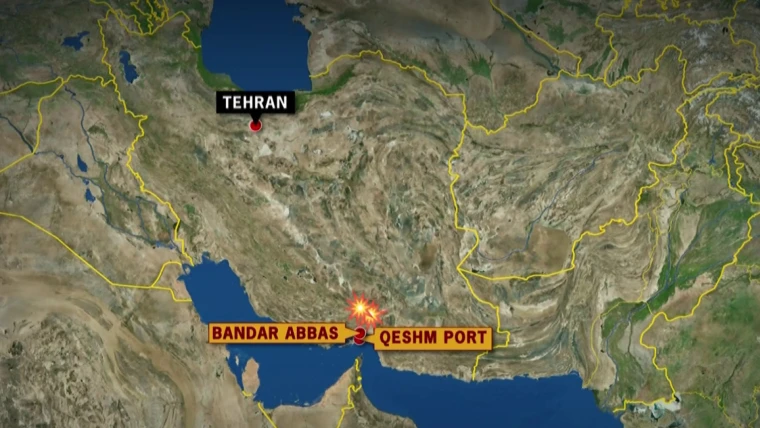
Tehran presents a different version of events. The Iranian command claims that the United States was the first to violate the ceasefire by attacking an Iranian oil tanker off the coast of Jask, as well as another vessel near the entrance to the Strait of Hormuz close to Fujairah. Iran also says U.S. strikes hit civilian areas along the coast of Bandar Khamir, Sirik and Qeshm Island. According to Tehran, Iranian forces then retaliated against U.S. warships.
Inside Iran, state and semi-official media reported explosions near Bandar Abbas and on Qeshm Island, which lies in the Strait of Hormuz. There were also reports of explosions in southern Iran and defensive fire in western Tehran, although the exact sources of the explosions have not yet been established.
U.S. President Donald Trump said the American destroyers passed through the strait without damage and that serious damage had been inflicted on the Iranian attacking forces. At the same time, he insisted that the ceasefire remains in force despite the exchange of strikes. Trump also warned Tehran of a tougher response if negotiations collapse.
The key question now is whether the ceasefire can survive. Formally, neither Washington nor Tehran has declared its complete breakdown. However, the very fact of a military confrontation in the Strait of Hormuz shows that the existing arrangements remain extremely fragile. The United States says it acted in self-defense after an Iranian attack, while Iran accuses Washington of striking Iranian ships and coastal areas.
The Strait of Hormuz is of strategic importance. Before the current crisis, a significant share of the world’s oil and liquefied natural gas passed through this route. That is why even limited clashes in this area immediately affect global markets.
Oil prices rose amid the latest escalation. The increase was driven by fears that the incident could disrupt efforts to reopen the Strait of Hormuz and push the region back toward a broader confrontation.
The problem is not only military. Shipping in the Persian Gulf is already facing serious difficulties. Iran has reportedly created a structure called the Persian Gulf Strait Authority, which effectively claims the right to regulate the passage of vessels through the strait and collect fees. Maritime law experts say such actions conflict with the principle of innocent passage through territorial waters.
Major logistics companies are also feeling the consequences of the crisis. The conflict has disrupted sea routes after Iran closed the Strait of Hormuz to commercial traffic. Some vessels remain blocked in the Persian Gulf.
The diplomatic background remains contradictory. On the one hand, the United States and Iran continue to exchange signals about the possibility of an agreement. On the other hand, mutual accusations after the incident in the Strait of Hormuz have seriously complicated the negotiation process. Earlier talks mediated by Pakistan did not lead to a final agreement, although Tehran had reportedly been studying new U.S. proposals aimed at ending the war.
As a result, the situation around Iran remains extremely tense: the ceasefire formally continues, but in practice it is under serious threat. The United States says it acted in self-defense after an attack on its ships. Iran claims it was responding to U.S. strikes on Iranian vessels and coastal areas. There is still no independent confirmation of the full scale of the damage claimed by either side.
For the region, the main danger is that the Strait of Hormuz could once again become the center of a direct military confrontation. Even limited strikes there can trigger higher oil prices, disruptions in maritime transport and a new wave of diplomatic tension. For the South Caucasus, including Armenia, this is especially important because Iran is a direct neighbor of the region, and any destabilization around it inevitably affects security, trade and the energy agenda.
Related Articles

Artificial Intelligence Enters a New Era
27 July 2026
Read more
Agentic AI: Why It Is Poised to Become the Defining Technology of the Coming Years
22 July 2026
Read more
Саммит G7 во Франции: мировые лидеры перед лицом новой эпохи глобальных вызовов
17 June 2026
Read more
China Against the System: How Beijing Is Preparing for an Era of Great Global Confrontation
23 May 2026
Read more