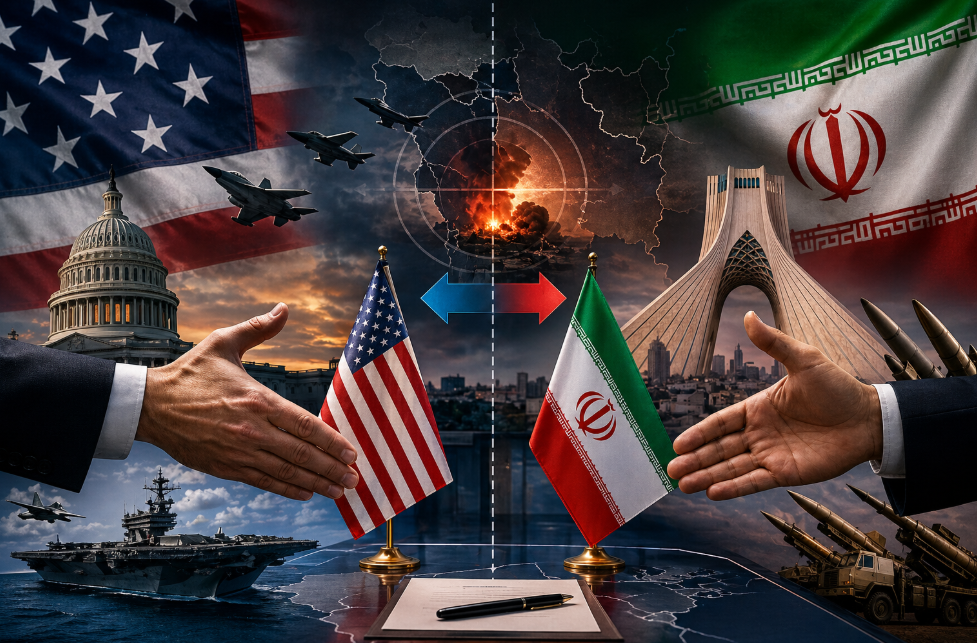
“Between War and Negotiations”: The Second Phase of U.S.–Iran Confrontation as a New Strategic Reality
Relations between the United States and Iran have entered a stage that cannot be described either as classical negotiations or as open conflict. This intermediate condition—the second phase—represents a complex mixture of pressure, signaling, maneuvering, and deliberate refusal of direct dialogue. It is precisely within this space that the future architecture of interaction between Washington and Tehran is being shaped.
This is not a temporary pause, nor a diplomatic deadlock. On the contrary, it is an active phase in which each side seeks to redistribute strategic advantages before any formal negotiations even begin. In traditional diplomacy, dialogue starts with the articulation of positions. In the current reality, positions are first imposed through leverage—and only later, if necessary, formalized at the negotiating table.
The defining feature of this second phase is the absence of direct contact alongside the continuous presence of communication. Washington and Tehran are not engaged in open talks, yet they exchange signals constantly. These signals travel through intermediaries, diplomatic backchannels, public statements, and even military demonstrations. This model allows both sides to avoid formal accountability for dialogue while maintaining control over escalation.
Mediation remains a central element of this architecture. Oman traditionally serves as a communication channel, facilitating message exchange between the parties. At times, other actors—such as Qatar or certain European states—also play roles. However, mediators in this context are not neutral platforms. They are part of a mechanism in which each side seeks to exploit the channel to strengthen its own position.
Iranian diplomacy has recently demonstrated a characteristic pattern of activity. The movements of its foreign minister across regional capitals are not routine visits but elements of shuttle diplomacy. This tactic is typical in situations where direct dialogue is either impossible or undesirable, yet a continuous exchange of positions must be maintained. It enables Tehran to preserve flexibility while avoiding direct concessions.
The United States, by contrast, is pursuing a different strategy. Washington emphasizes a demonstrative refusal to engage in negotiations under unfavorable conditions. The cancellation of diplomatic visits and firm public rhetoric create the image of a side holding the initiative and not requiring immediate dialogue. In this framework, negotiations are no longer a tool—they become a reward that must be earned.
This behavior should not be mistaken for a rejection of diplomacy. It is, rather, its transformation. Negotiations have shifted from formal settings into the domain of pressure and signaling. Every statement, every movement, every canceled meeting becomes part of a broader negotiation process conducted without a formal table.
The military dimension plays a crucial role in this phase. The presence of U.S. forces in the Persian Gulf, increased patrol activity, and demonstrations of readiness for forceful action all form the backdrop against which diplomacy unfolds. From Iran’s side, similar signals emerge through rhetoric and the activities of allied regional actors. Thus, diplomacy and military pressure merge into a single system.
A distinctive feature of this second phase is that the risk of escalation itself becomes an instrument. Neither side seeks immediate war, yet both actively use the possibility of conflict as leverage. This creates a paradoxical dynamic: the higher the tension, the stronger the negotiating position.
At the core of any future dialogue remains Iran’s nuclear program. This issue continues to define the strategic agenda. For the United States, the priority is limiting Iran’s nuclear capabilities. For Iran, it is the lifting of sanctions and recognition of its sovereign rights. However, in the current phase, these demands are not directly negotiated. Instead, both sides attempt to reshape the context in which such negotiations would occur.
The regional dimension further amplifies the tension. The Middle East remains a space of intersecting interests, where actions by one side inevitably provoke responses from the other. In such an environment, even local developments can acquire strategic significance, becoming part of a broader confrontation.
The informational dimension is equally important. Public statements by leaders, media leaks, and official commentary are all used to shape perception. In the absence of direct dialogue, the information space becomes the arena where strength, intent, and resolve are projected.
It is essential to understand that this second phase does not aim for a rapid transition to negotiations. On the contrary, its purpose is to delay direct engagement while raising the stakes. Only when one side concludes that sufficient leverage has been achieved will a transition to formal talks become possible.
At the same time, uncertainty remains high. The absence of formal frameworks provides flexibility but also increases the risk of miscalculation. Any misinterpreted action could trigger rapid escalation. Thus, this phase requires constant strategic balancing.
From an analytical perspective, what we are witnessing is an adaptation to a new reality. Traditional diplomacy—based on structured negotiations and agreements—is giving way to a hybrid model in which dialogue and pressure coexist. In this model, success is determined not by the outcome of negotiations, but by the position from which they are entered.
Therefore, the current U.S.–Iran dynamic should not be seen as a transitional pause but as a distinct phase of confrontation. A phase in which the conditions for future decisions are being shaped. A phase where words are replaced by signals, and negotiations by their simulation.
It is within this framework that the present situation must be understood—not as the absence of diplomacy, but as its evolution into a harsher, more ambiguous, and significantly more dangerous form.
Related Articles
Artificial Intelligence Enters a New Era
27 July 2026
Read more
Agentic AI: Why It Is Poised to Become the Defining Technology of the Coming Years
22 July 2026
Read more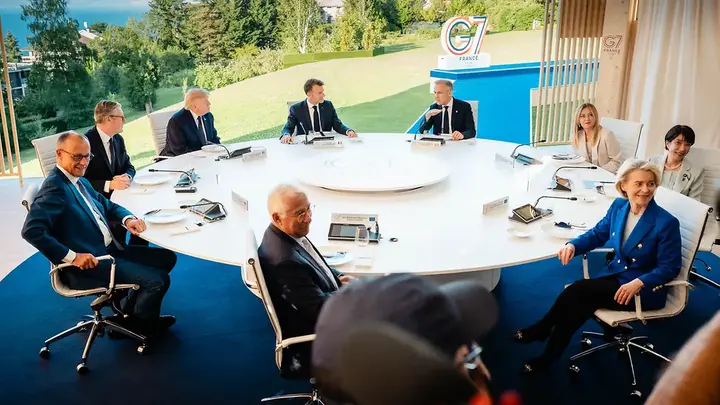
Саммит G7 во Франции: мировые лидеры перед лицом новой эпохи глобальных вызовов
17 June 2026
Read more
China Against the System: How Beijing Is Preparing for an Era of Great Global Confrontation
23 May 2026
Read more