Northern Cyprus as a Zone of De Facto Integration
Why Nicosia Speaks of Creeping Annexation
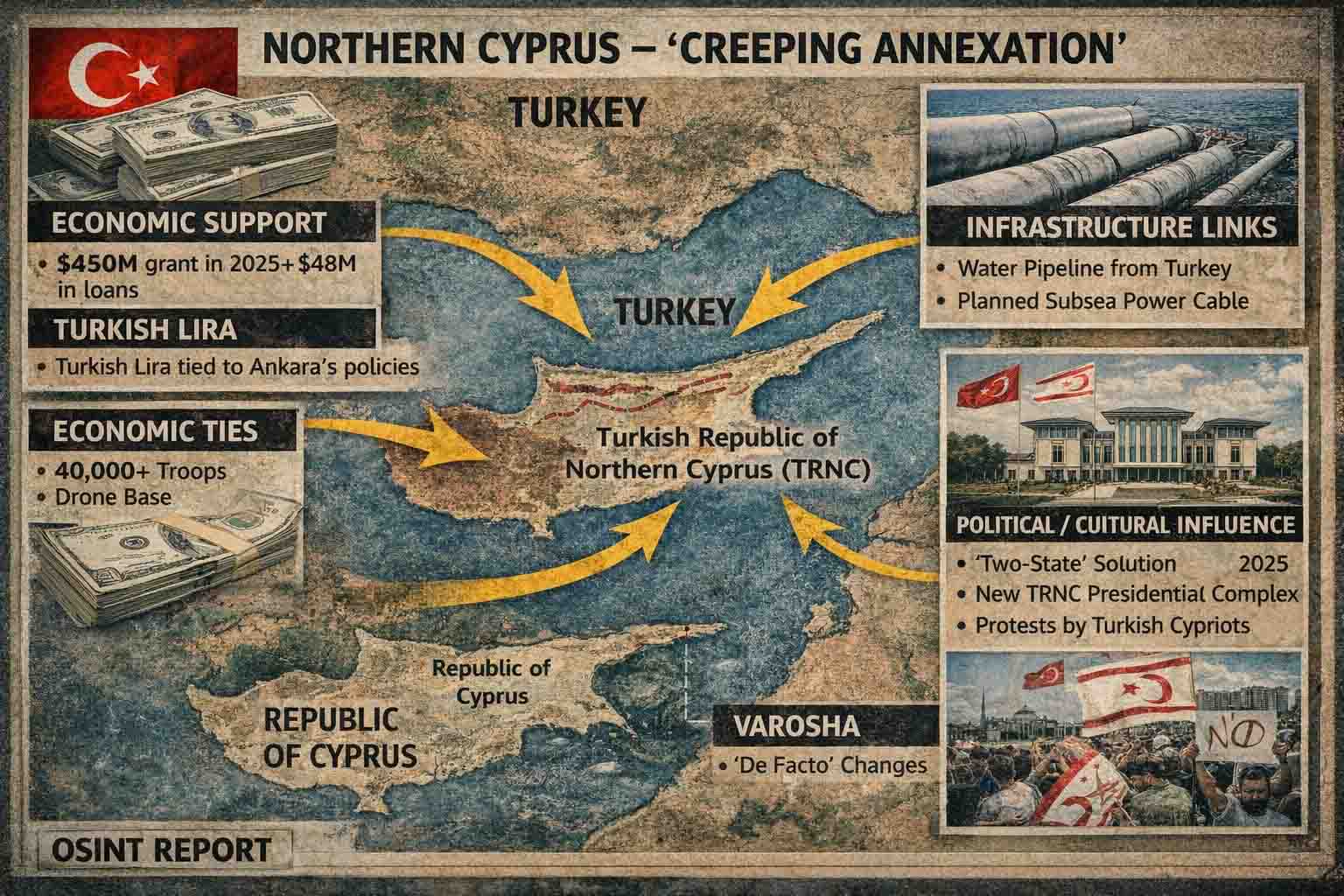
Over the past two years, the relationship between Ankara and the self-declared Turkish Republic of Northern Cyprus has evolved from a set of separate political gestures into a coherent and durable system of dependence. Formally, there has been no legal act of annexation, no referendum, and no change in international status. In practice, however, an increasingly dense web of economic, infrastructural, military, and symbolic ties is being constructed, one that steadily reduces the practical autonomy of Northern Cyprus. It is this cumulative process that officials in Nicosia and across Europe increasingly describe as “creeping annexation.”
The economic foundation of this model is straightforward. The budget of the northern part of the island is effectively sustained by direct transfers from Ankara. Financial support is structured through intergovernmental protocols on economic and financial cooperation, renewed on a regular basis and defining not only the volume of assistance but also spending priorities. These are not marginal sums, but hundreds of millions of dollars annually, covering core budgetary needs such as salaries, infrastructure, and social programs. Additional credit lines deepen this dependence and create long-term financial obligations. The use of the Turkish lira as the local currency reinforces the dynamic, making Northern Cyprus’s monetary environment directly subject to decisions taken in Ankara and to fluctuations in the Turkish economy. From Nicosia’s perspective, when budgetary stability, currency, and access to finance are externally anchored, political autonomy becomes largely nominal, even if local institutions continue to exist.
Infrastructure serves to lock in this dependence physically. The most emblematic project is water supply. The undersea pipeline connecting Turkey to the northern part of the island is not merely an engineering achievement but a strategic artery. Control over water, a vital resource, translates directly into political leverage. A similar logic applies to energy. Plans for a subsea electricity cable linking Turkey to Northern Cyprus are advanced as a viable alternative to EU-backed or Greek Cypriot energy projects. Even at the discussion stage, such initiatives shape expectations of long-term integration into Turkey’s energy system. Transport and logistics complete the picture. The new terminal at Ercan airport has become a symbol of the north’s deeper integration into Turkish transport, tourism, and service networks. Together, water, energy, and logistics form a material framework of dependence that cannot be reversed through diplomacy alone.
The military dimension, though long-established, remains central. Turkish forces stationed in the north number in the tens of thousands, constituting a permanent presence rather than a temporary deployment. Security decisions are effectively centralized in Ankara, leaving little room for an autonomous strategic posture. The growing role of airbases and drone infrastructure further embeds Northern Cyprus into Turkey’s broader strategy in the Eastern Mediterranean. Supporters frame this as the protection of national interests, while critics view it as entrenchment of control and militarization.
Politically, Turkey’s line increasingly distances the process from the long-standing UN-backed federal framework for reunification. The promotion of a “two-state” solution is presented by Ankara as pragmatic realism, yet in Nicosia and Brussels it is widely seen as an attempt to legitimize the island’s permanent division. Statements by prominent Turkish political figures openly advocating for Northern Cyprus to join Turkey, even if not official government policy, reinforce perceptions of inevitability and harden the narrative of annexation by stealth.
Symbolic power adds another layer. The construction and inauguration of large government and presidential complexes in northern Nicosia, framed as gifts from Ankara, are interpreted by critics not as assistance but as visual confirmation of where authority ultimately resides. Architecture, public ceremonies, and state symbolism increasingly convey the idea of a single political center. Alongside this, cultural and ideological tensions have intensified. Protests by Turkish Cypriots against perceived Islamization and externally imposed social norms suggest that parts of the local population see the current trajectory not as an organic choice but as pressure from outside.
Varosha remains a particularly sensitive test case. Any unilateral changes to its status are viewed by international institutions as undermining existing UN resolutions and the negotiation framework. For Nicosia, developments around Varosha exemplify how de facto realities can be altered incrementally without formal legal steps.
It is the cumulative effect of these trends that gives weight to the term “creeping annexation.” No single measure is decisive on its own. Each step can be framed as technical, pragmatic, or temporary. Yet taken together, they form a clear trajectory. Economic dependence, infrastructural integration, military control, political rhetoric, and symbolic dominance converge to produce a reality in which the center of decision-making is increasingly external to the island.
For Nicosia, this means a narrowing of diplomatic space and rising stakes in dealings with the EU and the United Nations. For Ankara, it represents a consolidation of influence in the Eastern Mediterranean without triggering the full costs of a formal annexation. For Northern Cyprus itself, it poses a fundamental dilemma between de facto integration and the preservation of a distinct political and cultural identity. This is why the language of “creeping annexation” has become increasingly prevalent, even in the absence of any single legal act confirming it.
Related Articles
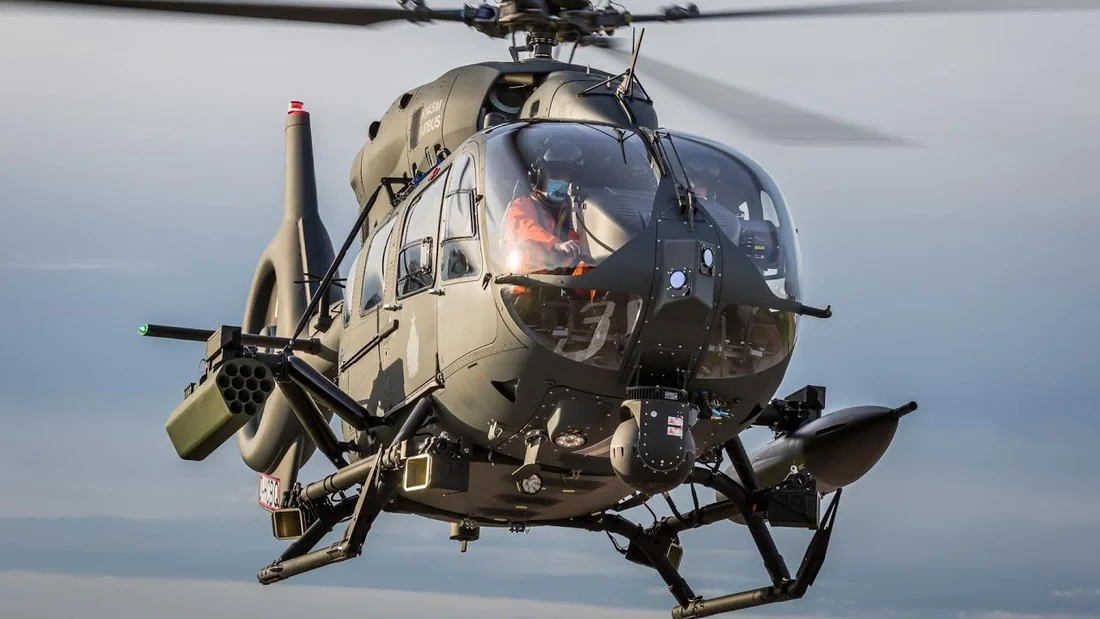
Cyprus Defence Ministry Responds to Reports of Turkish Air-Defence Expansion in the North
31 January 2026
Read more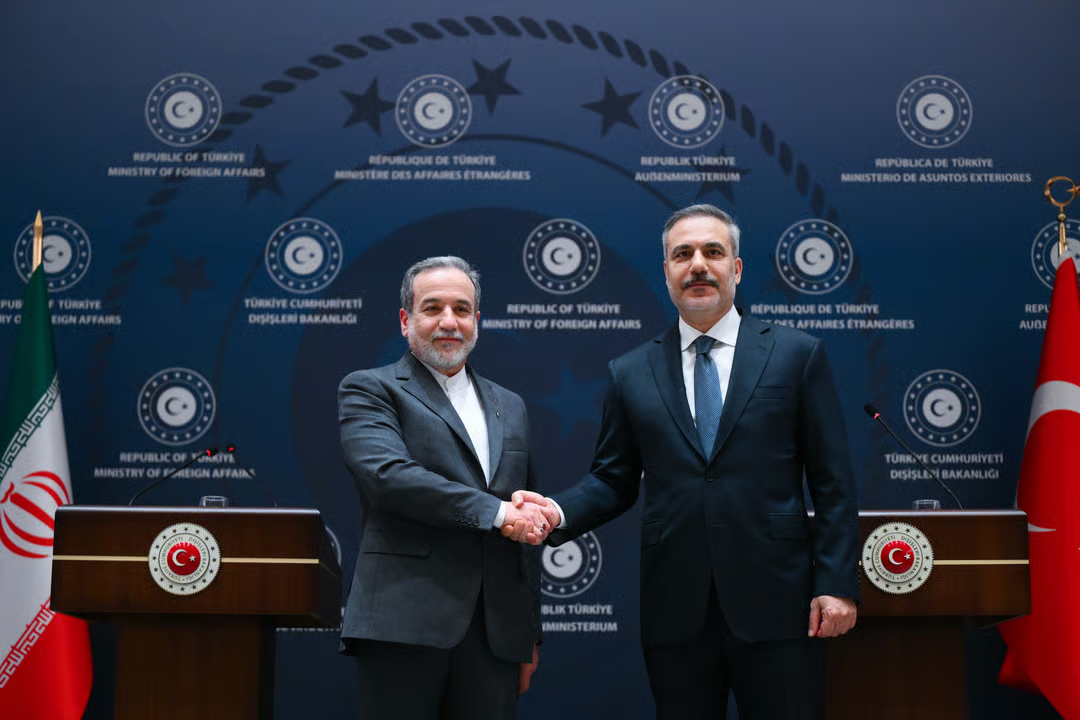
Istanbul Sets the Line: Türkiye and Iran Define the Limits of Escalation Amid Rising Regional Tensions
30 January 2026
Read more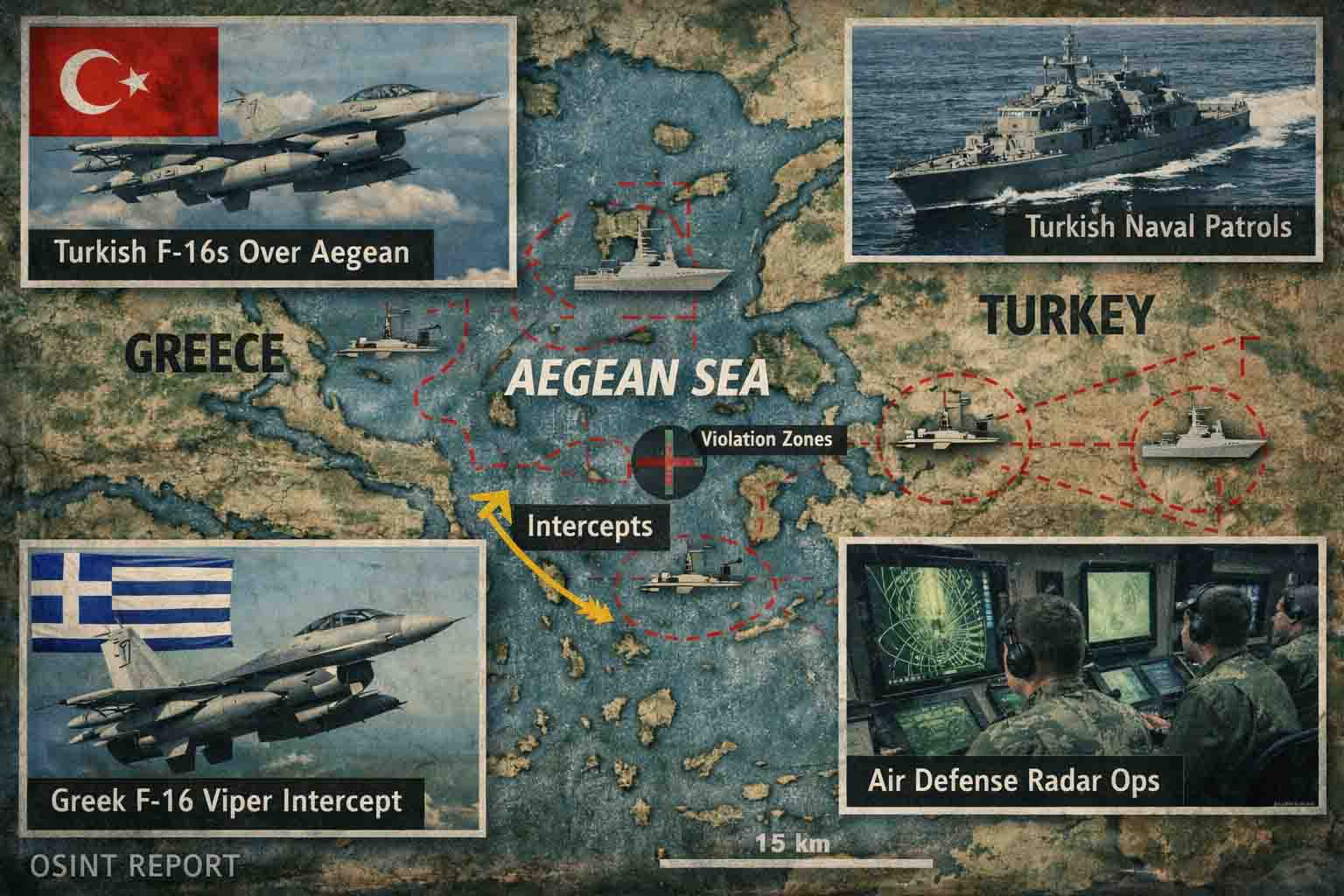
The Aegean Sea as a Zone of Managed Pressure. Turkey’s Rising Activity and Greece’s Strategic Response
24 January 2026
Read more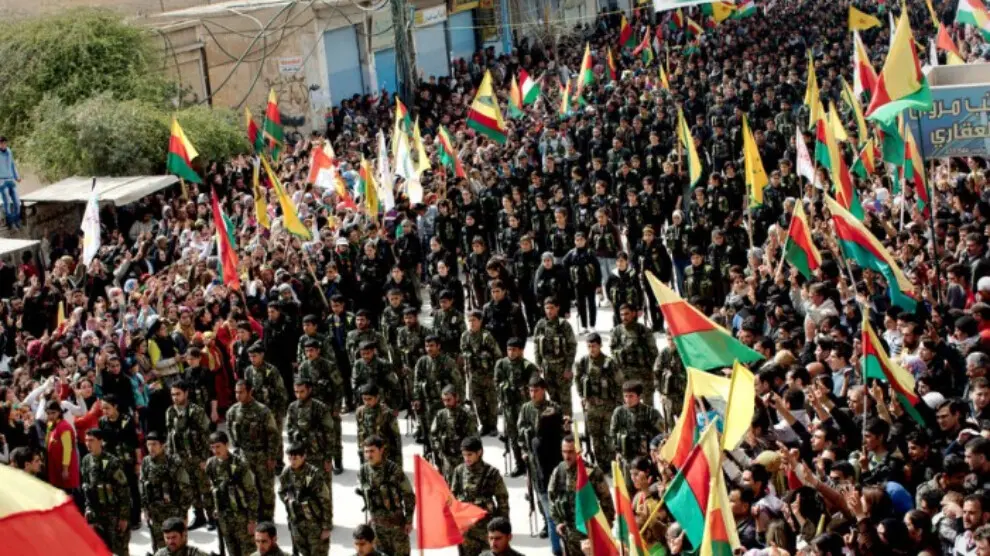
Escalation in Rojava and the Hasakah Deal: What Happened in Northeastern Syria
21 January 2026
Read more