Escalation in Rojava and the Hasakah Deal: What Happened in Northeastern Syria

The escalation of hostilities in northeastern Syria between January 18 and 20 culminated in the announcement of a temporary ceasefire and a framework agreement between Damascus and the Kurdish-led forces controlling much of the region. The developments marked one of the most serious crises in the area in recent years, combining military confrontation, mass mobilization of the Kurdish population, and intense diplomatic activity.
On the evening of January 18, following talks in Damascus, a ceasefire was announced. However, it collapsed within hours. By the night of January 19, reports indicated renewed fighting and advances by Syrian government forces and allied formations in several directions, including north of Raqqa, near Ayn Issa, and around the Tishrin Dam. Kurdish forces reported that the pause in fighting had been used for regrouping, while clashes resumed on multiple fronts.
Throughout January 19, pressure increased on the areas of Hasakah and Kobani. Information emerged about withdrawals from certain positions, while reports circulated of escapes from detention facilities holding individuals linked to terrorist groups. The situation around the al-Hol camp in Hasakah province became particularly acute, with unrest reported among residents and growing concerns about security and humanitarian risks.
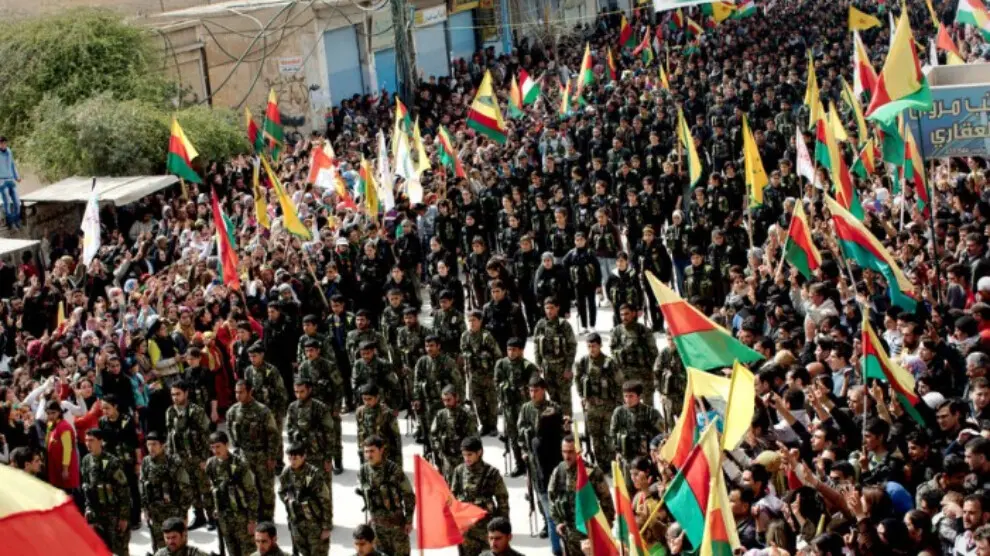
The escalation triggered a broad regional response. Protests and solidarity rallies were reported in Kurdish-populated areas of Syria and in the Kurdistan Region of Iraq, including Erbil, Sulaymaniyah, and Duhok. Kurdish communities in Turkey also mobilized, with groups attempting to approach or cross border areas near Qamishli. Volunteers from neighboring regions were reported to be moving toward northeastern Syria, underscoring the transnational nature of the crisis.
Fighting continued into January 20, with positional clashes reported on the outskirts of Hasakah and near Kobani. At the same time, the center of Hasakah remained relatively calm, according to multiple sources. Kurdish forces announced heightened mobilization measures, while reports emerged of airstrikes and the use of heavier weapons in certain sectors.
A critical turning point came with developments around the al-Hol camp. Kurdish forces confirmed a complete withdrawal from the camp, after which Syrian government troops announced their entry to restore order. Parallel reports spoke of the release of a large number of detainees associated with terrorist organizations, prompting sharp reactions and accusations of international inaction from the Kurdish side.
By the afternoon of January 20, the confrontation shifted toward a political track. Syria’s presidential administration announced that a framework agreement had been reached with the Kurdish-led forces on the future of Hasakah province. According to the announcement, a four-day ceasefire was declared to allow consultations and the preparation of an integration plan. Syrian troops would not enter the centers of Hasakah and Qamishli, remaining on their outskirts, while security in Kurdish villages would be maintained by local forces. The agreement also предусматривает the integration of Kurdish military and security structures into state institutions and the implementation of measures related to linguistic, cultural, and civil rights.
The Syrian Ministry of Defense confirmed the ceasefire, stating that it would take effect across all fronts. Kurdish forces, in turn, declared their readiness to comply with the agreement.
Statements from the United States added an international dimension to the developments. Washington indicated that Damascus was capable of assuming responsibility for security issues, including control over detention facilities, and reiterated that it did not envisage a long-term military presence in Syria. US officials described the integration of Kurdish regions into the Syrian political framework, under diplomatic support, as the most realistic path toward long-term stability and security for the Kurdish population.
The events of January 18–20 highlighted both the fragility of the security situation in northeastern Syria and the scale of the risks associated with renewed large-scale conflict. While the announced ceasefire and agreement opened a window for de-escalation, their durability will depend on implementation, control over sensitive sites such as detention camps, and the ability of all parties to prevent a new cycle of violence.
Related Articles
Cyprus Defence Ministry Responds to Reports of Turkish Air-Defence Expansion in the North
31 January 2026
Read more
Istanbul Sets the Line: Türkiye and Iran Define the Limits of Escalation Amid Rising Regional Tensions
30 January 2026
Read more
The Aegean Sea as a Zone of Managed Pressure. Turkey’s Rising Activity and Greece’s Strategic Response
24 January 2026
Read more
Northern Cyprus as a Zone of De Facto Integration
24 January 2026
Read more