Russia–Ethiopia Military-Technical Cooperation in 2024–2026
.png "Department of Strategic Monitoring")
Russia–Ethiopia Military-Technical Cooperation in 2024–2026: Open-Source Intelligence Assessment of Armored Vehicle Transfers, Advanced Trainer Aircraft, MALE UAV Systems, Logistical Pathways, Strategic Drivers, and Regional Security Implications
In 2024–2026, military-technical cooperation between the Russian Federation and the Federal Democratic Republic of Ethiopia has re-emerged as a subject of heightened analytical attention within the defense and OSINT communities. The renewed focus is not based solely on diplomatic rhetoric or generalized statements about strategic partnership, but on a series of open-source indicators suggesting potential transfers of armored vehicles, advanced trainer aircraft, and medium-altitude long-endurance (MALE) unmanned aerial systems. The evidentiary landscape, however, remains uneven and requires a disciplined distinction between verified data, high-probability assessments, and secondary reporting.
The historical foundation of Russia–Ethiopia defense cooperation extends back to the Cold War period, when Ethiopia became one of the principal recipients of Soviet military assistance in Africa. Following the dissolution of the Soviet Union, the relationship transitioned into a model centered on sustainment, modernization, and technical support. The Ethiopian Air Force continues to operate legacy Soviet-designed platforms, including Su-27 fighter aircraft, whose maintenance and overhaul cycles involve Russian industrial participation. Consequently, contemporary reports of renewed equipment transfers should be understood within the framework of a long-standing military relationship rather than as a sudden geopolitical shift.
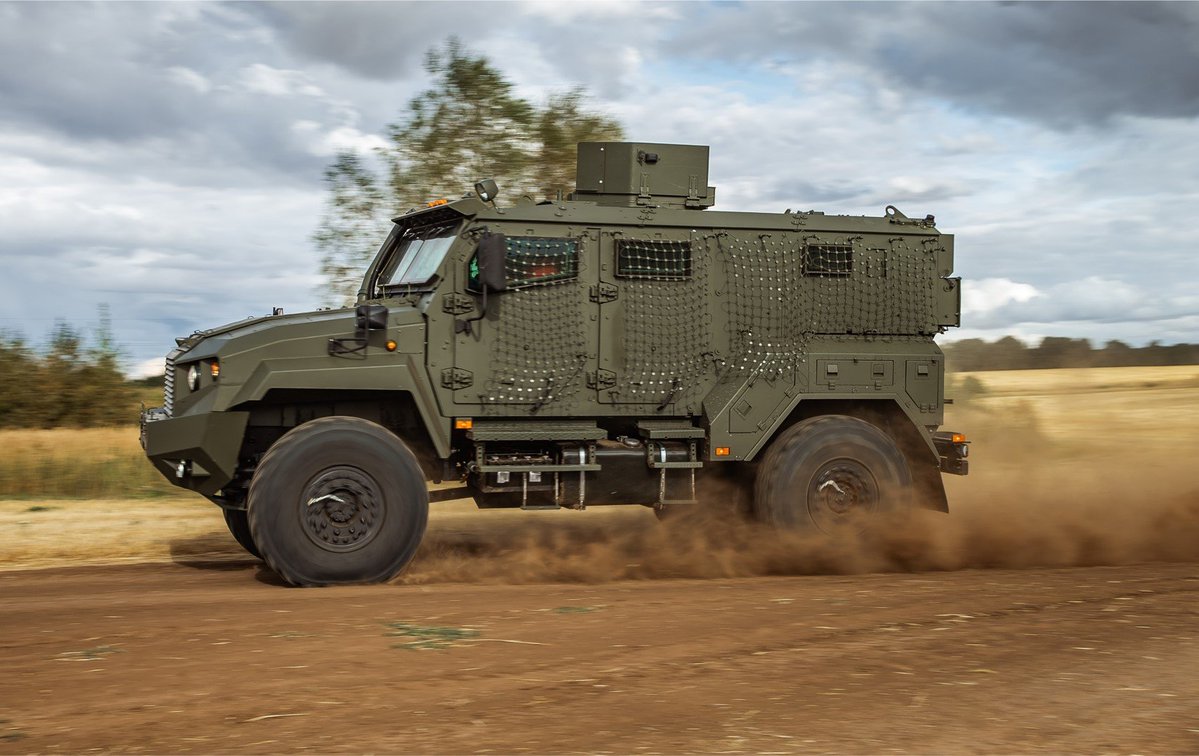
In early 2026, open-source video material circulated online depicting armored vehicles visually consistent with the KamAZ-53949 “Typhoon-K” platform. Analysts identified distinctive structural features such as the V-shaped hull configuration, armored cabin architecture, window geometry, and chassis layout. While these characteristics support preliminary identification, the existence of video evidence alone does not constitute definitive confirmation of completed delivery. A rigorous OSINT validation process requires geolocation of the footage, verification of timestamps, cross-referencing with satellite imagery where possible, and identification of serial markings or unit insignia. At present, the available material supports a high-probability assessment of vehicle transfer activity but does not conclusively establish delivery quantities or operational status.
A second cluster of reports concerns the Yak-130 advanced trainer and light combat aircraft. Media accounts referencing aviation events in Ethiopia have noted the presence of aircraft matching the Yak-130 configuration. The platform is widely used for pilot training and can perform limited ground-attack missions. From an analytical perspective, the distinction between demonstration presence and confirmed contractual delivery is critical. Public display at an aviation exhibition may signal deepening defense ties, but it does not independently confirm fleet integration. Conclusive validation would require aircraft serial number tracking, consistent imagery across multiple dates, confirmation of Ethiopian markings, and corroboration from independent aviation monitoring sources.
A third dimension of analysis involves the possible transfer of Orion or Orion-E MALE unmanned aerial systems. Several publications have referenced the appearance of Orion-type UAVs associated with Ethiopian defense structures. As with the Yak-130 case, the evidentiary standard demands careful differentiation between prototype exhibition units and operationally deployed systems. Supporting indicators for confirmed transfer would include documented pilot or operator training programs, ground control infrastructure development, maintenance facilities, recurring flight activity observed via local reporting, or satellite-detected UAV ground equipment. While current reporting suggests an increased likelihood of UAV cooperation, precise numbers and deployment conditions remain indeterminate.
The geopolitical context provides explanatory depth to these developments. Russia, operating under expanded Western sanctions, has placed increased emphasis on sustaining defense exports to non-Western markets, particularly in Africa. Ethiopia, having experienced internal conflict and maintaining regional security concerns in the Horn of Africa, has strategic incentives to modernize its armed forces and diversify external defense partnerships. From Addis Ababa’s perspective, engagement with Moscow contributes to procurement diversification and strategic autonomy. From Moscow’s perspective, defense cooperation reinforces political ties and sustains export revenues in a constrained international environment.
Logistical pathways represent an additional layer of inquiry. Transfers of heavy armored vehicles would plausibly occur via maritime routes through Red Sea ports or by heavy airlift under specific circumstances. Open-source methodology typically involves monitoring cargo aircraft movements, tracking maritime freight data, reviewing port activity, and analyzing high-resolution satellite imagery of airbases and storage facilities. At present, the publicly accessible dataset does not provide a fully reconstructable supply chain narrative. Nevertheless, the pattern of equipment visibility suggests structured cooperation rather than isolated transactions.
Methodologically, this case illustrates the structural limitations inherent in open-source intelligence analysis. Social media posts can rapidly shape public perception, yet they frequently lack the evidentiary rigor required for academic confirmation. A disciplined analytical approach demands multi-source triangulation, temporal consistency checks, technical feature verification, and careful avoidance of inferential inflation. Only when visual evidence, contextual data, and independent corroboration converge can an assessment transition from probable to confirmed.
From a regional security perspective, potential transfers of armored vehicles, advanced trainers, and MALE UAV systems would modestly enhance Ethiopia’s tactical and operational capabilities. However, the reported scale does not suggest transformative alteration of the broader military balance in East Africa. The more significant implication lies in the continuity of Russia’s defense engagement on the African continent and Ethiopia’s sustained commitment to diversified military procurement channels.
In summary, open-source evidence from 2024–2026 indicates an intensification of Russia–Ethiopia military-technical interaction involving armored platforms, aviation assets, and unmanned systems. The highest-confidence findings relate to visual documentation of armored vehicles and public aviation exposure; UAV-related reporting remains less conclusively substantiated. Strategically, the pattern reflects pragmatic alignment driven by export resilience on the Russian side and force modernization priorities on the Ethiopian side. Continued monitoring of imagery, logistics data, and official disclosures will be necessary to refine the evidentiary picture.
Sources
- Defence UA, “Russians Sell up to Six Yak-130s and Orion UAVs to Ethiopia,” 2026.
- Addis Standard, “News Report Says Russia Delivers Yak-130 Aircraft, Orion Drone to Ethiopia,” 2026.
- United24 Media, “Russia Sends Mine-Resistant Typhoon-K Armored Vehicles to Ethiopia, OSINT Shows,” 2026.
- Army Technology, “KamAZ-53949 Typhoon-K Armoured Vehicle – Technical Overview.”
- Anadolu Agency, “Russia, Ethiopia Ink Military Cooperation Agreement,” 2021.
- Defense News, “Russia Claims $15 Billion in 2025 Arms Exports With Focus on Africa,” 2026.
- Jamestown Foundation, analytical materials on Russian defense engagement in Africa.
Related Articles

Russian Africa Corps Sustains Losses in Mali: Kidal as the Breaking Point of the War’s Entire Configuration
26 April 2026
Read more
“Operation Self-Liquidation”: The Transformation of OSINT from Passive Monitoring to an Instrument of Digital Operational Impact
19 February 2026
Read more
United States, Russia and Ukraine in Abu Dhabi. After the First Round
26 January 2026
Read more
OSINT or a Weapon of Terror
24 January 2026
Read more