“Operation Self-Liquidation”: The Transformation of OSINT from Passive Monitoring to an Instrument of Digital Operational Impact
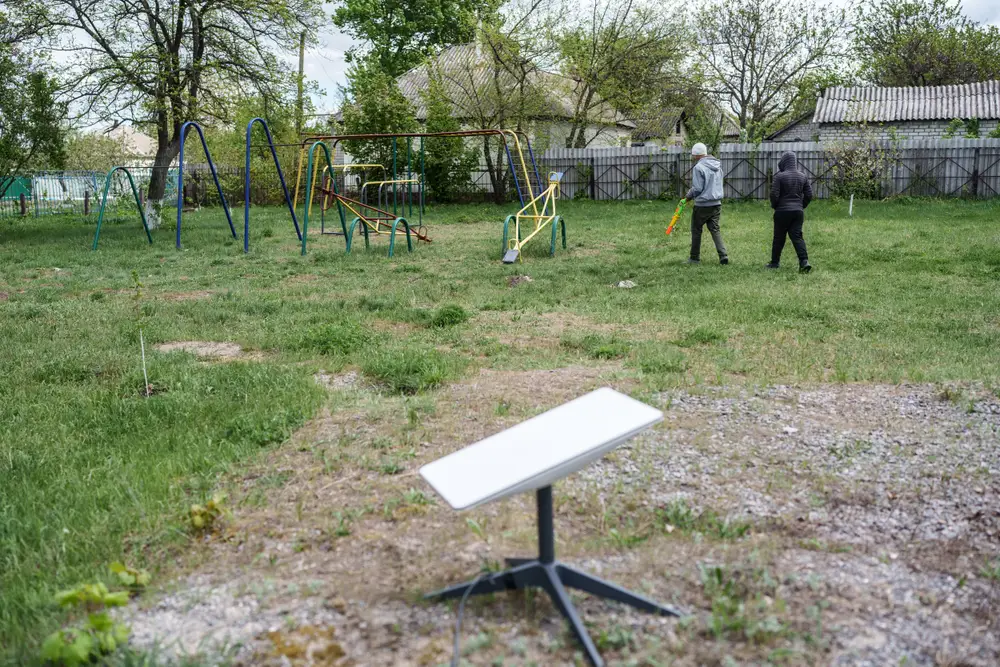
Within the professional field of open-source intelligence (OSINT), only a limited number of cases fundamentally alter the conceptual boundaries of the discipline. The recently reported operation informally referred to as “Operation Self-Liquidation” appears to belong to that category. According to open reporting, a deceptive digital service allegedly induced Russian military personnel to submit terminal identifiers and geolocation data under the pretext of restoring access to Starlink satellite internet services.
The mechanism, as described in public sources, was structurally simple yet strategically consequential. A Telegram channel and bot were reportedly created and presented as a technical support service designed to assist Russian soldiers in re-registering or restoring Starlink terminals. In a conflict environment where stable satellite connectivity directly affects operational coordination, such an offer would plausibly attract users seeking reliable communications.
The intelligence extraction occurred at the data-entry stage.
Users were reportedly prompted to input terminal identification numbers, contact information, and in some accounts, GPS coordinates. According to published reporting, more than 2,400 records containing precise geographic data points were collected. In modern high-intensity warfare, such coordinates represent more than digital artifacts; they can theoretically be correlated with force disposition, logistics patterns, and artillery strike timelines.
What distinguishes this case from conventional OSINT practice is the active inducement of data generation. Traditional OSINT methodology relies on analyzing information that has already entered the public domain—images, satellite data, public documents, or social media posts. In this instance, the digital environment itself was reportedly engineered to elicit operationally sensitive information from the target population. The information space was not merely observed; it was structured to produce intelligence.
Public reporting, including coverage by Business Insider, indicates that the operation may have combined elements of social engineering, financial transactions, and data harvesting. Russian servicemembers allegedly paid for the purported service, creating an additional layer of traceable interaction. If accurately described, this would represent a hybridized model integrating OSINT methodologies with cyber deception and operational targeting.
From an analytical standpoint, several dimensions warrant attention.
First, the boundary between passive intelligence collection and active operational engagement becomes increasingly indistinct. OSINT historically functions as an observational discipline—mapping, verifying, and synthesizing publicly accessible data. Here, the reported mechanism involves deliberate structuring of a digital interaction to induce voluntary disclosure. The epistemological shift is substantial: the intelligence actor influences the information environment to generate the intelligence itself.
Second, the case underscores systemic vulnerabilities in digital military infrastructure. Satellite connectivity, encrypted messaging platforms, online payment channels, and mobile devices constitute integrated operational ecosystems. Each node in that ecosystem can become a vector of exposure if digital hygiene and verification protocols are inadequate. The exploitation of trust within such systems represents a structural risk beyond the immediate tactical episode.
Third, psychological implications are non-trivial. If personnel begin to question the authenticity of digital support channels or communication services, internal trust degrades. In contemporary warfare, command and control reliability is inseparable from confidence in digital tools. Even isolated cases of exploitation can create disproportionate uncertainty.
The question of verification remains central. Assertions that the collected coordinates were used for artillery targeting or strike adjustment require independent corroboration. Analysts would need to examine temporal correlations between data collection phases and battlefield developments, assess geospatial overlaps between alleged coordinate submissions and subsequent engagements, and cross-reference independent reporting. At present, publicly available evidence is largely limited to media accounts and statements attributed to participants.
Nevertheless, irrespective of full operational validation, the broader analytical significance remains intact. The case illustrates a structural evolution within the OSINT ecosystem: the integration of open-source methodology with digital inducement strategies and near-real-time operational application.
From a strategic perspective, the importance lies not only in the reported tactical outcomes but in the doctrinal implications. Digital environments are no longer merely platforms for information dissemination; they function as contested operational spaces. Intelligence, influence, deception, and targeting converge within the same infrastructure.
If subsequent investigations substantiate the scale and impact described in current reporting, the operation may represent an inflection point in OSINT practice. The discipline would no longer be confined to analytical verification and geolocation. Instead, it would operate as a dynamic component of digital conflict, capable of shaping information flows and extracting actionable intelligence through engineered interaction.
In that sense, “Operation Self-Liquidation” is significant not solely for its alleged immediate military utility but for what it signals about the future trajectory of open-source intelligence in high-technology warfare environments.
Sources
- Business Insider, “Ukrainian forces say Russian troops paid them for a fake Starlink service that instead revealed battlefield locations,” 2026.
- Open-source reporting and analytical commentary on “Operation Self-Liquidation,” 2026.
- Broader analytical coverage on the operational use of Starlink in the Russia-Ukraine conflict (2023–2026).
Related Articles

Artificial Intelligence Enters a New Era
27 July 2026
Read more
Agentic AI: Why It Is Poised to Become the Defining Technology of the Coming Years
22 July 2026
Read more
Саммит G7 во Франции: мировые лидеры перед лицом новой эпохи глобальных вызовов
17 June 2026
Read more
China Against the System: How Beijing Is Preparing for an Era of Great Global Confrontation
23 May 2026
Read more