OSINT or a Weapon of Terror

How open-source intelligence turned into an independent front of war
The full-scale war in Ukraine marked the moment when OSINT finally ceased to be a supplementary analytical tool and became an independent factor of the conflict. Maps, satellite imagery, strike videos, geolocation data, and operational reconstructions of events began shaping perceptions of the war faster and often more convincingly than official statements by states. For millions of people, OSINT became the primary window into the reality of combat.
Over time, however, it became evident that OSINT no longer exists in a neutral environment. It is embedded in an emotionally overheated, politically fragmented, and network-closed space. Moreover, under the guise of OSINT, information increasingly circulates that preserves an external analytical form but in essence performs a different function: psychological pressure, demoralization, and the construction of predetermined narratives. In this sense, OSINT increasingly functions not as a tool of knowledge, but as a weapon of terror in the informational dimension.
The emotional contour of war as a foundation for manipulation
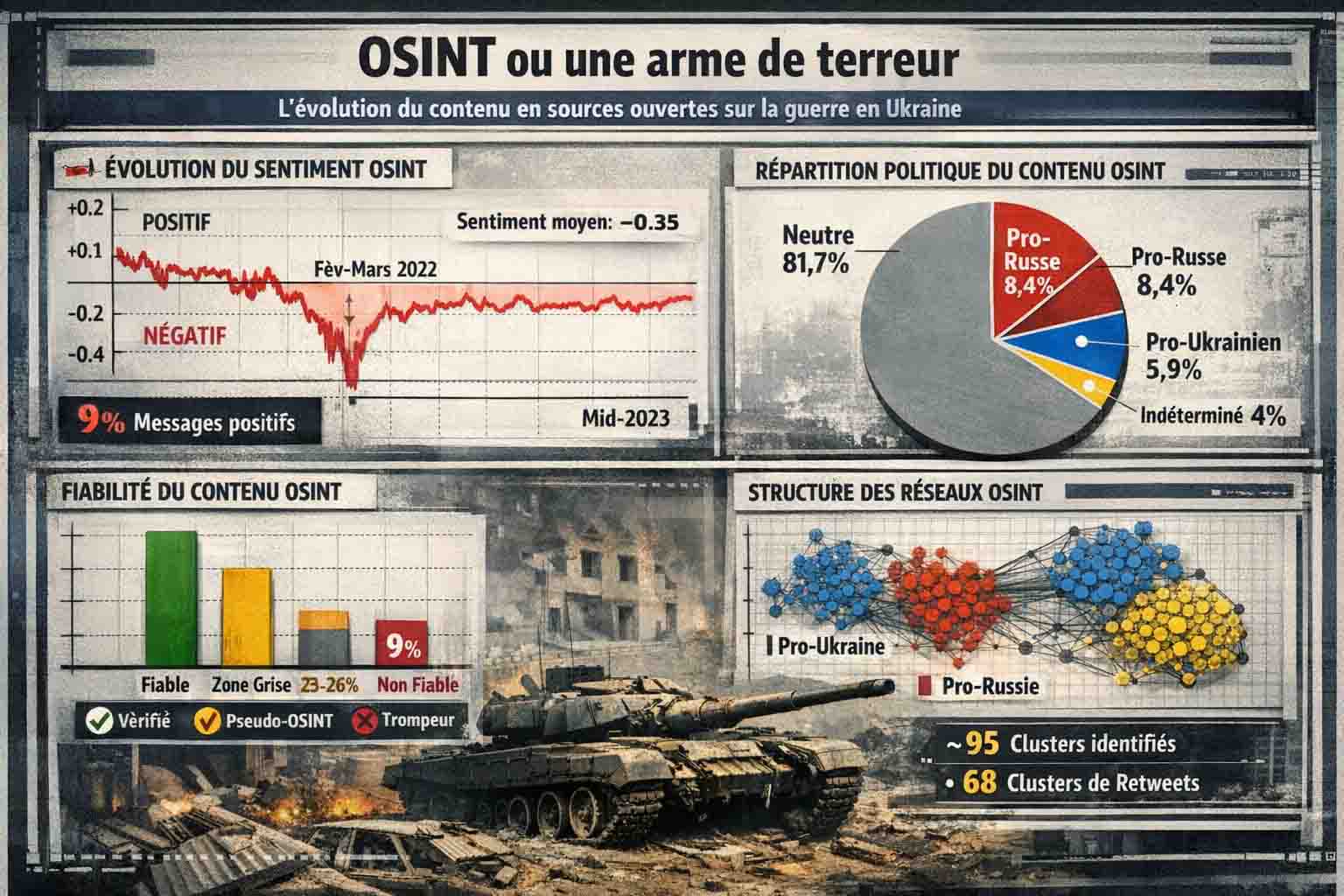
Our research shows that the emotional background of OSINT content throughout the war remains consistently negative. Average sentiment values stay firmly in negative territory and do not return to neutral levels even during periods of relative military calm.
A sharp decline in emotional indicators is recorded in February–March 2022, coinciding with the start of full-scale hostilities. Crucially, however, negativity does not dissipate over time but becomes entrenched as a background condition. War ceases to be unexpected, yet remains a constant source of emotional pressure.
Approximately 9% of messages display positive sentiment. These are typically symbolic expressions of support, mobilizing slogans, and statements of resistance. The majority of publications are either neutral-factual or negative in emotional tone. This confirms that OSINT material exists in a state of chronic crisis perception, where anxiety becomes the norm rather than the exception.
In such an environment, the logic of information perception itself changes. Audiences are less tolerant of uncertainty, gravitate toward simple and definitive conclusions, and are more inclined to trust voices that speak confidently and categorically. This creates favorable conditions for transforming OSINT into an instrument of psychological influence. Even accurate data, when framed emotionally, begin to function not as information but as intimidation, mobilization, or demoralization.
Political camps and divergent emotional strategies
The division of OSINT content along political lines dismantles the myth of its universal neutrality. Each group demonstrates its own emotional profile, directly tied to its interpretation of the war.
Our research indicates that 81.7% of messages are classified as neutral, containing no explicit pro-Ukrainian or pro-Russian stance. At the same time, 8.4% of content exhibits a pro-Russian orientation, 5.9% a pro-Ukrainian position, and approximately 4% remains politically undefined.
The pro-Ukrainian segment more frequently fluctuates around neutral sentiment and periodically moves into positive territory. This is not optimism in a classical sense, but mobilizational rhetoric. Positivity here serves as a tool of resistance and psychological resilience, compensating for the overall negative background.
The neutral segment, contrary to expectations, proves to be the most emotionally depressive. This is where the bulk of so-called “dry OSINT” is published: front-line maps, strike confirmations, operational summaries. Yet it is precisely here that a sense of endless crisis emerges, where each new episode is perceived as further confirmation of hopelessness. This is particularly dangerous because it creates an illusion of objectivity under conditions of maximum psychological pressure.
The pro-Russian segment demonstrates the deepest and most stable negativity. Positive spikes are virtually absent. The rhetoric is built around images of destruction, threat, and total confrontation. This emotional style does not merely describe the war; it constructs a perception of inevitable catastrophe, a classic element of psychological influence.
Factuality, pseudo-OSINT, and the grey zone
A key mistake in the perception of OSINT lies in evaluating it through a binary lens of “truth or fake.” Reality is far more complex. Our research shows that approximately 65% of OSINT content has a high probability of being factual. At the same time, 25–26% of messages fall into a grey zone: formally correct, but containing incomplete data, interpretive distortions, or premature conclusions. Roughly 9% of messages are classified as having a high probability of being unreliable.
The distribution of unreliable content is highly uneven. The pro-Russian segment shows the highest levels of unreliability, particularly during periods of intense combat. The pro-Ukrainian segment demonstrates more stable and higher factuality indicators. The neutral segment accumulates the bulk of borderline content. It is precisely here that what can be termed pseudo-OSINT emerges: information appears convincing but pushes the audience toward unambiguous conclusions in the absence of a full picture.
It is within this grey zone that OSINT begins to operate as a weapon of terror—not through direct falsehoods, but through the sensation of total knowledge, inevitability, and lack of alternatives.
Named entities and focus of attention
An analysis of the structural content of messages shows that approximately 60% of publications contain named entities. Persons are mentioned in around 9% of messages, with political and military leaders of countries involved in the conflict dominating. Geographic references appear in roughly 21% of messages, primarily referring to states, followed by key cities and combat zones. Organizations are mentioned in about 11% of messages, most frequently military and political institutions, as well as major media platforms.
This confirms that OSINT is not limited to recording events, but is continuously embedded within a broader global political and symbolic context.
Network structures and the effect of closed communities
Network analysis demonstrates that OSINT space is not a unified informational field. It is divided into stable clusters. Analysis of mentions identifies around 95 clusters, of which only 6 are of significant scale. Retweet analysis reveals 68 clusters, again with 6 dominant ones.
These clusters strongly correlate with political orientation, thematic focus, and levels of unreliable content dissemination. This means OSINT functions not as a single interpretive space, but as a collection of closed ecosystems within which distinct versions of the war are constructed.
Conclusion
Our research shows that the core problem of OSINT today is neither a lack of data nor the dominance of outright falsehoods. The key threat is interpretive overload, where facts are used to create a sense of total knowledge, inevitability, and absence of alternatives.
In this form, OSINT ceases to be purely an analytical instrument and begins to function as a mechanism of informational pressure, where fear, exhaustion, and confidence in a predetermined outcome become a systemic byproduct.
The boundary between OSINT as analysis and OSINT as a weapon of terror does not run through technology or sources. It runs through intellectual honesty, the ability to sustain uncertainty, and the refusal to turn analysis into psychological coercion.
Related Articles
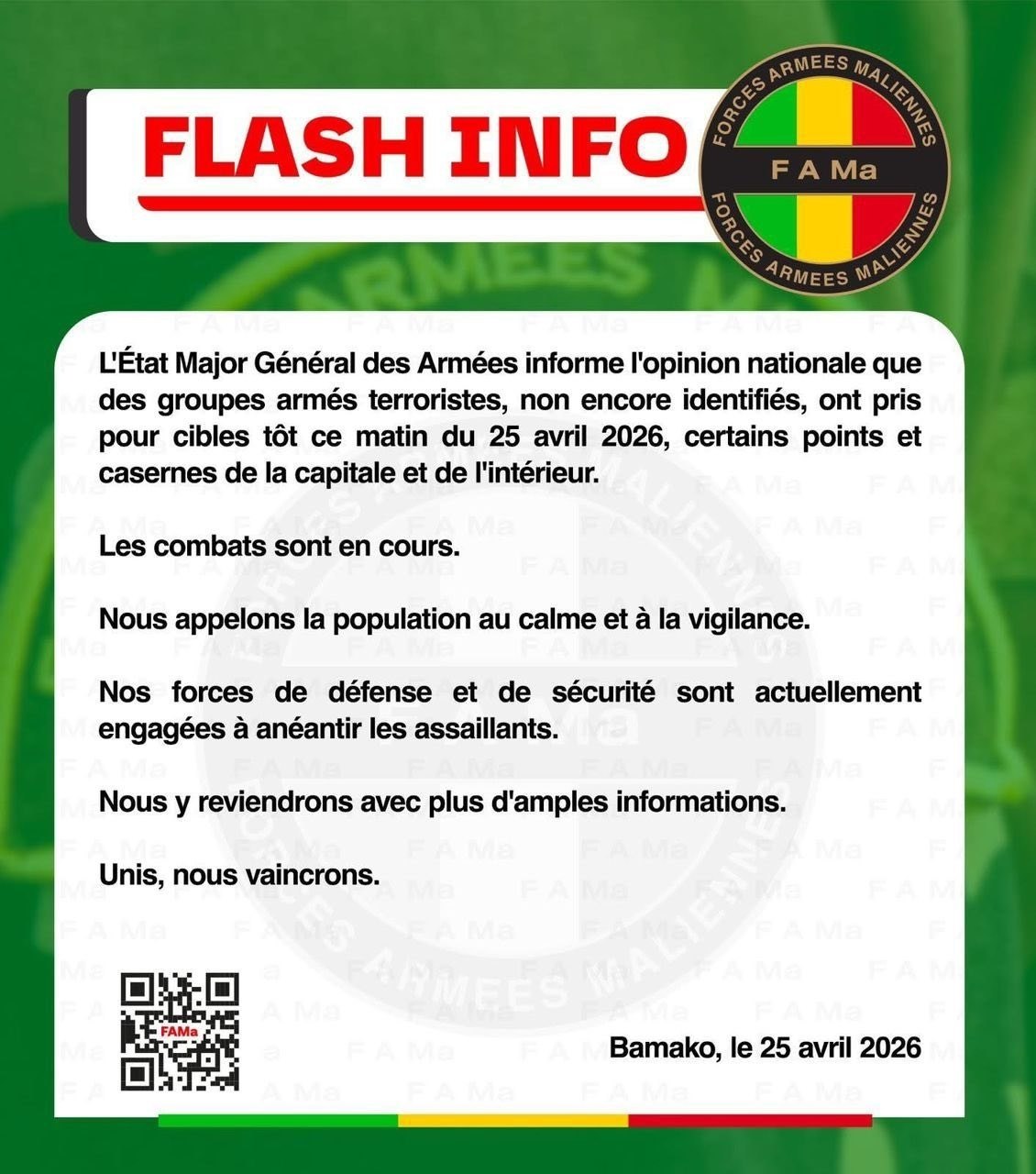
Russian Africa Corps Sustains Losses in Mali: Kidal as the Breaking Point of the War’s Entire Configuration
26 April 2026
Read more
“Operation Self-Liquidation”: The Transformation of OSINT from Passive Monitoring to an Instrument of Digital Operational Impact
19 February 2026
Read more
Russia–Ethiopia Military-Technical Cooperation in 2024–2026
19 February 2026
Read more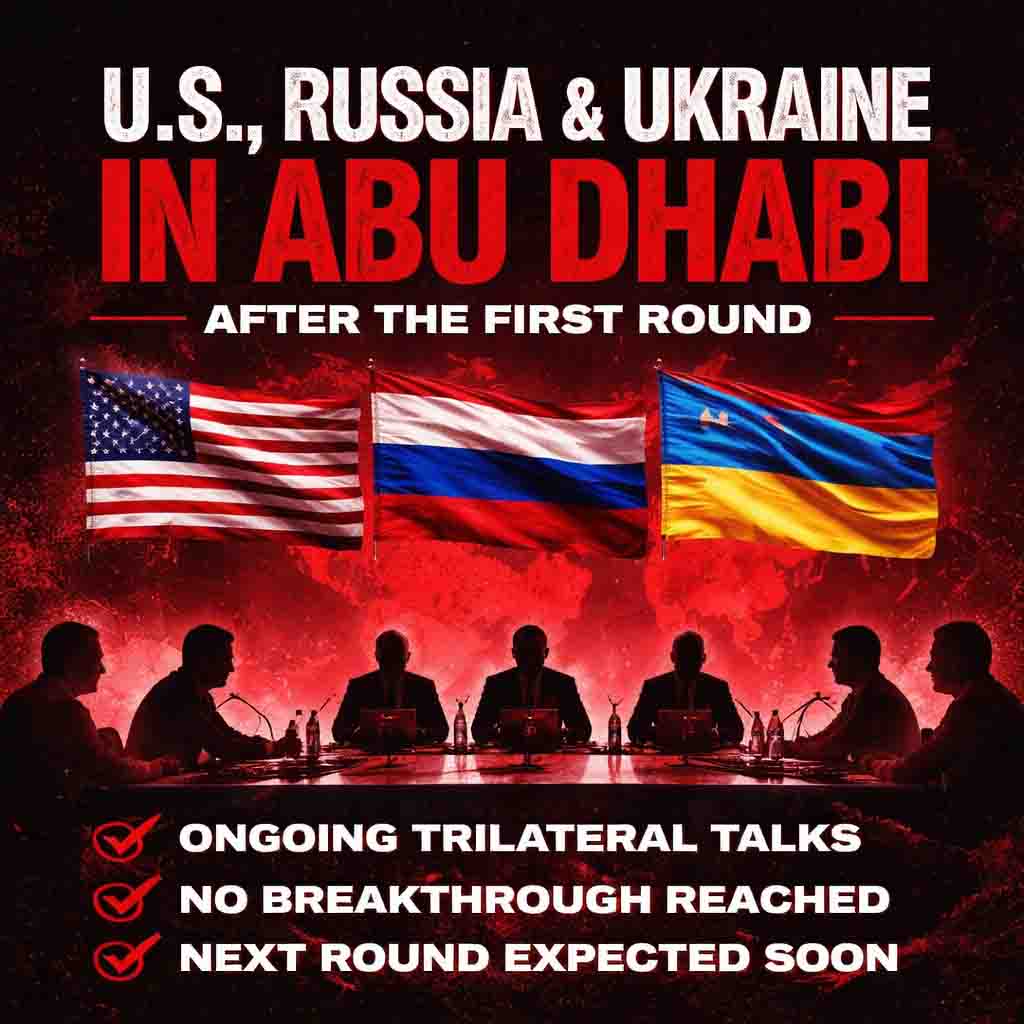
United States, Russia and Ukraine in Abu Dhabi. After the First Round
26 January 2026
Read more