
2026 elections to the National Assembly of Armenia

Armenia’s June 7 Election: A Mandate for Continuity, Not a Blank Check
Armenia’s parliamentary election of June 7, 2026 was not merely another vote to renew the National Assembly. It became a concentrated referendum on the country’s direction: peace and security, relations with Azerbaijan, the future of ties with Russia, the deepening partnership with the European Union and the United States, and the level of public trust in institutions after years of crisis. The formal outcome is clear: Prime Minister Nikol Pashinyan’s Civil Contract Party retained power and will be able to form a government. Politically, however, the result is more complex. The ruling party won, but it did not erase polarization, it did not neutralize the opposition, and it did not settle the question of national consensus around Armenia’s most sensitive strategic choices.
1. The electoral arithmetic: victory, opposition consolidation, and a narrow threshold dispute
On June 14, Armenia’s Central Electoral Commission finalized the official results of the June 7 parliamentary elections. Civil Contract received 726,819 votes, or 49.7456%. The Strong Armenia Alliance came second with 340,006 votes, or 23.2710%. The Armenia Alliance received 144,983 votes, or 9.9231%. Prosperous Armenia obtained 58,287 votes, or 3.9893%, narrowly missing the 4% threshold required for parliamentary representation. The final result leaves three forces in the new National Assembly: Civil Contract, Strong Armenia and the Armenia Alliance.
The seat distribution gives the ruling party a strong parliamentary position. Civil Contract will hold 64 seats, Strong Armenia 29, and the Armenia Alliance 12. This means that Pashinyan’s party preserves not only a simple governing majority, but also a three-fifths majority, which is important for constitutional laws and a number of key institutional appointments. At the same time, it remains short of the two-thirds majority needed to amend the Constitution unilaterally.
This arithmetic explains the dual nature of the election. On one hand, the government clearly won and avoided dependence on coalition bargaining. On the other hand, almost half of the participating electorate voted for forces other than Civil Contract. The opposition did not win power, but it returned to parliament with a sizeable presence. The election therefore produced stability, but not unanimity; continuity, but not a national political settlement.
2. Why this election mattered more than a routine parliamentary vote
The June 2026 election was Armenia’s first regularly scheduled parliamentary election since 2017. The previous votes in 2018 and 2021 were snap elections triggered by political crises. This matters because Armenia’s political system has spent nearly a decade in a state of emergency politics: the 2018 revolution, the 2020 war, the post-war domestic crisis, the 2021 snap election, the loss of Nagorno-Karabakh in 2023, the displacement of Karabakh Armenians, negotiations with Azerbaijan, the erosion of confidence in Russian security guarantees, and the acceleration of Armenia’s dialogue with the West.
The 2026 election therefore tested more than the popularity of one party. It tested whether Armenia could return to a regular political cycle after years of shocks. It also tested whether the electorate still saw elections as the legitimate instrument for resolving disputes about sovereignty, security and foreign policy.
Compared with 2021, the ruling party’s vote share declined, but turnout increased. This suggests that the government’s victory did not come from public demobilization. Armenian society remained politically engaged, but it chose a cautious path. Voters strengthened the opposition, yet refused to hand it power. They endorsed continuity, but not without warning.
3. A mandate for continuation, not for political self-confidence
Civil Contract’s victory does not mean that Armenian society is free of fatigue with the government. The ruling party has been in power since 2018, and it has governed through war, defeat, displacement, social pressure, institutional reform and foreign-policy reorientation. No government can pass through such a period without accumulating disappointment, resentment and mistrust.
Yet dissatisfaction with the government did not automatically become readiness to replace it. This is one of the central lessons of the election. Many voters may have been unhappy with prices, governance style, personnel decisions, administrative arrogance, or painful diplomatic compromises. But they still considered the alternative riskier.
In that sense, Pashinyan’s mandate is pragmatic rather than enthusiastic. It is not the revolutionary energy of 2018. It is not the emergency mobilization of 2021. It is a mandate of continuity under pressure. The electorate essentially said: continue, but do not assume that victory equals unlimited confidence.
That distinction is crucial. The government has the legal and parliamentary authority to govern. But in a polarized country, authority is not the same as political trust. The next cycle will show whether Civil Contract can transform electoral legitimacy into broader state legitimacy.
4. The opposition: defeated in the battle for power, but not politically marginal
Strong Armenia’s 23.2710% is not the result of a marginal movement. It represents a large segment of society that distrusts Pashinyan’s course, rejects his foreign-policy turn, or believes that the ruling party has mishandled national security. The Armenia Alliance, with nearly 10%, also preserves a distinct parliamentary base. Together, the two opposition forces will have 41 seats out of 105.
The opposition lost the central question of the election: the question of power. It failed to turn public anger, security anxiety and geopolitical dissatisfaction into a governing majority. But it won another question: the question of representation. The next National Assembly will not be politically one-dimensional. It will be a forum of permanent contestation between a ruling party with a mandate to continue its course and opposition forces determined to challenge that course domestically and geopolitically.
The opposition’s strength lies in its ability to concentrate protest votes. Its weakness remains the absence of a single positive project capable of persuading not only anti-Pashinyan voters, but also cautious and undecided citizens. Criticism of the government is not yet the same as a credible alternative state strategy.
Strong Armenia has also challenged the result. Reuters reported that the alliance filed a request with the election commission to annul the outcome, alleging irregularities. International observers, while noting allegations of vote-buying and other problems, said voting had gone smoothly in most polling stations.
5. Prosperous Armenia and the most sensitive post-election dispute
The most politically sensitive controversy is not about who finished first. That question is settled. The most sensitive dispute concerns the narrow failure of Prosperous Armenia to cross the 4% threshold and the invalidation of results at several polling stations.
The Central Electoral Commission reported that it had invalidated voting results at three polling stations before finalizing the national results. Prosperous Armenia finished with 3.9893%, just below the threshold.
This is not a technical footnote. Had Prosperous Armenia entered parliament, the composition of the National Assembly and the distribution of institutional leverage would have changed. The ruling party would still have won, but its margin of institutional comfort could have been narrower. EVN Report noted that with Prosperous Armenia outside parliament, Civil Contract retained its three-fifths majority, enabling it to pass constitutional laws and make several key appointments without opposition support, though still without the two-thirds majority required for unilateral constitutional change.
For democracy, the perception of procedure matters almost as much as the legal result. When a party falls short by such a narrow margin, and when invalidated precincts become part of the public debate, the electoral administration must not only be legally correct; it must also be publicly persuasive. A lawful decision that is poorly explained can still leave a lasting political wound.
6. International observers: genuine choice, uneven campaign
The international observation assessment was also mixed. The OSCE/ODIHR said that voters had been offered a genuine choice among political alternatives in a well-run process. At the same time, observers noted direct foreign pressure, escalating trade restrictions and security threats during the campaign, which they said were aimed at influencing voters in favour of the opposition.
But a technically well-administered election does not automatically mean a healthy political environment. Observers and media reports pointed to confrontational rhetoric, uneven campaign opportunities, allegations of vote-buying, criminal proceedings involving opposition figures, and a polarized media space. AP reported that observers described the election as offering a genuine choice, but against a background of divisive rhetoric and unequal campaigning.
This is one of the central challenges for Armenian democracy. The country has an electoral system capable of producing a competitive result. The harder question is whether the political system can produce trust. Elections can be technically credible and still leave society deeply divided if the campaign environment becomes a war of mutual delegitimization.
7. Russia, the West, and the search for Armenian sovereignty
The election took place in an unusually dense geopolitical context. In recent years, Armenia has strengthened ties with the European Union and the United States while relations with Russia have deteriorated. In May 2026, Armenia and the EU held their first-ever summit in Yerevan, reinforcing cooperation in connectivity, security and defence, economic development and people-to-people contacts.
It would be too simplistic, however, to describe the election only as a choice between Russia and Europe. For many Armenians, the deeper question is sovereignty: how to secure the state when the old security architecture no longer inspires confidence and the new one has not yet become a full substitute.
Armenia’s turn toward Europe is therefore not only ideological. It is also a search for new guarantees, new partners and new room for manoeuvre. But the constraints remain severe. The EU is not a military alliance for Armenia. Russia, despite the collapse of trust, remains an economic, energy, migration and security factor. That is why the next Armenian government will not be able simply to “choose a side” and move on. It will have to manage a long and difficult transition between dependencies.
Russia has already signalled that the issue of Armenia’s future in post-Soviet structures cannot remain unresolved indefinitely. Reuters reported that Moscow said Armenia would soon need to settle its position regarding the Collective Security Treaty Organization and the Eurasian Economic Union, amid Pashinyan’s pursuit of closer ties with the EU.
Thus the election strengthened the government’s pro-Western course, but it also exposed the limits of that course. The ruling party has a majority; the opposition has a large parliamentary presence; Russia retains levers of pressure; and the West can offer support, but not instant security replacement.
8. Peace with Azerbaijan: the central mandate and the central risk
The peace agenda was one of the decisive themes of the election. On August 8, 2025, Armenia and Azerbaijan initialled the agreed text of an agreement on the establishment of peace and inter-state relations in Washington, in the presence of the leaders of Armenia, Azerbaijan and the United States. The Armenian government later published the initialled text of the agreement, which includes mutual recognition of sovereignty, territorial integrity, inviolability of borders, absence of territorial claims, and a commitment to refrain from the use or threat of force.
The 2026 election gives Pashinyan political space to continue this line. But it does not give him unlimited freedom. In Armenia, peace is not a neutral technical issue. It is connected to dignity, memory, security, the fate of Karabakh Armenians, and fear of further concessions.
The most difficult problem is that peace can be externally supported and parliamentarily manageable, while still lacking full internal consensus. A peace agreement without public trust is vulnerable. It can be attacked not only from outside, but also from within, especially if citizens feel that the price and meaning of compromise have not been explained honestly.
This is why communication will be decisive. The government must not treat society as a passive recipient of diplomatic outcomes. It must explain the logic, limits and risks of peace in a way that respects grief and anxiety, rather than dismissing them as political manipulation.
9. Institutional power and the danger of dominance
Civil Contract’s 64 seats create a strong governing position. The party can pass major legislation and exercise influence over institutional appointments. That may produce governability at a moment when Armenia faces external pressure and difficult negotiations.
But governability is not the same as democratic restraint. The stronger a single party’s institutional position, the greater its responsibility to avoid transforming parliamentary advantage into political monopoly. Armenia needs a functioning government, but it also needs the opposition, the courts, the media and civil society to be more than decorative elements.
The next parliament will therefore be a test of political maturity. The ruling party must show that it can govern without humiliating the opposition. The opposition must show that it can resist without trying to delegitimize the state itself. Both sides must understand that Armenia’s security problems are too serious for permanent internal war.
10. The voter’s message
The Armenian voter delivered a more nuanced message than many campaign narratives allowed.
To the government, the message was: continue, but do not confuse victory with unlimited trust.
To the opposition: you belong in parliament, but you have not convinced the country that you should govern.
To external actors: Armenia’s choice cannot be dictated from outside.
To the institutions: legitimacy depends not only on the result, but also on the transparency of the procedure.
This is a mature but uneasy message. Mature, because the conflict was channelled through elections rather than violence. Uneasy, because the political language remains saturated with existential fear. Each side tends to describe the other not merely as mistaken, but as dangerous. That is poisonous for a small state living under real security pressure.
11. The economy: the agenda that geopolitics overshadowed
The campaign was dominated by geopolitics. Peace with Azerbaijan, Russia’s role, the EU track, security guarantees and constitutional questions pushed social and economic issues into the background. But after the election, those issues will return.
Citizens will expect more than diplomatic formulas. They will expect jobs, infrastructure, affordable housing, better education, credible courts, anti-corruption enforcement, and the integration of displaced people from Nagorno-Karabakh. The promise of open communications and regional connectivity will matter only if it becomes visible in everyday life.
This is where the government faces a dangerous gap between strategic vision and social patience. Peace dividends take time. Voters, however, live in the present. If the diplomatic process remains abstract and economic benefits are delayed, dissatisfaction may grow not from ideological opposition, but from daily frustration.
The EU-Armenia connectivity partnership could become part of a new development model, especially in transport, energy and digital links. But a framework is not yet a result. The government’s challenge is to translate international documents into roads, jobs, markets and confidence.
12. Post-election scenarios
The first scenario is managed stabilization. The government forms a cabinet, the opposition takes its seats, legal disputes proceed through institutions, and Armenia gradually returns to a normal legislative cycle. This is the best scenario for state stability, but it requires restraint from all major actors.
The second scenario is a conflictual parliament. The opposition remains inside the system but uses parliament mainly as a platform to delegitimize the government. In this case, Armenia would have formal stability but chronic political confrontation.
The third scenario is acceleration of the peace agenda. The government uses its mandate to move toward a final agreement with Azerbaijan, the opening of communications and deeper Western partnerships. This could bring a strategic breakthrough, but it could also provoke domestic backlash if society feels excluded from the process.
The fourth scenario is external pressure. Moscow may increase economic, informational or diplomatic pressure if Yerevan continues to deepen its Western orientation. The election result did not end the geopolitical contest around Armenia; it may have intensified it.
The fifth scenario is a lingering crisis of electoral trust. If the disputes around invalidated polling stations, recounts and the Prosperous Armenia threshold issue are not convincingly resolved, they may become a durable opposition argument against the legitimacy of the new parliament.
13. The main conclusion: Armenia chose a managed risk
The June 7 election showed that Armenia has not returned to the pre-2018 political model, but it is no longer living in the revolutionary mood of 2018 either. The country is entering a phase of hard pragmatism.
Voters did not give the government a blank check, but they gave it the right to continue. They did not give the opposition power, but they gave it a strong voice. They did not reject the peace agenda, but they did not remove its internal tensions. They did not sever Armenia from Russia, but they confirmed a demand for greater sovereignty and stronger Western partnerships.
The most accurate definition of the result is managed risk. Armenian society chose not an ideal path, but the path it considered less dangerous at this historical moment.
For Pashinyan, this is a victory with a warning. For the opposition, it is a defeat but not a disappearance. For institutions, it is a stress test. For society, it is a reminder that democracy does not end on election day; it begins after it.
Armenia has emerged from the election with a government, but not with consensus; with a majority, but not with political peace; with a foreign-policy direction, but not with a completed security architecture. The central question is no longer who won. That is known. The central question is whether the victory can become the beginning of a more mature stage of Armenian statehood, rather than another chapter in the country’s internal polarization.
Related Articles
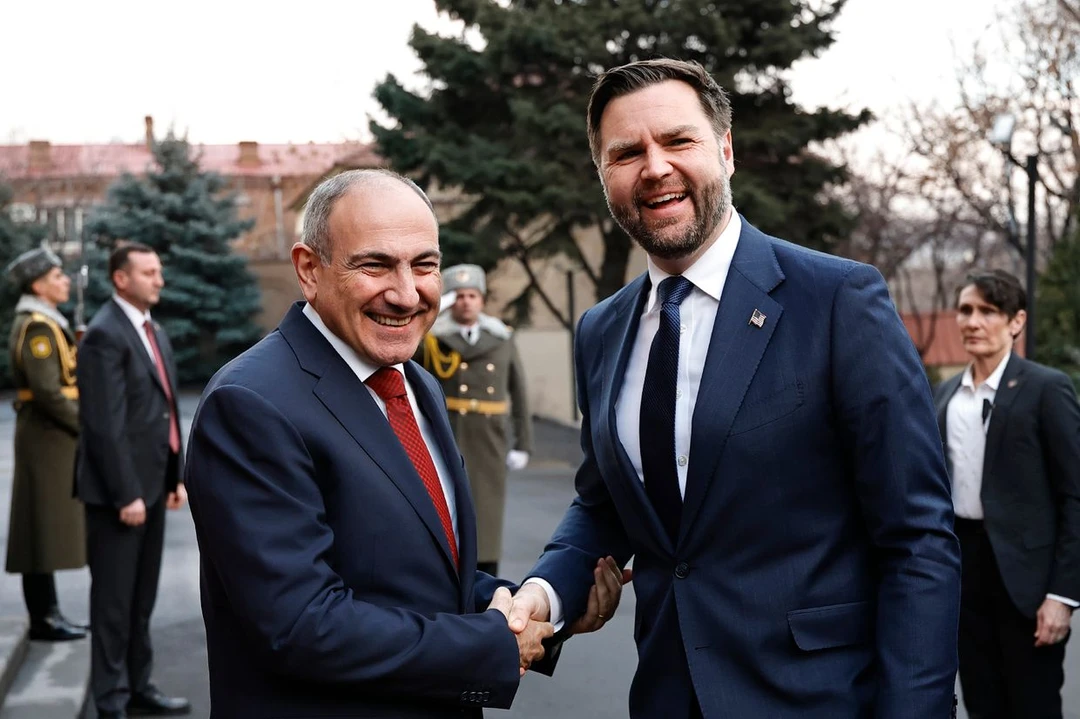
The Historic Visit of U.S. Vice President J.D. Vance to Yerevan
10 February 2026
Read more
Armenia Under Siege: How a Small Democracy is Fighting Russia's Hybrid Warfare Playbook
20 January 2026
Read more
Azerbaijan releases four Armenian prisoners
14 January 2026
Read more
TRIPP: A Pragmatic Framework for Armenia and the Region
14 January 2026
Read more