Venezuela Between Oil and External Control. Economic Stabilization as a Tool of US Geopolitics
.png "Department of Strategic Monitoring")
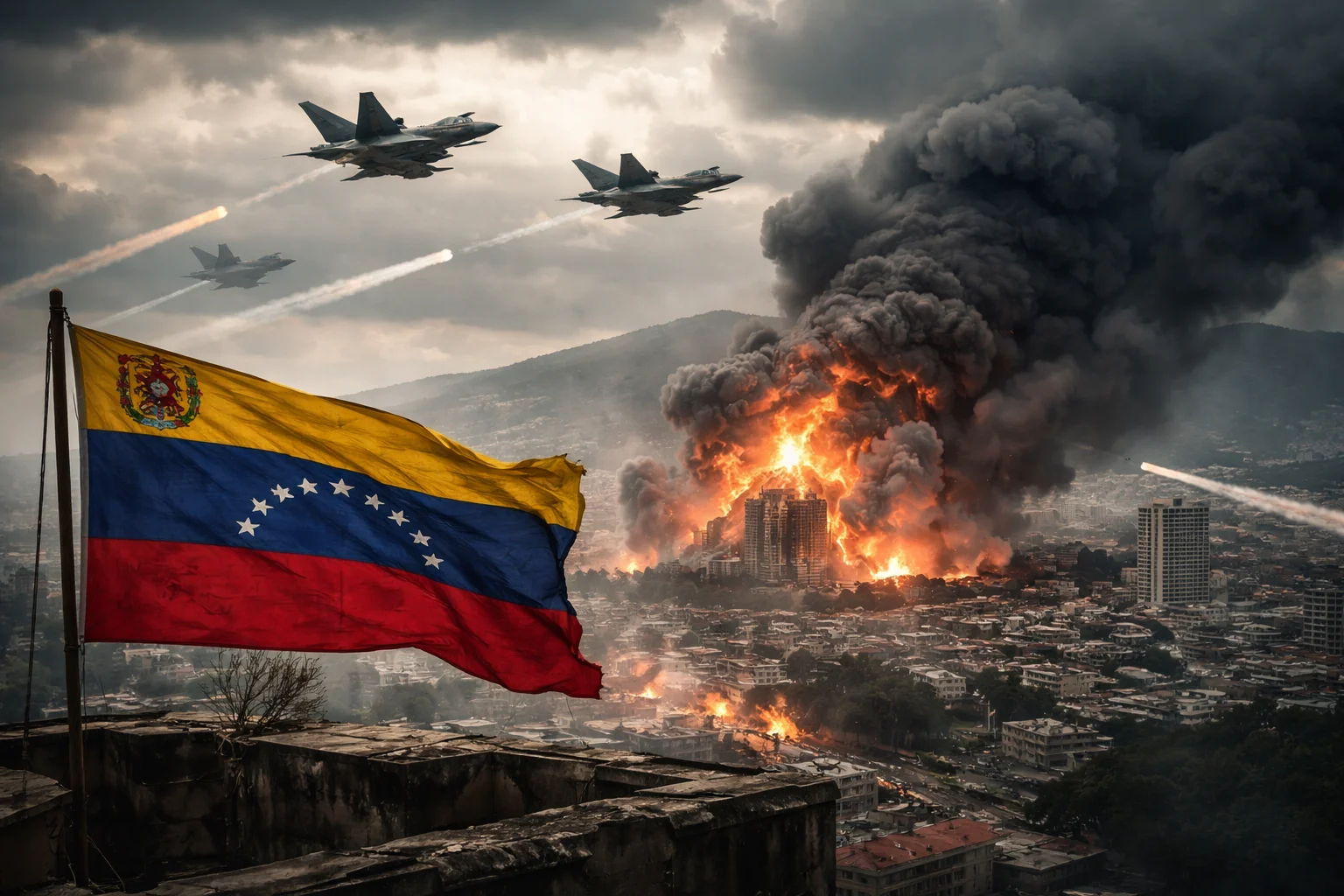
The period from January 10 to January 23, 2026 marked a sharp shift for Venezuela from overt pressure to a phase dominated by economics, oil, and diplomacy. While the military phase of the US operation formally ended earlier, its consequences are unfolding now through deals, legislative changes, limited diplomatic engagement, and sustained internal political tension. The central issue has become control over oil flows and the configuration through which Venezuela is being integrated into a new regional and global framework.
The first major development came in mid-January, when the United States authorized the sale of Venezuelan oil through American brokers. This was not a lifting of sanctions, but a tightly controlled opening of access to the market via US-regulated infrastructure. At the same time, several tankers linked to sanction-evasion schemes were seized in the Caribbean. At least seven vessels were detained in a single week, signaling strict enforcement over maritime logistics. The message was directed not only at Caracas, but also at third countries that had previously relied on grey shipping networks.
Domestic reactions in Venezuela were deeply divided. Opposition figures, including María Corina Machado and Edmundo González, sharply criticized the developments, describing the situation as “Madurismo without Maduro.” In their view, the formal removal of Nicolás Maduro did not amount to a real transformation of the system, but instead opened the door to external management through economic levers. This framing spread rapidly through opposition media and became a core argument against cooperation with Washington on oil.
International reactions were similarly mixed. Russia, China, and Iran condemned US actions as violations of Venezuelan sovereignty, but confined their response to diplomatic statements without military or economic retaliation. The United Nations described the situation as a dangerous precedent capable of undermining the foundations of international law, yet no concrete enforcement mechanisms were activated.
Inside the United States, the policy triggered political confrontation. Democrats in Congress attempted to limit President Donald Trump’s actions on Venezuela, but Republicans blocked those efforts, preserving the White House’s freedom of maneuver on sanctions, licensing, and energy policy.
Between January 16 and January 20, the focus shifted decisively toward economics. Venezuela’s National Assembly approved the first stage of an oil law reform opening the sector to foreign investors and strengthening legal protections for their capital. This move directly met US conditions and became a prerequisite for broader market access. Almost immediately, the first transactions followed. Valero and Phillips 66 purchased Venezuelan crude through partner arrangements involving Chevron, confirming that the new model was operational.
Financial indicators responded quickly. Domestic demand for USDT in Venezuela fell by roughly 40%, a change attributed to exchange-rate stabilization driven by oil revenues and political shifts. Analysts view this as an early signal of potential economic normalization, although risks tied to inflation and sanctions persist. The economy received a short-term boost, but its durability remains uncertain.
Against this backdrop, Donald Trump’s remarks in Davos fit into a broader narrative. He publicly stated that Venezuela would be “doing fantastically well” and would earn more money in six months than it had in the previous twenty years. These comments were aimed both at investors and at a domestic US audience, framing Venezuela as evidence of the effectiveness of the administration’s foreign policy approach.
Washington also indicated that China would be allowed to purchase Venezuelan oil, but without preferential discounts and exclusively through US-controlled channels. This signals that even major external players are being integrated into a system where ultimate oversight remains with the United States. Venezuela, in this framework, is not returning as a free exporter, but as a managed supplier within a controlled regime.
By January 23, the situation appeared relatively stable, with no new military incidents, but with high internal tension. Marches organized by communal groups in Caracas have drawn thousands demanding the release of Nicolás Maduro and Cilia Flores. Authorities have simultaneously honored fallen soldiers, including a female pilot reported to have died defending against the US operation. These symbolic acts are aimed at maintaining loyalty among the core Chavista base.
The opposition continues to speak of “occupation” and criticizes Trump for ignoring Machado while focusing exclusively on oil. An additional destabilizing factor is the activity of colectivos, paramilitary-style militias linked to power outages and contested reports of civilian deaths. Estimates range from 80 to more than 100 casualties, fueling uncertainty and fear.
Within the political system, Rodríguez has consolidated authority by reshuffling loyalists while retaining key Chavista figures such as Diosdado Cabello. There are no mass riots, but tension within the ruling camp is high, as fears of purges and realignments persist.
In the oil sector, expectations remain elevated. Reports indicate that more than 300 million dollars in oil has already been sold to the US. The Trump administration is considering expanding licenses for major traders such as Vitol and Trafigura, while maintaining the core condition that all transactions flow through the American market. This entrenches a model of economic control without formal annexation or direct governance.
Diplomatic engagement is developing in parallel. Rodríguez is planning a visit to the United States, potentially the first such trip in more than twenty-five years. His meeting with CIA representatives on January 16 is widely interpreted as a signal of willingness to cooperate. The US has sent a limited number of diplomats to Caracas to begin restoring relations, pointing to cautious normalization at the level of official contacts.
Another symbolic element is the ongoing legal process involving Nicolás Maduro, who is being held in a Brooklyn detention facility. He has refused to recognize the charges, calling himself a prisoner of war. The White House is using the case as leverage in dealings with Cuba, Colombia, Mexico, and Iran, expanding the Venezuelan issue into a broader regional pressure campaign.
Global reactions remain muted. The European Union, Brazil, and Colombia have issued condemnations without concrete follow-up. China is reassessing its credit exposure to Venezuela. Russia has stated that the developments will influence its stance in negotiations over Ukraine. In Davos, Trump linked Venezuela to global deal-making, claiming relevance to a significant share of worldwide economic flows.
Analysts broadly agree that this is not a classic regime-change scenario. Rather, it represents a model of governance through local structures under external oversight, with oil as the primary lever. There is no permanent US ground troop presence, but naval forces in the Caribbean maintain blockade and enforcement capabilities. Trump has not ruled out “boots on the ground” if circumstances require.
The implications extend beyond Latin America. In expert circles and Chinese social media, the Venezuelan case is already being discussed as a potential template for other regions, including Taiwan. Meanwhile, OPEC+ has paused production increases due to oversupply, with Venezuela notably absent from the cartel’s active deliberations.
Public opinion is polarized. Social media narratives oscillate between “liberation” and “imperialism.” Polling in the United States shows that roughly 70% of Americans oppose “forever wars,” reinforcing the administration’s emphasis on economic outcomes over military escalation. For Trump, Venezuela is part of a broader energy strategy tied to the Arctic and Greenland.
The key question in the coming weeks centers on oil contracts and Rodríguez’s planned visit to Washington. These will determine whether Venezuela enters a phase of managed oil-driven recovery under US control or slides back into instability. Signs of economic stabilization are visible, but humanitarian risks remain, including disruptions to medical supply chains. Globally, US influence is expanding, but at the cost of fraying alliances, as countries such as Germany and Denmark show signs of strategic reorientation.
Related Articles

Artificial Intelligence Enters a New Era
27 July 2026
Read more
Agentic AI: Why It Is Poised to Become the Defining Technology of the Coming Years
22 July 2026
Read more
Саммит G7 во Франции: мировые лидеры перед лицом новой эпохи глобальных вызовов
17 June 2026
Read more
China Against the System: How Beijing Is Preparing for an Era of Great Global Confrontation
23 May 2026
Read more