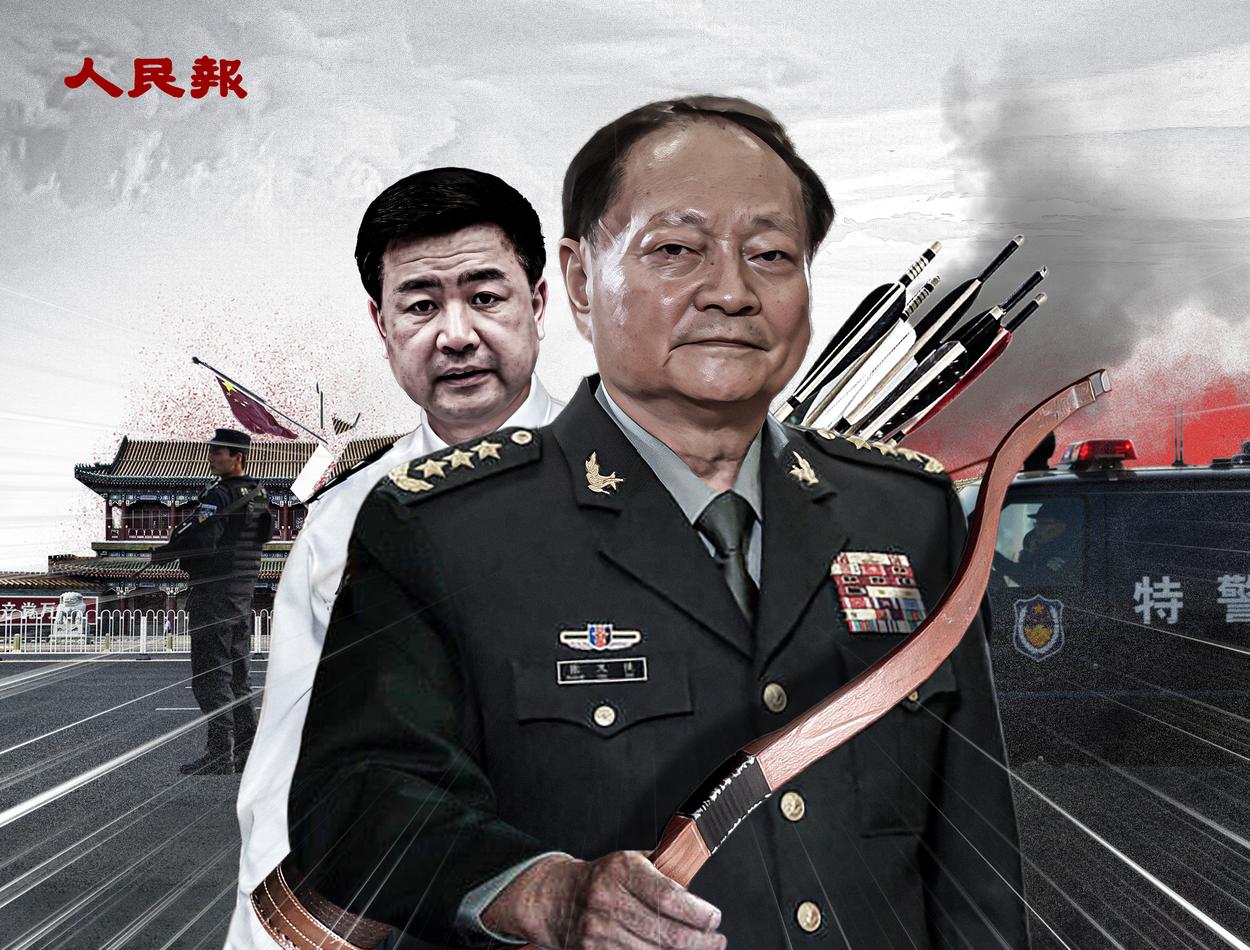
Investigation into China’s Top Generals: What the Purge of PLA Leadership Means and How It Reshapes Power in Beijing
.png "Department of Strategic Monitoring")
On January 24, 2026, China’s political and military system entered a phase that until recently was considered highly unlikely even among seasoned observers. The Ministry of National Defense of the People’s Republic of China officially confirmed the launch of investigations into two of the most senior figures in the country’s military leadership: Zhang Youxia, senior vice-chairman of the Central Military Commission, and Liu Zhenli, chief of the Joint Staff Department of the CMC. The official wording—“serious violations of discipline and law”—is standard in China’s political lexicon, but the stature of those involved elevates the case to a systemic and historic level.
Why this investigation is unprecedented
Zhang Youxia is not simply another high-ranking officer. He has long been regarded as one of the most influential generals in contemporary China, positioned at the very core of decision-making within the People’s Liberation Army. His authority extended well beyond formal job descriptions. Zhang was widely seen as a close associate of Xi Jinping, with their relationship carrying symbolic weight rooted in revolutionary-era family ties.
The fact that Zhang remained in office well beyond the customary retirement age only reinforced perceptions of his exceptional status. In China’s system, such exceptions are rare and usually reserved for figures deemed indispensable and unquestionably loyal. His sudden inclusion in an investigation therefore marks the collapse of a long-standing taboo. If a figure of Zhang’s rank is no longer untouchable, it signals the effective disappearance of any protected category within the PLA.
Liu Zhenli’s case reinforces this interpretation from another angle. As chief of the Joint Staff Department, Liu oversaw operational command, coordination among service branches, and the practical execution of strategic decisions. This role sits at the intersection of political authority and the functioning of the military machine. His investigation transforms the episode from a personal matter into a structural one.
Anti-corruption as a tool for reshaping the armed forces
Formally, the investigation fits into the long-running anti-corruption campaign launched by Xi Jinping at the start of his rule. Over more than a decade, dozens of senior officers, regional commanders, procurement officials, and defense industry figures have been swept up. Former defense ministers, leadership of the Rocket Force, and officials tied to major weapons programs have all fallen.
What distinguishes the current phase is the level of the targets. Earlier purges tended to affect retired figures or those representing alternative power bases. Now, individuals from the very heart of the military hierarchy are under scrutiny. This suggests the campaign has moved beyond “clean-up” and into a phase of final restructuring.
Anti-corruption rhetoric serves a dual purpose. Domestically, it legitimizes action in the eyes of the Party and the public. Strategically, it provides a universal instrument for dismantling any remaining autonomous centers of influence within the armed forces.
The transformation of the Central Military Commission
Successive investigations over recent years have fundamentally altered the configuration of the Central Military Commission. Historically, the CMC functioned not merely as an administrative body but as a space where competing interests within the PLA were balanced. That balance is now rapidly eroding.
As key figures are removed, effective control increasingly concentrates around Xi Jinping and a very narrow circle of trusted loyalists, such as Zhang Shengmin. The institutional autonomy of the military is shrinking sharply. The PLA is losing its role as a semi-independent political actor and becoming a tightly controlled instrument of a personalized Party hierarchy.
For China’s governance model, this represents a profound shift. An army that for decades retained its own internal logic and weight is now being fully integrated into a centralized command structure with minimal internal counterbalances.
International context and external signaling
It is notable that the investigations were confirmed not through leaks but through official channels and were almost immediately reported by leading international media, including AP News, Reuters, The New York Times, The Wall Street Journal, CNN, South China Morning Post, and France 24.
This suggests Beijing did not seek to conceal the process. On the contrary, it appears designed to send a signal. Against the backdrop of tensions over Taiwan, the South China Sea, and broader strategic rivalry with the United States, the message is clear: doubts about loyalty or controllability within the armed forces will be resolved preemptively, even at the cost of internal upheaval.
Consequences and likely scenarios
In Chinese practice, investigations of this nature can last for months, with details emerging only at a final stage, if at all. Outcomes may range from Party disciplinary sanctions to criminal proceedings behind closed doors. Regardless of the legal endgame, the political impact has already been achieved.
The investigations into Zhang Youxia and Liu Zhenli mark a new stage in the evolution of China’s power structure. The anti-corruption campaign has definitively shifted from corrective policy to a mechanism of strategic control. The military is being fully absorbed into a personalized vertical of authority, with decisions made by an increasingly narrow leadership circle.
For external analysts, this necessitates a recalibration of how China is assessed. Forecasts of Beijing’s military behavior must now assume weaker institutional buffers and a greater role for centralized personal authority. In a volatile global environment, this makes China’s strategic trajectory both more coherent internally and potentially more rigid in its external posture.
Related Articles
Artificial Intelligence Enters a New Era
27 July 2026
Read more
China Against the System: How Beijing Is Preparing for an Era of Great Global Confrontation
23 May 2026
Read more
The Race for AGI: How Artificial Intelligence Is Reshaping the Global Balance of Power
14 May 2026
Read more
China and Global OSINT: How Analysts Are Tracking the New Superpower of the 21st Century
14 May 2026
Read more