China and Global OSINT: How Analysts Are Tracking the New Superpower of the 21st Century
China has become one of the central subjects of the global OSINT community. Following the sharp rise in tensions around Taiwan, the high-profile talks between Donald Trump and Xi Jinping, and the accelerated modernization of the People’s Liberation Army, independent analysts, satellite-monitoring groups, and military researchers are now conducting near-continuous monitoring of Chinese activity across multiple domains.
The primary focus of Chinese OSINT today is Taiwan. Analysts track Chinese naval movements, aircraft routes, amphibious units, and missile deployments in real time. Satellite imagery from Maxar, Planet Labs, and Sentinel is combined with ADS-B Exchange aviation tracking, MarineTraffic maritime data, and Chinese open-source material. Particular attention is being paid to military exercises around Taiwan, troop and equipment movements into Fujian Province, and the activity of Chinese Rocket Force units.
Following the Trump-Xi summit, interest surged regarding Beijing’s possible pressure scenarios against Taiwan. OSINT researchers are attempting to determine whether China’s actions are primarily political demonstrations of force or whether the PLA is gradually building logistical and operational infrastructure for a potential blockade or amphibious operation.
One of the most heavily discussed topics remains China’s missile infrastructure. Independent researchers continue to investigate the so-called “Great Underground Wall of China” — a vast network of tunnels and hardened facilities associated with the PLA Rocket Force. Satellite imagery is used to study suspected missile silos, hidden storage areas, and underground command facilities.
Significant attention is also focused on the construction of new intercontinental ballistic missile silo fields in western China. OSINT groups frequently publish analyses of desert regions in Gansu and Xinjiang where hundreds of structures resembling DF-41 strategic missile sites have reportedly been identified.
Another major area of Chinese OSINT concerns naval activity. Analysts closely monitor Chinese aircraft carriers, nuclear submarines, and new Type 055 destroyers. Carrier strike group deployments into the Western Pacific and operations in the South China Sea are examined in detail.
Many researchers now consider naval logistics to be one of the clearest indicators of China’s future intentions. Any unusual movement of amphibious ships, support vessels, or large-scale port activity rapidly becomes the subject of extensive analysis.
Chinese military logistics as a whole represent a major OSINT field. Analysts track railway transportation of military equipment, fuel transfers, airfield construction, and activity near defense-industrial facilities. Eastern Chinese provinces closest to Taiwan are monitored especially closely.
Chinese aviation is another critical area of interest. Using ADS-B data and satellite imagery, OSINT researchers analyze the movement of airborne early warning aircraft, H-6 strategic bombers, transport aircraft, and fifth-generation J-20 fighters. Large-scale flights or unusual aircraft concentrations are often interpreted as indicators of major exercises or heightened military readiness.
The growing technological confrontation between the United States and China has also intensified OSINT attention toward China’s semiconductor industry. Analysts study the expansion of SMIC fabrication plants, supply chains for chipmaking equipment, U.S. export restrictions, and China’s efforts to achieve technological self-sufficiency.
Space-related OSINT focused on China has expanded rapidly as well. Independent researchers monitor Chinese early-warning satellites, reconnaissance platforms, possible inspector satellites, and dual-use space programs. Western analytical circles increasingly discuss the militarization of orbit and China’s potential role in future space conflicts.
Chinese cyber-related OSINT has become another rapidly developing field. Researchers investigate alleged Chinese APT groups, cyber-espionage campaigns, and digital influence infrastructure. Particular attention is devoted to operations related to Taiwan, the South China Sea, and American technology companies.
Following the escalation involving the United States, Israel, and Iran, many analysts also began monitoring potential coordination between Beijing and Tehran. Attention has focused on oil shipments, the so-called shadow fleet, sanctions-evasion mechanisms, and possible technological cooperation.
Domestic developments inside China also form a substantial OSINT category. Researchers analyze the country’s economic slowdown, real-estate crisis, youth unemployment, internal social tensions, and the political rhetoric of Chinese leadership. However, analysis is complicated by extensive censorship and information restrictions inside China’s internet ecosystem.
Artificial intelligence has emerged as another major focus area. China is widely viewed as one of the global leaders in integrating AI into military systems. Independent researchers examine Chinese projects involving autonomous drones, computer vision systems, satellite analysis tools, and AI-assisted command-and-control infrastructure.
Against the backdrop of intensifying strategic rivalry between the United States and China, many analysts now describe the Chinese theater as the primary center of global OSINT activity for the coming decade. China increasingly dominates satellite analysis, military monitoring, geopolitical forecasting, and research into the technological and strategic competition shaping the 21st century.
Related Articles

Artificial Intelligence Enters a New Era
27 July 2026
Read more
China Against the System: How Beijing Is Preparing for an Era of Great Global Confrontation
23 May 2026
Read more
The Race for AGI: How Artificial Intelligence Is Reshaping the Global Balance of Power
14 May 2026
Read more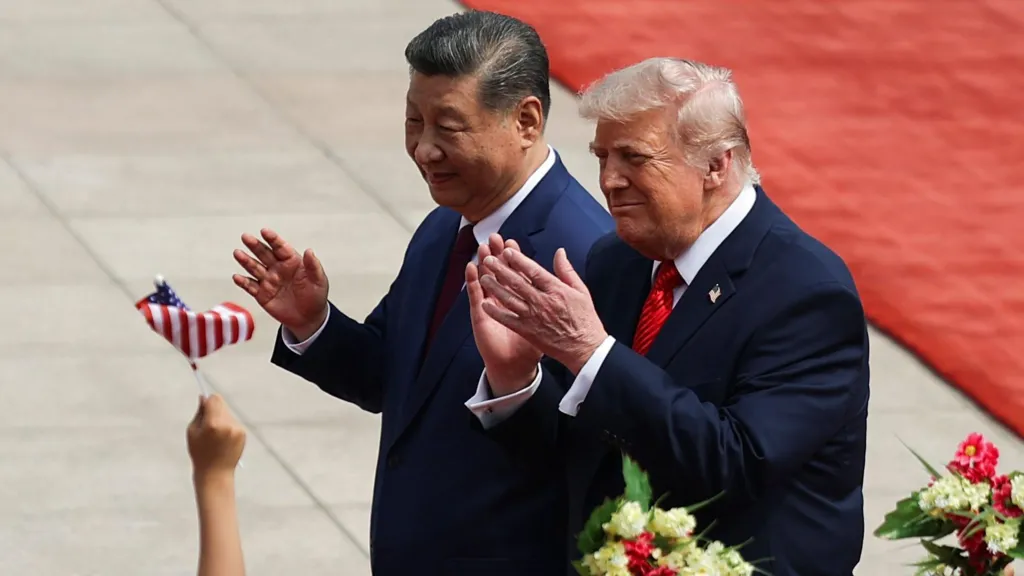
American Media on Donald Trump’s Visit to China
14 May 2026
Read more