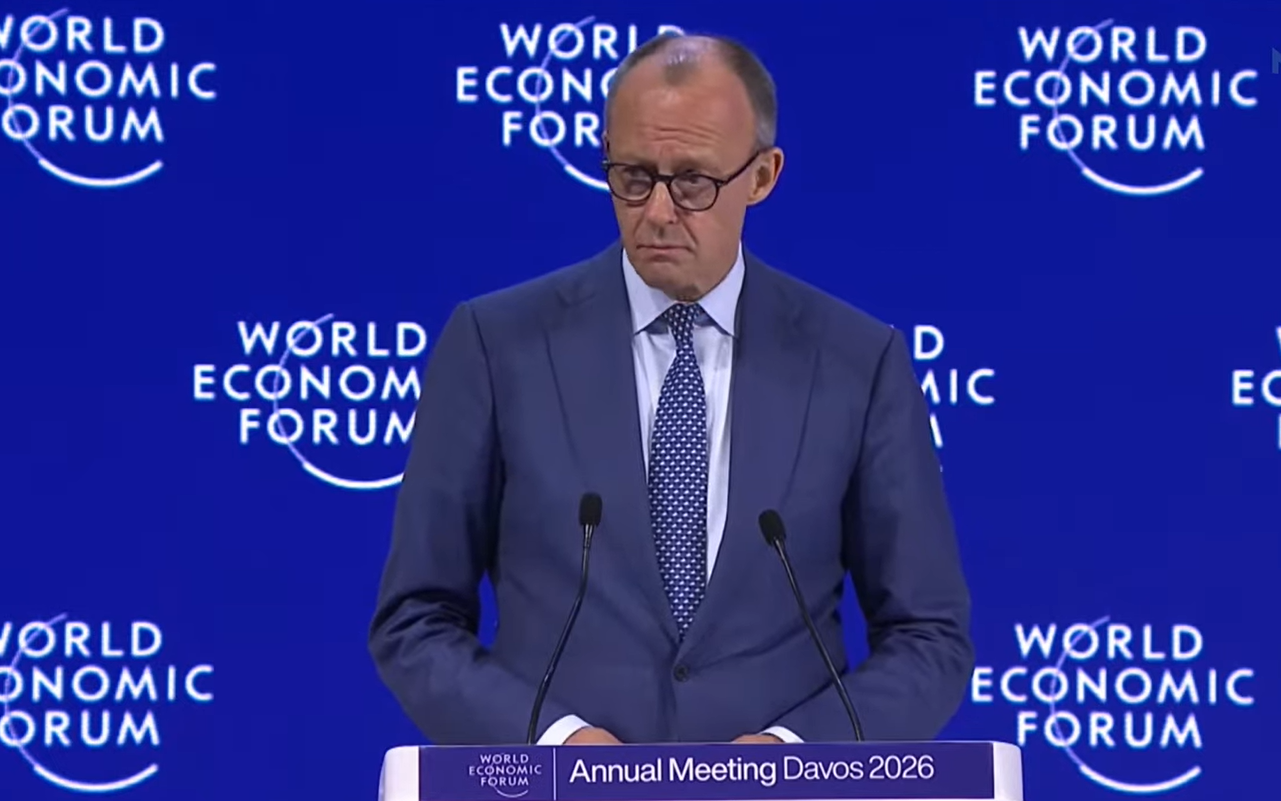
Europe in an Age of Power Politics. What Chancellor Friedrich Merz Said in Davos
The speech delivered by German Federal Chancellor Friedrich Merz at the annual session of the World Economic Forum in Davos on 22 January 2026 sounded like a deliberate attempt to give the European audience a clear and uncompromising framework for understanding the current moment. Against the backdrop of escalating transatlantic tensions, disputes surrounding Greenland, tariff pressure from Washington, and the continuing war waged by Russia against Ukraine, Merz built his address around the idea that Europe has reached the end of a familiar era and has entered a phase of great-power competition in which strength, strategic resilience, and economic durability are decisive.
The core formula with which he opened his remarks was an acknowledgment of a new historical phase. According to Merz, the world has entered an era of great-power politics, and the international order of recent decades, anchored in rules and institutions, was imperfect even at its height but has now been fundamentally shaken. This framing matters not as rhetoric but as a conscious rejection of Europe’s long-standing habit of viewing security and development primarily through procedures, norms, and interdependence. Merz made clear that rules still matter, but they can no longer serve as the sole foundation for assessing threats or planning the future.
Substantively, his speech stood out because he linked global change to several simultaneous sources of pressure. He identified Russia’s aggression against Ukraine as a decisive turning point, while also pointing to China’s growing power and the transformation of American foreign policy behavior. In the German context, this combination signals an effort to preserve the alliance with the United States without ignoring the increasingly hard-edged nature of American policy, while at the same time strengthening Europe’s capacity for independent action without breaking the transatlantic bond.
One phrase in particular drew attention across European media. Merz stated that a world in which “only power counts” is a dangerous one. Within the logic of his speech, this was both a critique of coercive practices in international affairs and a warning to Europe that ignoring this reality would be irresponsible. He thus articulated two positions at once. On the one hand, he rejected power politics as a normative principle. On the other, he argued that Europe must learn to operate effectively in an environment where power politics is becoming a preferred instrument for other global actors.
The broader Davos context intensified the resonance of these remarks. The forum took place shortly after a high-profile appearance by US President Donald Trump and amid controversy over Greenland, which many Europeans viewed as a demonstration of a new level of pressure from Washington. Trump had earlier threatened tariffs against European partners over the issue, later speaking of a tentative understanding and announcing a withdrawal of tariff threats. European leaders, however, emphasized that questions of sovereignty were not subject to bargaining and must be decided by Denmark and Greenland themselves.
Against this backdrop, Merz’s intervention was notably pragmatic rather than abstract. He effectively warned that the sudden introduction of new tariffs would undermine the foundations of transatlantic relations and create a situation in which Europe would be forced to respond collectively, calmly, deliberately, and firmly. This formulation combined several objectives. It signaled readiness for countermeasures, necessary for deterrence. It preserved space for negotiation, essential for avoiding a trade conflict. And it underscored the need for a unified European stance, which Berlin increasingly views as indispensable amid internal debates within the European Union over the depth and pace of integration.
A symbolic detail further reinforced the message. Merz had been expected to hold a bilateral conversation with Trump on the sidelines of the forum, but the meeting did not take place due to delays in the American president’s arrival. Even this episode illustrated a broader point implicit in Merz’s speech. In the era he described, diplomatic rituals and carefully planned formats are increasingly overtaken by improvisation, demonstrations of leverage, and messaging aimed at domestic audiences. For Europe, this means developing a stable strategic line that does not depend on whether a particular meeting happens or a tactical compromise is reached on a given day.
Read as a policy blueprint, Merz’s address pointed toward several parallel efforts. First, it called for strengthening Europe’s capacity to defend its interests, with security understood far beyond the military domain. This encompasses supply chains, technological autonomy, investment in critical infrastructure, and the resilience of financial and industrial systems. Second, it reframed economic growth as a geopolitical instrument. In Merz’s logic, competitiveness ceases to be a theme reserved for business forums and becomes a prerequisite for political agency. Third, it rejected a false choice between alignment against the United States and subordination to it. Europe, in his view, should remain a close ally of Washington while speaking the language of concrete interests and capabilities rather than moral expectations.
The form of the speech itself was also noteworthy. By Davos standards it was relatively concise, lasting roughly twenty-five minutes, yet its density of meaning gave it greater impact than many longer interventions. It coincided with a moment of heightened tension, when European elites were searching for a coherent response to American tariff threats, the Arctic debate, and the broader shift in global politics.
The Arctic dimension, even when not foregrounded explicitly, formed part of the broader equation. The Greenland issue had become a test of Europe’s ability to defend the principle of sovereignty while addressing security concerns in northern regions where strategic competition is intensifying and logistics and infrastructure are gaining importance. At the same time, it tested whether the European Union could act as a unified actor when pressure was directed at individual capitals rather than institutions as a whole. The prevailing European reaction underscored a willingness to discuss security while drawing a firm line around sovereignty.
In the end, Merz’s Davos speech amounted to an attempt to provide Europe with a clear structure for action in the near term. He described a world that is more confrontational and less predictable, while emphasizing that Europe is not a passive object of events. According to his message, Europe retains the capacity to shape its future if it mobilizes its advantages and acts with unity. This perspective shifts the European debate from emotion to obligation. If the foundations of the international order have been shaken, Europe’s task is not to lament the change, but to construct a new balance in which its interests are secured by real capabilities rather than declarations.
Related Articles
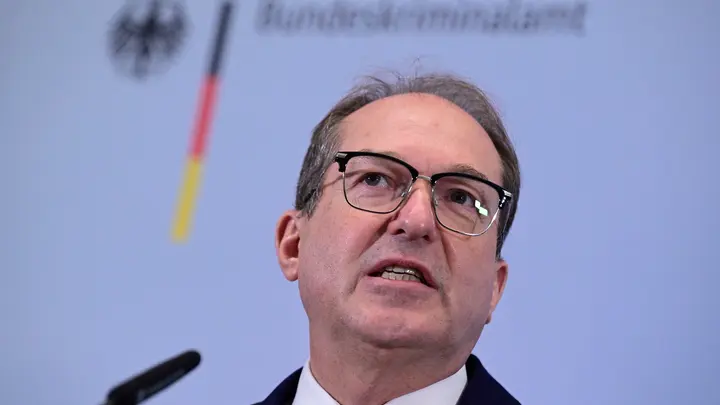
Germany Prepares for a New Reality as Intelligence Services Warn of Sabotage and Assassination Risks
24 July 2026
Read more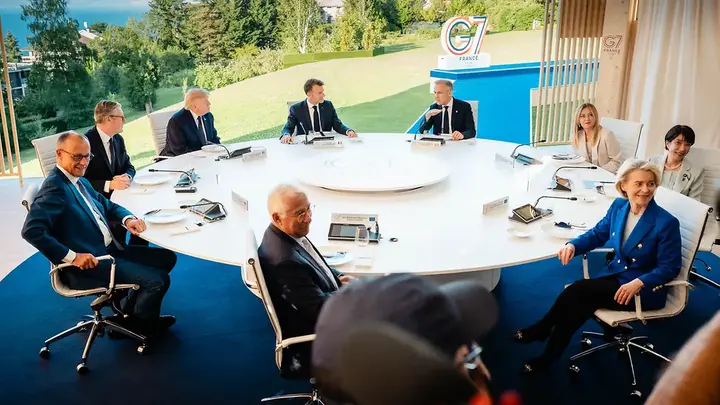
Саммит G7 во Франции: мировые лидеры перед лицом новой эпохи глобальных вызовов
17 June 2026
Read more
Germany Dramatically Expands Military Spending: Berlin Prepares for a New Era of European Security
23 May 2026
Read more
Munich Security Conference 2026
10 February 2026
Read more