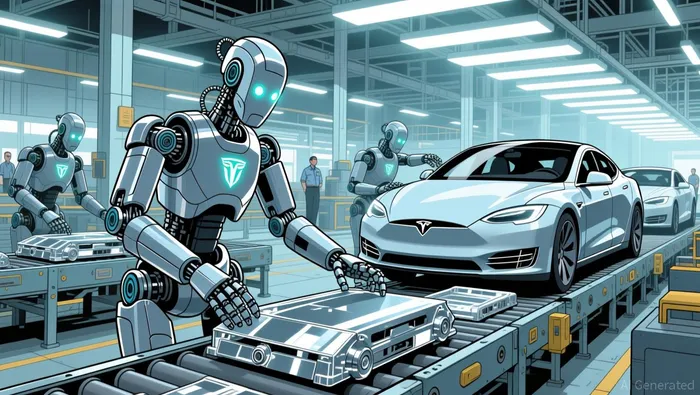
Tesla to discontinue Model S and X and deepen pivot toward AI and robotics

US electric-vehicle maker Tesla said it will discontinue its Model S and Model X vehicles and invest $2bn in Elon Musk’s xAI, marking a strategic shift away from cars toward artificial intelligence and robotics. The announcement followed the company’s first-ever annual decline in revenue.
Revenue in the fourth quarter fell 3 per cent year on year to $24.9bn, broadly in line with the average analyst estimate of $24.8bn. Full-year 2025 revenue came in at $94.8bn, also down 3 per cent from the previous year.
Tesla said it had agreed to invest $2bn in xAI as part of a January funding round, despite lukewarm shareholder backing for the move. Elon Musk stated that production of the premium Model S and Model X would end next quarter, while the company’s California factory would be converted to produce its Optimus humanoid robot, with a target output of up to 1 million units per year. Musk acknowledged that the decision was “slightly sad” but said it reflected Tesla’s broader shift toward an autonomous future.
At the same time, Tesla confirmed that its long-delayed Roadster sports car is scheduled to launch in April.
Chief financial officer Vaibhav Taneja said the company plans to spend more than $20bn this year on expanding factory capacity and building AI infrastructure. Adjusted net income fell 16 per cent in the fourth quarter to $1.8bn, beating Wall Street expectations. Net income, which includes stock-based compensation and losses on digital assets, dropped 61 per cent to $840mn.
Tesla shares rose as much as 4.8 per cent in after-hours trading, though gains were pared as Musk and senior executives later spoke with analysts.
The company has been under pressure following US President Donald Trump’s decision to cancel a series of EV incentive programmes, as well as declining sales in the US and Europe amid customer backlash against Musk’s political positions and support for far-right parties.
As vehicle sales weakened, Musk has increasingly staked Tesla’s future on self-driving Cybercabs and AI-enabled humanoid robots. The company has begun describing itself as “a physical AI company”.
The closer alignment with xAI follows a non-binding shareholder resolution in November calling for such an investment. While the proposal received more votes in favour than against, the combined number of abstentions and opposing votes indicated that a majority of shareholders were not fully supportive. Tesla’s general counsel said at the time that the high level of abstentions required further consideration before a final decision.
SpaceX has already invested $2bn in xAI as Musk seeks additional funding for the capital-intensive AI business.
In 2025, Tesla lost its position as the world’s largest EV manufacturer to China’s BYD. The company delivered 418,227 vehicles in the fourth quarter, down 16 per cent from a year earlier and below market expectations of 423,000 units. In Europe, the decline was even sharper, with new registrations falling 21 per cent amid intense competition from both Chinese and western rivals.
Revenue from the sale of regulatory credits to other automakers fell 22 per cent year on year in the quarter to $542mn. Last year, the US government eliminated penalties for failing to meet emissions standards, effectively weakening the credit trading schemes.
Tesla also said it plans to roll out its Cybercabs in seven additional US cities by summer, following launches in San Francisco and Austin, Texas. Musk claimed the company expects to secure regulatory approval for its “full self-driving” software in Europe and China next month. For the first time, Tesla disclosed the number of full self-driving subscriptions, which rose 38 per cent during the quarter to 1.1 million.
Despite its name, the full self-driving system still requires a human driver to remain in the seat and maintain full attention. Musk’s claims about the technology continue to face scrutiny from US road safety regulators.
Despite Tesla’s weak financial performance, Musk has scored a series of legal victories over his controversial pay packages, reinforcing his control over the company. In November, shareholders approved a new stock award that could be worth up to $1tn if ambitious performance targets are met. Last month, a Delaware court reinstated a $56bn compensation package that had previously been struck down as excessive.
Tesla’s operating margin for the quarter declined to 5.7 per cent from 6.2 per cent a year earlier.
Related Articles
Artificial Intelligence Enters a New Era
27 July 2026
Read more
Agentic AI: Why It Is Poised to Become the Defining Technology of the Coming Years
22 July 2026
Read more
Саммит G7 во Франции: мировые лидеры перед лицом новой эпохи глобальных вызовов
17 June 2026
Read more
China Against the System: How Beijing Is Preparing for an Era of Great Global Confrontation
23 May 2026
Read more