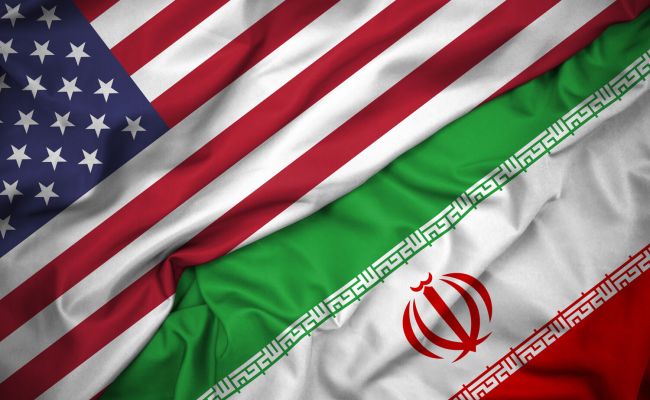
The United States and Iran in January 2026
.png "Department of Strategic Monitoring")
The United States and Iran in January 2026: Crisis Architecture, Escalation Dynamics, and the Diplomatic Deadlock
A Systemic Crisis Instead of a Situational Confrontation
The end of January 2026 finds relations between Washington and Tehran in a state of deep structural crisis, in which traditional mechanisms of deterrence and diplomacy are showing increasing dysfunction. The confrontation has ceased to be a sequence of isolated incidents or negotiation cycles—it has crystallized into a stable conflict system with its own internal logic of development. Within this system, military demonstrations, nuclear advances, domestic political processes, and regional confrontation are intertwined to such a degree that any action immediately resonates across all levels, creating an effect of “escalatory feedback.” It is precisely this systemic character that makes a return to “simple negotiations” virtually impossible without a prior change in the very conditions of interaction.
Strategic Demonstration of Force: A Theater of Signals with an Unpredictable Third Act
The deployment of a carrier strike group led by the USS Abraham Lincoln into the Persian Gulf and adjacent waters is not merely a repetition of a familiar pressure scenario. In the context of early 2026, this demonstration acquires a multidimensional meaning, operating simultaneously across several operational planes.
Military-strategic dimension:
The presence of an aircraft carrier provides the United States with what can be described as “escalatory dominance”—the ability to control the intensity of the confrontation. This is an instrument not so much for delivering an immediate strike as for shaping an environment in which Iran is forced to continuously calculate the risks of retaliation. The carrier strike group embodies the threat of limited but highly precise use of force—for example, against elements of nuclear infrastructure, IRGC command centers, or oil-related facilities. Crucially, this demonstration occurs against the backdrop of Iran’s accumulated anti-access/area denial (A2/AD) capabilities, which include anti-ship missiles, kamikaze drones, and mini-submarines. Thus, the carrier’s presence is both a test of the effectiveness of these deterrence systems and an attempt to neutralize them through presence alone.
Political-psychological dimension:
For the domestic U.S. audience, particularly in the run-up to the 2026 midterm elections, the military demonstration serves as confirmation of the administration’s “hard line.” It neutralizes criticism from Republican opponents accusing the government of weakness in the face of the Iranian threat. For regional allies—Israel, Saudi Arabia, and the UAE—it signals the continuity of U.S. security commitments, which is especially important amid the ongoing normalization of relations between Tehran and several Arab states. For Iran itself, the demonstration reinforces the narrative of “American hostility,” which the leadership uses to mobilize the population and justify military expenditures.
Economic subtext:
The threat of blocking the Strait of Hormuz or attacking oil infrastructure remains a constant destabilizing factor for energy markets. The buildup of military presence is intended, on the one hand, to secure maritime communications, and on the other, it raises insurance premiums and fuels volatility by its mere existence. In the context of global economic instability in the mid-2020s, this factor becomes a significant lever of pressure not only on Iran but also on consumers of Iranian oil, primarily China.
Iran’s response strategy is based on the principle of “asymmetric deterrence.” Instead of direct fleet-to-fleet confrontation, Tehran employs:
- The “swarm” strategy—creating multiple threats via proxy groups in Iraq, Syria, Yemen, and Lebanon, capable of attacking U.S. interests in a dispersed manner with minimal attribution.
- Cyber and hybrid operations against critical infrastructure of the United States and its allies.
- Demonstrative missile and drone launches near U.S. vessels, increasing the risk of accidental incidents.
- Acceleration of the nuclear program as an instrument of strategic coercion.
Thus, the U.S. military demonstration does not lead to immediate war, but it narrows the corridor for maneuver, increasing the probability of an incident with unpredictable consequences.
Diplomacy in the Shadow of the Sword: Why Direct Talks Have Become a Political Taboo
Public statements by both sides create the impression of a complete diplomatic deadlock. Iran’s foreign minister categorically denies requests for negotiations, labeling dialogue under threat of force as “humiliating.” The U.S. administration, in turn, insists that the “window of opportunity” for a deal is rapidly closing, accompanying this claim with ultimatum-like language. Yet behind this façade exists a complex network of informal channels and mediation efforts.
Turkey’s role as a mediator, articulating a “step-by-step approach,” is particularly revealing. Ankara proposes not a comprehensive settlement of all disputes (the nuclear program, regional activity, human rights, ballistic missiles), but their sequential, phased resolution. This approach acknowledges the political impossibility of a “grand bargain” under current conditions. For Iran, gradualism allows it to save face—concessions can be framed not as capitulation under pressure but as exchanges within a reciprocal process. For the United States, it provides a mechanism to demand verifiable actions before granting meaningful sanctions relief.
The fundamental problem, however, lies in a crisis of basic trust. Events of previous years—the unilateral U.S. withdrawal from the JCPOA in 2018, a series of covert and overt strikes on Iranian targets (the killing of General Soleimani in 2020, sabotage at nuclear facilities in 2020–2024, periodic strikes on proxy bases)—have created a conviction in Tehran that any agreement with Washington is inherently unstable and can be dismantled by the next administration. From the American perspective, the dominant belief is that Iran uses negotiations merely to buy time while continuing to expand its destabilizing capabilities.
Domestic political contexts in both countries render compromise toxic. In Iran, against the backdrop of brutal suppression of mass protests (which some assessments describe as the bloodiest since the revolution), any concession to the United States would be perceived as regime weakness and could trigger renewed instability. In the United States, bipartisan consensus on Iran has shifted toward maximalism: displays of “toughness” have become an essential element of foreign policy credibility, while a return to the JCPOA or any similar framework is viewed by a significant portion of the political establishment as a mistake.
As a result, diplomacy persists only in a reduced, “shadow” format, where intermediaries transmit signals and direct contacts are limited to technical issues such as prisoner exchanges. Full-scale negotiations would require either a change in the domestic political situation in one of the countries or an external shock forcing a reassessment of confrontation risks.
The Nuclear File: From Technical Parameter to Instrument of Political Warfare
The trajectory of Iran’s nuclear program in 2024–2025 transformed it from a negotiation subject into an independent driver of escalation. Key figures—the increase in stocks of uranium enriched to 60% from 182 kg at the end of 2024 to approximately 440 kg by mid-2025—carry a dual significance.
Technical threshold:
Sixty-percent enrichment represents the last major technological barrier before weapons-grade levels (90% and above). Accumulating significant quantities of such material drastically reduces “breakout time” should a political decision be made. Expert estimates range from several weeks to several months. This creates a “red line” situation for Israel and the United States—either already crossed or about to be. At the same time, the very possibility of a rapid breakout gives Iran a powerful tool of coercion: Tehran signals that it can become a threshold nuclear state at any moment without formally crossing the line.
Political-symbolic dimension:
Each additional kilogram of 60% enriched uranium is a message addressed to multiple audiences simultaneously. To the West: “Our patience and options are running out.” To the domestic audience: “We are on the verge of a great technological achievement that will guarantee our security.” To regional rivals: “Our strategic position is changing irreversibly.” These figures feed the internal U.S. debate, where hardliners cite them as evidence of the failure of containment policy.
The situation is further complicated by the erosion of the IAEA inspection regime. Strikes on nuclear facilities (attributed to Israel or otherwise) and Iran’s retaliatory restrictions on inspector access have created “blind spots.” Uncertainty about activities at sites such as Fordow or Natanz fuels worst-case scenarios in intelligence and analytical assessments. In conditions of mutual distrust, this is a direct path to crisis driven by miscalculation or false assumptions.
Iran skillfully employs a “strategy of ambiguity”: officially denying the pursuit of nuclear weapons while continuously highlighting its technical capabilities. This allows Tehran to reap benefits close to nuclear-weapon status—heightened attention, bargaining power, deterrence—without incurring the full costs and sanctions associated with formal nuclearization.
Iran’s Internal Dynamics: How Protests Transform Foreign Policy
The wave of protests that swept Iran in 2024–2025 and was brutally suppressed by security forces is not merely a domestic affair. It has become a key factor shaping the regime’s external behavior.
The paradox of vulnerability and rigidity:
The more vulnerable the regime feels domestically, the harsher and more uncompromising it behaves internationally. Concessions to the United States amid internal repression would be perceived as an admission of weakness and could inflame protest sentiments. External confrontation thus becomes an instrument of nationalist mobilization and rally-around-the-flag consolidation. The image of an external enemy (the United States, Israel) is used to explain economic hardships and justify repression.
Shifts in elite power balance:
The violent suppression of protests strengthened the position of the security apparatus, especially the Islamic Revolutionary Guard Corps (IRGC) and its Quds Force. These structures—whose influence and budgets are directly tied to external confrontation—have a vested interest in maintaining or escalating tensions. Their economic empires, controlling large segments of the Iranian economy, have adapted to sanctions and in some cases benefit from them by eliminating competitors. As a result, significant segments of the ruling elite lack incentives for genuine compromise that would lift sanctions and open markets.
Generational and ideological rift:
The protests exposed a deep divide between a large portion of the young, urban population and the conservative ideological apparatus. This rift forces the regime to seek legitimacy not through a social contract but through messianic, anti-imperialist rhetoric. Foreign policy becomes an extension of internal ideological struggle, rendering it highly rigid.
For the United States, Iran’s internal crisis creates a dilemma: regime weakness presents an opportunity for pressure, yet an unstable Iran with nuclear ambitions may be even more dangerous. American threats and demonstrations of force, intended to pressure the regime, often strengthen its hardest-line faction by validating claims of an “external threat.”
The Regional Puzzle: A Multilevel Game Involving Third Parties
The U.S.–Iran conflict has long transcended a bilateral framework. It is embedded in a complex regional system of alliances and rivalries, where each action has multiple addressees.
Israel as an escalation driver:
Tel Aviv pursues a policy of preventing Iran’s nuclear potential at any cost. A series of strikes on Iranian targets attributed to Israel creates a dual dilemma for the United States. On one hand, these actions weaken Iran without direct U.S. military involvement. On the other, each strike narrows diplomatic space, forcing Tehran to demonstrate resolve and retaliate—often via proxies against U.S. interests. Washington is thus caught between restraining an ally (risking bilateral friction) and tolerating its actions (risking entanglement in a broader war).
Normalization between Iran and Arab monarchies (Saudi Arabia, UAE), initiated in 2023, adds another layer of complexity. On one hand, it reduces the risk of direct regional war between Sunni monarchies and Shiite Iran. On the other, it weakens a unified pressure front against Tehran. Saudi Arabia now has a vested interest in Iranian stability, as conflict would jeopardize its economic projects and security. This complicates U.S. coordination with traditional allies.
China and Russia function as counterweights to U.S. pressure. Beijing, as the largest consumer of Iranian oil, seeks regional stability while also benefiting from weakened U.S. influence. Moscow uses the Iranian crisis as a distraction and leverage against the West. Both countries block tougher sanctions at the UN Security Council and provide Iran with political cover and access to technology and financial channels, mitigating the impact of U.S. sanctions. This gives Tehran confidence that it will not be completely isolated.
Proxy groups (Hezbollah in Lebanon, the Houthis in Yemen, Shiite militias in Iraq and Syria) represent both strength and vulnerability for Iran. They allow Tehran to strike adversaries while maintaining ambiguity and avoiding direct responsibility. At the same time, their actions are often autonomous and may trigger escalation at moments when Tehran prefers restraint. Control over these groups becomes increasingly difficult as they institutionalize and embed themselves in local contexts.
Economic Sanctions: From a Pressure Tool to a Structural Reality
The sanctions regime against Iran, tightened over more than a decade, has undergone a qualitative transformation. From an instrument of coercion aimed at forcing negotiations, it has become a permanent feature of the global economy and a driver of parallel financial and trade systems.
Adaptation and habituation:
Although Iran’s economy suffers enormous losses, it has adapted to life under sanctions. Complex evasion schemes have emerged via third countries (UAE, Turkey, Iraq, Afghanistan), along with cryptocurrency use and barter arrangements. Security structures (IRGC) have built sanction-based economic empires controlling smuggling and black markets. Thus, sanctions simultaneously weaken the state budget and population while strengthening the most radical and corrupt elements of the regime.
Global costs:
Sanctions against Iran generate friction in the global economy, raising energy prices, disrupting supply chains (particularly for China), and imposing compliance costs on companies. This fuels growing dissatisfaction among traditional U.S. allies in Europe and Asia, whose firms lose market access. In the long run, sanctions incentivize the creation of financial mechanisms outside the dollar system, undermining U.S. hegemony.
The negotiation paradox:
Any potential deal would involve phased sanctions relief. Yet re-imposing sanctions in the event of Iranian noncompliance is politically difficult, especially if European and Asian companies reinvest in Iran during the deal’s lifespan. This makes sanctions a blunt instrument—easy to impose, hard to lift, and even harder to re-impose. Iran understands this dynamic and рассчитывает that any agreement will be largely irreversible with respect to sanctions.
Scenarios for 2026: Between Managed Tension and Drift Toward War
Based on the current crisis architecture, several plausible trajectories for 2026 can be identified.
Scenario 1: “Managed Confrontation” (most likely)
Tensions remain high, but direct war is avoided. The United States maintains an enhanced military presence; Iran continues expanding its nuclear potential and supporting proxy groups. Periodic incidents occur (drone attacks on ships, strikes on bases in Syria/Iraq, cyberattacks) but are contained short of full escalation. Mediated talks continue without breakthrough. This scenario is sustained by mutual fear of war’s unpredictability and the absence of a viable military solution for the United States (occupation of Iran is impossible; limited strikes would only strengthen the regime). Risk: accumulation of incidents may lead to “escalation by mistake.”
Scenario 2: “Limited Military Campaign”
One party—most likely Israel with tacit U.S. support, or the United States in response to a major provocation—conducts a series of strikes on key Iranian targets: nuclear facilities (Natanz, Fordow, Isfahan), IRGC assets, missile production sites. The aim is to roll back the nuclear program for years and demonstrate regime vulnerability. Iran responds asymmetrically: mass missile and drone attacks via proxies against U.S. bases in the region, Israel, and Saudi oil facilities; attempts to disrupt the Strait of Hormuz. The conflict remains limited in duration (weeks) and geography (Middle East) but inflicts serious damage on the global economy. Under international pressure, parties return to negotiations with even deeper mistrust.
Scenario 3: “Diplomatic Breakthrough Through Crisis”
A severe incident (e.g., a major terrorist attack on U.S. interests with proven Iranian involvement or a direct Iranian strike on Israel) creates a perception that war is inevitable. Facing catastrophe, key actors (U.S., Iran, plus EU, China, Russia) convene urgently for de-escalation. The shock compels concessions unacceptable under normal circumstances. A situation analogous to the Cuban Missile Crisis may emerge, leading to a new, more stable deterrence framework—possibly with Iranian acceptance of nuclear limits in exchange for lifting core sanctions and security guarantees. The probability is low but real.
Scenario 4: “Internal Collapse or Transformation of Iran”
Continued economic pressure, protest sentiment, and legitimacy crisis lead to major internal changes. This could result either in leadership change toward more pragmatic forces open to compromise, or in consolidation of ultra-conservatives who harden policy. In the first case, a window for renewed negotiations opens; in the second, confrontation intensifies, though Iran may become a more predictable (albeit harsher) adversary.
Conclusion: Why “Simple Negotiations” Are Impossible and What Is Required to Resume Them
The current deadlock in U.S.–Iran relations is not the result of bad faith or lack of diplomatic channels. It stems from a deep structural problem in which:
- The conflict has become a self-sustaining system. Military-industrial complexes, security structures, sanctions bureaucracies, and ideological apparatuses in both countries (to differing degrees) have vested interests in continued confrontation.
- Domestic politics override foreign policy. For both sides, external concessions are perceived as threats to internal stability and legitimacy.
- The regional architecture has grown more complex. The involvement of multiple actors (Israel, Arab monarchies, Turkey, Russia, China) makes any bilateral agreement fragile unless third-party interests are accounted for.
- Trust has been exhausted. A history of violations and unilateral withdrawals has created a situation where any promise requires unattainable guarantees.
To resume substantive negotiations, preliminary conditions are required:
- Creation of minimal “trust capital” through synchronized, small but verifiable steps (e.g., freezing enrichment above 60% in exchange for partial asset unfreezing).
- Domestic political preparation in both countries so compromise is not framed as capitulation.
- Expansion of the negotiation format to a regional level, involving Iran’s neighbors, enabling comprehensive security discussions beyond the nuclear issue.
- Clear definition of red lines and de-escalation mechanisms to prevent war by mistake.
January 2026 demonstrates that pressure without diplomacy leads to escalation, while diplomacy that ignores power realities is ineffective. Exiting this labyrinth requires not merely returning to the negotiating table, but rethinking the logic of interaction itself—so that one side’s security is not achieved through the other’s sense of existential threat. Until such a rethinking occurs, the region and the world will continue balancing on the edge of a managed crisis, where the risk of slipping into a major war will steadily grow with each new cycle of confrontation.
Related Articles

Artificial Intelligence Enters a New Era
27 July 2026
Read more
Agentic AI: Why It Is Poised to Become the Defining Technology of the Coming Years
22 July 2026
Read more
Саммит G7 во Франции: мировые лидеры перед лицом новой эпохи глобальных вызовов
17 June 2026
Read more
China Against the System: How Beijing Is Preparing for an Era of Great Global Confrontation
23 May 2026
Read more