Muscat Talks A Cautious Step in the Deadlock of Tensions Between Washington and Tehran
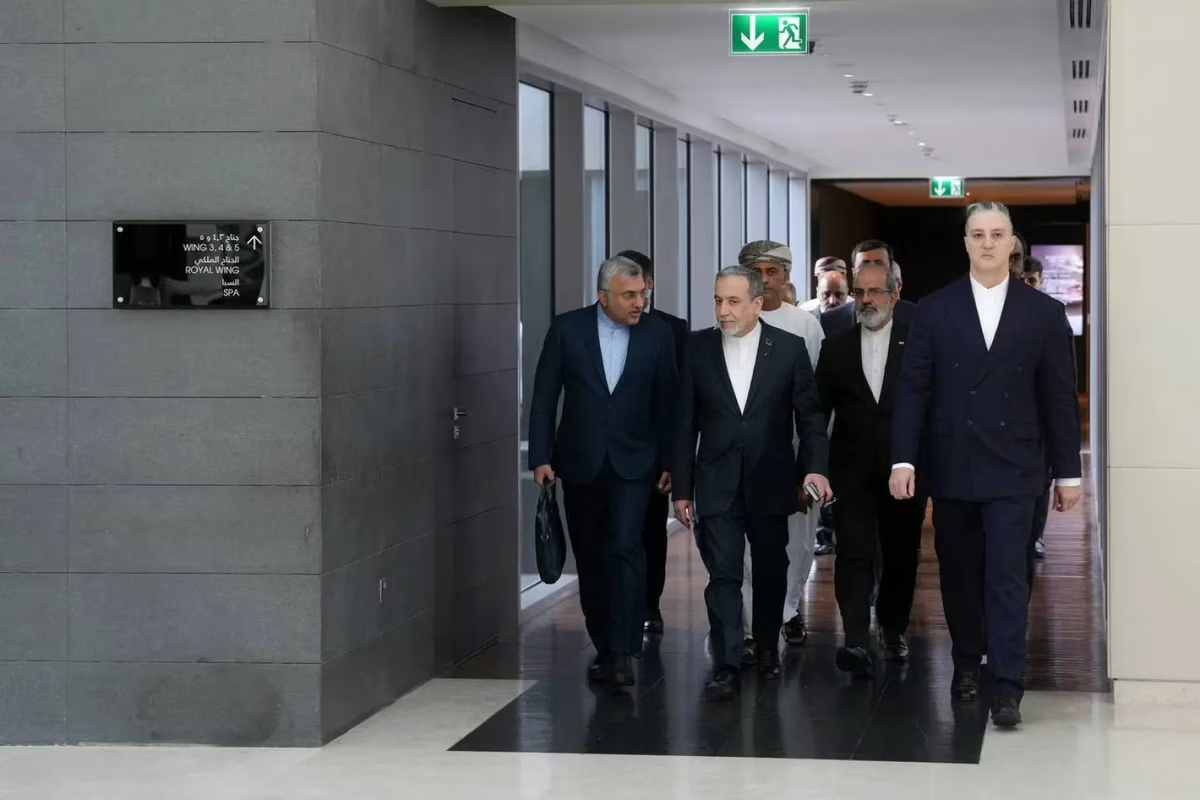
On February 6, 2026, the Omani capital Muscat hosted a long-awaited round of indirect negotiations between representatives of the United States and the Islamic Republic of Iran, marking the first attempt at dialogue in several months between two countries whose relations had recently hovered on the brink of open military confrontation.
The meeting took place at Al Alam Palace under Omani mediation and followed intense diplomatic preparations that nearly collapsed on February 4 amid mutual ultimatums. The Iranian delegation was led by Foreign Minister Abbas Araghchi, while the American side was represented by U.S. presidential envoy for Iran Steve Witkoff. The indirect format of the talks, conducted through intermediaries, underscored the deep mistrust that continues to define relations between Washington and Tehran.
The central issue was Iran’s nuclear program, particularly uranium enrichment at levels approaching weapons grade. According to Western media reports, Tehran refused to concede on Washington’s main demand for a full suspension of enrichment activities. Iranian officials stressed that any limitations on their nuclear program must be accompanied by the immediate lifting of economic sanctions and the provision of security guarantees.
Despite the absence of a substantive breakthrough, the negotiations ended with an agreement to continue dialogue. Foreign Minister Araghchi described the meeting as a good beginning but noted that final decisions would have to be taken in the capitals, a reference to the need for approval from Iran’s supreme leadership. Oman’s foreign minister characterized the consultations as very serious and expressed hope that technical negotiations could resume in the near future.
The talks unfolded against a backdrop of escalating regional tensions. In late January and early February 2026, the United States deployed significant military assets to the Persian Gulf, including a carrier strike group. Iran conducted a series of provocative maneuvers near American vessels and warned that any attack on its territory would trigger a regional war. Amid these mutual threats, the Muscat negotiations were widely seen as one of the last opportunities to prevent further escalation.
UN Secretary General António Guterres welcomed the resumption of dialogue, calling it an important step toward peaceful settlement and urging both sides to show flexibility. China also voiced support for Oman’s mediation and signaled readiness to assist in reviving diplomatic engagement on nuclear issues.
Experts note that the February 6 talks did not resolve the fundamental disagreements but helped establish a fragile framework for continued consultations. The main challenge remains overcoming years of accumulated mistrust shaped by sanctions, military incidents, and ideological confrontation. Iran insists on recognition of its right to a peaceful nuclear program and high-level enrichment, while the United States and European allies demand a return to the parameters of the 2015 nuclear agreement.
The next round of negotiations is scheduled for late February 2026. Its outcome will depend on both sides’ willingness to compromise and on domestic political dynamics in Washington, where Congress remains skeptical of any deal with Tehran, as well as in Iran, where conservative forces criticize engagement with the United States.
The Muscat talks demonstrated that diplomatic channels remain open even under extreme tension. Yet the path from a good beginning to a durable agreement is likely to be long and difficult, as geopolitical interests, historical grievances, ideological differences, and questions of national dignity continue to shape the negotiating table. The future of the region may ultimately depend less on military power and more on the ability of diplomats to transform fragile de-escalation into a stable peace process.
Related Articles

Artificial Intelligence Enters a New Era
27 July 2026
Read more
Agentic AI: Why It Is Poised to Become the Defining Technology of the Coming Years
22 July 2026
Read more
Саммит G7 во Франции: мировые лидеры перед лицом новой эпохи глобальных вызовов
17 June 2026
Read more
China Against the System: How Beijing Is Preparing for an Era of Great Global Confrontation
23 May 2026
Read more