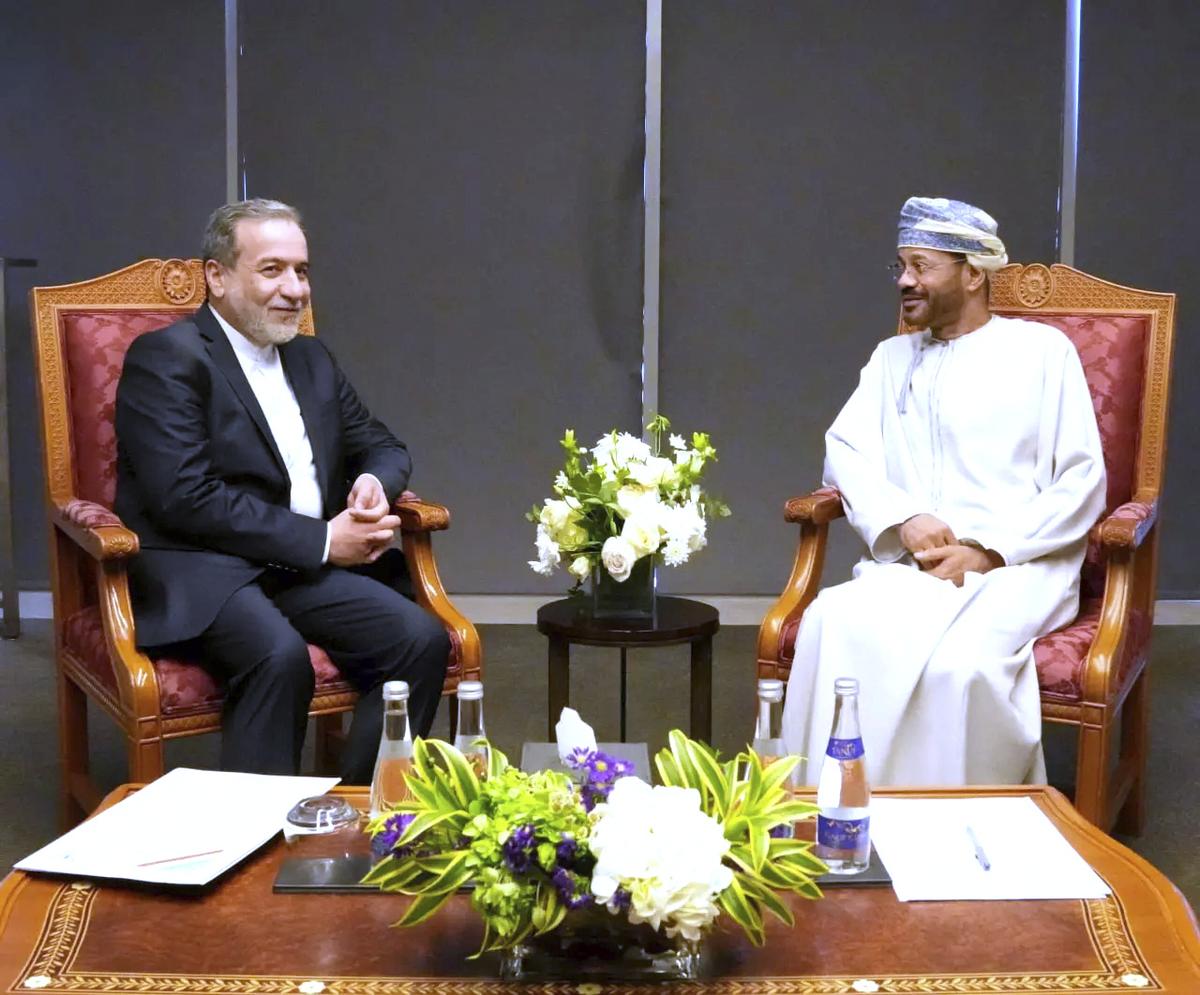
US–Iran Talks in Oman: Diplomacy Under Pressure and the Rising Risk of Escalation in the Middle East
The ongoing negotiation process between the United States and the Islamic Republic of Iran, facilitated through Omani mediation, has emerged as one of the most tense diplomatic developments of early 2026. The dialogue is unfolding against a backdrop of military signaling, escalating rhetoric, and deep mutual distrust, giving the talks the character of coercive diplomacy rather than traditional détente. International reports indicate that delegations arrived in Muscat after weeks of sharp public statements, with Washington pushing to broaden the agenda while Tehran insisted that discussions must remain limited strictly to the nuclear issue.
The United States is seeking stricter limitations on uranium enrichment levels, expanded inspection mechanisms, and verifiable monitoring frameworks designed to curb Iran’s nuclear capabilities. Analysts note that Washington aims to revive elements of the 2015 nuclear framework but in a significantly more restrictive format. At the same time, military dynamics continue to shape the negotiating environment. US naval forces remain active in the Persian Gulf region, and several Gulf states have increased air-defense readiness following a series of drone-related incidents and maritime tensions.
Iranian officials have adopted a firm stance regarding ballistic missiles and regional strategy. Representatives from Tehran repeatedly stress that missile programs are non-negotiable, framing them as a cornerstone of national defense. This position has created a structural deadlock: the United States seeks to expand the scope of negotiations to include broader security issues, while Iran attempts to narrow the framework to nuclear matters alone. Observers argue that the central struggle has shifted from the substance of any potential agreement to the very definition of what the negotiations should address.
Domestic political dynamics also shape the process. In Washington, pressure from regional allies—particularly Israel and several Gulf monarchies—has intensified calls for a more comprehensive deal that addresses Iran’s regional activities. Inside Iran, economic pressures linked to sanctions, inflation, and currency volatility complicate the leadership’s negotiating calculus. Tehran must project resilience and independence while simultaneously seeking pathways to reduce economic strain and avoid further isolation.
Diplomatic contacts are reportedly conducted indirectly through mediators, reflecting the depth of mistrust between the two sides. Oman has historically served as a discreet venue for sensitive US–Iran exchanges, and the current round continues that pattern. Sources suggest that negotiators are exploring interim measures designed to freeze elements of the crisis without committing to a sweeping formal agreement, an approach intended to stabilize the situation while preserving political flexibility for both governments.
Military signaling remains a constant backdrop. Surveillance flights and naval movements near the Strait of Hormuz have increased, underscoring the strategic importance of a corridor through which a significant portion of global oil shipments passes. Any escalation in this area could disrupt energy markets, and recent price volatility reflects investor concern about potential disruptions to supply chains. Energy analysts warn that even limited military incidents could have disproportionate effects on global pricing and shipping routes.
Regional proxy dynamics further complicate the negotiations. The United States accuses Iran of supporting armed groups across Iraq, Syria, and Yemen, while Tehran frames its actions as defensive measures aimed at countering external pressure and maintaining strategic depth. These opposing narratives add layers of complexity to the talks and make comprehensive agreements more difficult to achieve.
Despite aggressive rhetoric, both sides appear motivated to keep diplomatic channels open. Analysts suggest that Washington seeks to avoid a large-scale military confrontation amid broader geopolitical competition and multiple global crises. Iran, meanwhile, appears focused on buying time and reducing the risk of direct conflict without making concessions that could be interpreted domestically as capitulation.
Several possible scenarios are under discussion among policy observers. One outcome could involve a limited nuclear arrangement that temporarily lowers enrichment levels in exchange for partial economic relief. Another scenario envisions a collapse of negotiations followed by intensified military pressure, potentially leading to targeted strikes and retaliatory actions. A third possibility involves an informal understanding—an unpublicized compromise that stabilizes tensions without a formal treaty.
In this context, the Oman talks reflect a broader geopolitical contest in which diplomacy functions as a mechanism for managing confrontation rather than resolving it permanently. With military deployments, economic uncertainties, and regional rivalries converging, the US–Iran dialogue remains a fragile process whose trajectory will shape the strategic landscape of the Middle East in the months ahead.
Related Articles

Artificial Intelligence Enters a New Era
27 July 2026
Read more
Agentic AI: Why It Is Poised to Become the Defining Technology of the Coming Years
22 July 2026
Read more
Саммит G7 во Франции: мировые лидеры перед лицом новой эпохи глобальных вызовов
17 June 2026
Read more
China Against the System: How Beijing Is Preparing for an Era of Great Global Confrontation
23 May 2026
Read more