“Controlled War”: How the Israel–Hezbollah Front Has Become the Battlefield of the Second Phase of Regional Confrontation
The developments of the past 24 hours along the Israel–Hezbollah line can no longer be interpreted as isolated incidents or routine exchanges of fire. What is emerging is a stable configuration that, in essence, represents not a fragile ceasefire, but a structured phase of managed military pressure. This is precisely the “second phase” — the space between war and negotiations — where hostilities continue, yet full-scale war is deliberately avoided.
On the surface, the situation still carries formal signs of restraint. A ceasefire framework technically remains in place, diplomatic channels have not collapsed, and official rhetoric, though increasingly sharp, continues to operate within political boundaries. However, the operational reality tells a different story: strikes are ongoing, attacks occur daily, and the intensity of confrontation is gradually increasing.
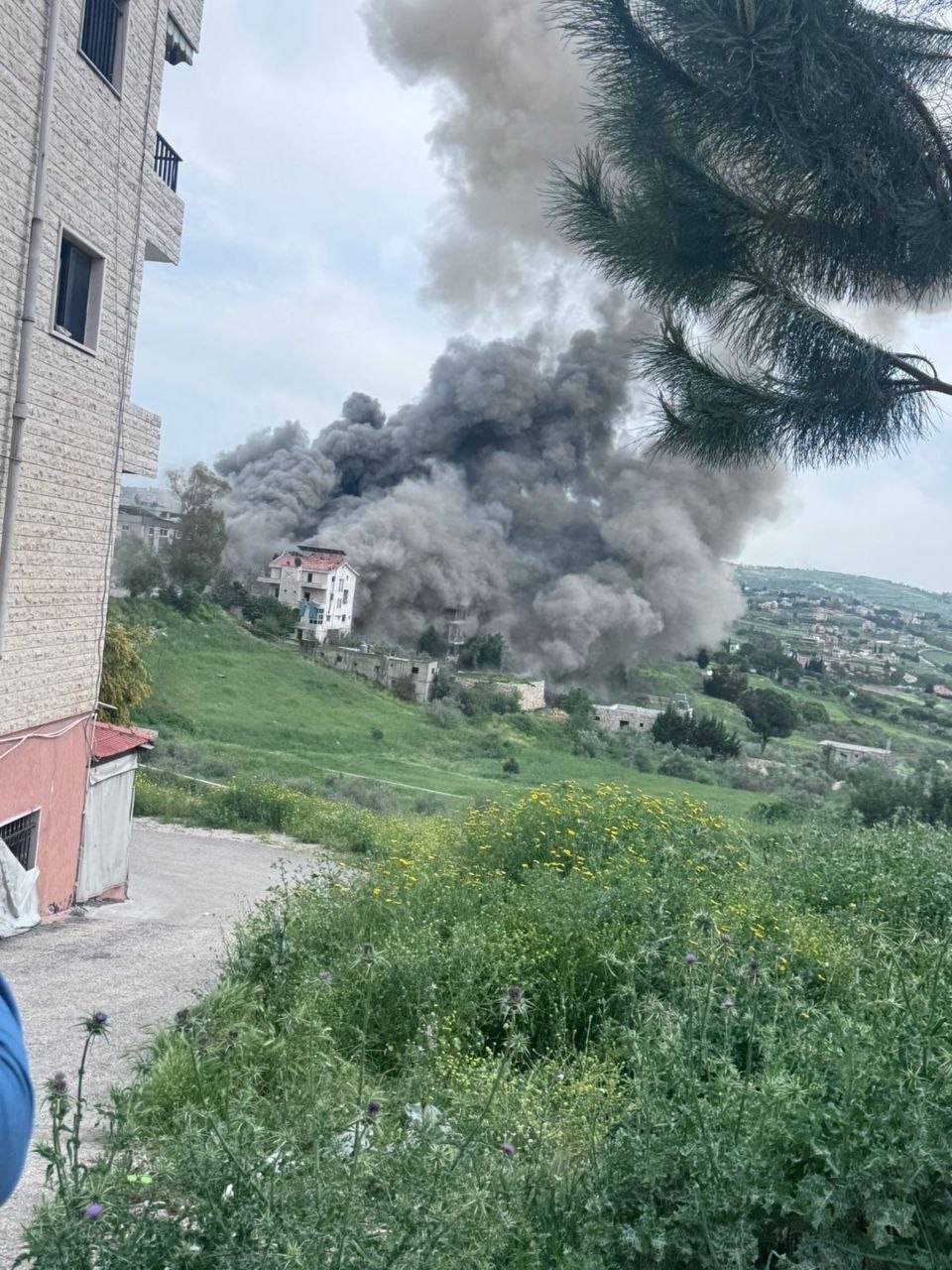
In recent hours, new launches of rockets and drones from Lebanese territory toward northern Israel have been recorded. Some were intercepted, others landed without causing significant damage. Yet the significance lies not in the immediate impact, but in the pattern: these are not sporadic actions, but a sustained rhythm of pressure. Israel interprets them as systematic violations of the ceasefire framework.
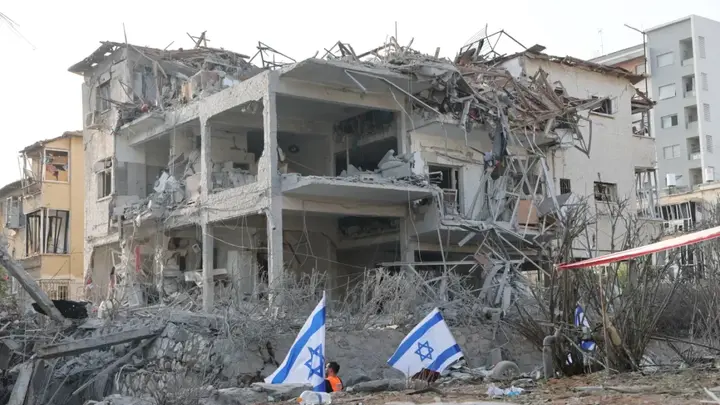
Israel’s response has moved beyond reactive strikes into a more structured operational posture. What is unfolding is not a series of limited retaliatory actions, but an authorized campaign of calibrated force. The Israeli military employs a combination of airstrikes, artillery fire, drones, and intelligence-guided targeting. The objectives are clear: launch platforms, weapons depots, mobile units, and logistical networks.
Equally important is the expanding geography of these strikes. Operations are no longer confined to immediate border areas. They extend deeper into southern Lebanon and, in certain cases, into populated zones. This shift reflects a transition from deterrence to gradual displacement — an attempt to degrade Hezbollah’s operational depth and push its capabilities away from the border.
Casualties have been reported in southern Lebanon, alongside significant losses among Hezbollah fighters. There are also repeated strikes against transport assets — trucks, motorcycles — and targeted eliminations of individual operatives. This pattern suggests a systematic effort to dismantle the mobility and flexibility that underpin Hezbollah’s asymmetric warfare model.
Formally, the ceasefire remains in place. It has been extended, and both sides continue to reference it. In practice, however, it has lost substantive meaning. Each side accuses the other of violations, while simultaneously conducting preemptive or retaliatory actions. Israel frames its operations as preventive necessity; Hezbollah increasingly treats the ceasefire as irrelevant.
This creates a paradoxical structure: legally, there is a ceasefire; operationally, there is continuous combat. This condition can best be described as “controlled war” — a conflict in which violence is regulated but not suspended.
The broader context of recent weeks reinforces this interpretation. Since March 2026, escalation has intensified: thousands of casualties in Lebanon, heavy losses among Hezbollah forces, and an expanding operational footprint. Israel maintains a buffer zone in southern Lebanon and conducts near-daily strikes. There have been episodes involving strikes on Beirut and large-scale air campaigns targeting dozens of sites within short timeframes.
This raises a critical question: why has the conflict not yet escalated into full-scale war despite these conditions?
The answer lies in the logic of the second phase. Neither side currently seeks an immediate large-scale war. However, both actively use limited military action as a tool of strategic pressure. Israel demonstrates readiness to escalate while avoiding thresholds that would trigger broader regional intervention. Hezbollah, for its part, maintains the capacity to strike while refraining from total confrontation.
A central factor is the integration of this conflict into a wider regional framework. Hezbollah does not operate in isolation; it is embedded within a broader system in which Iran plays a pivotal role. This means that any sharp escalation would not remain localized—it would immediately expand into a regional confrontation.
This interconnectedness explains the current level of control. Escalation occurs, but within boundaries. Strikes are executed, but calibrated to avoid triggering irreversible dynamics. Both sides are effectively probing limits, testing responses, and adjusting thresholds.
However, this balance is inherently fragile. Its instability stems from the absence of clearly defined rules. In a situation where the ceasefire exists only formally, any single event can act as a trigger for uncontrolled escalation. A miscalculation, an overreach, civilian casualties, or a misinterpreted signal—any of these could collapse the current equilibrium.
The informational dimension further intensifies the dynamic. Every strike, every casualty, every development is immediately amplified in the media space. Narratives are constructed, political pressures increase, and decision-making environments become more constrained. Under such conditions, even minor incidents can acquire strategic weight.
Thus, what is unfolding along the Israel–Hezbollah line should not be viewed as a standalone conflict. It is a frontline of the second phase—a phase in which war is already underway but has not yet been formally declared.
The key conclusion is clear. The current situation is not a temporary escalation or a transitional anomaly. It is a stable, though volatile, model in which sustained military engagement coexists with the deliberate avoidance of total war.
And therein lies its danger. The longer this configuration persists, the greater the probability that it will not be resolved through deliberate political choice, but rather shattered by an unforeseen event.
At that moment, a “controlled war” ceases to be controlled—and rapidly transforms into something far more consequential.