Iran Warns of a Regional War Amid U.S. Threats and European Union Decisions
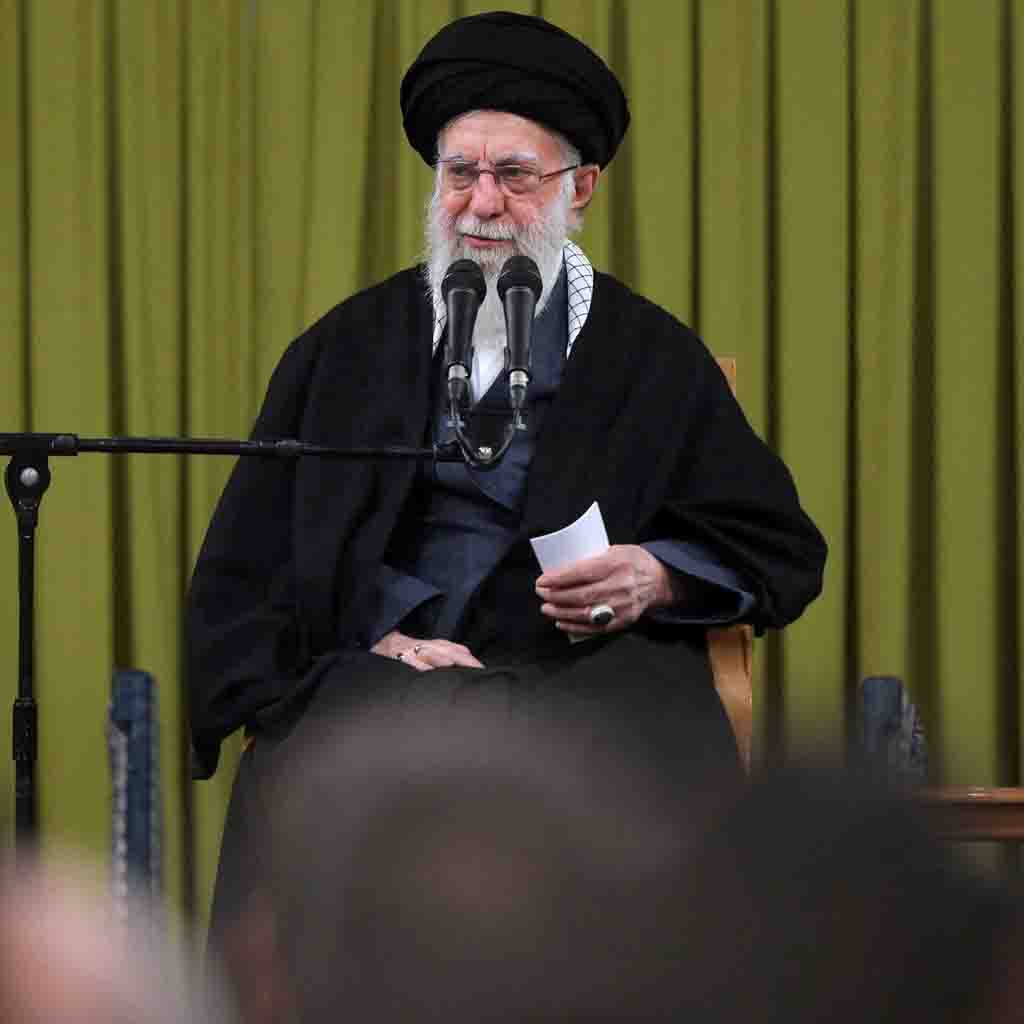
Iranian Persian-language media are widely reporting statements by Iran’s Supreme Leader Ali Khamenei issued amid heightened rhetoric from the United States and discussions of possible military preparations in the region. According to Iranian outlets, Tehran views these signals as a direct threat to national security and warns of far-reaching consequences should a military scenario unfold.
Speaking to clerics and public figures, Khamenei stated that any military strike by the United States against Iran would inevitably trigger a “regional war.” He stressed that Iran does not seek confrontation and is not the initiator of conflict, but would respond decisively to any attack. Iranian media emphasize that the statement was framed not as a rhetorical gesture, but as a direct warning aimed at U.S. decision-makers.
Commentary in Iranian outlets links the remarks to statements made by U.S. President Donald Trump, as well as reports of increased American military activity in the Middle East. These developments are interpreted in Tehran as part of a pressure campaign combining political threats with demonstrations of force. Iranian analysts argue that past experience shows that any military action against Iran would not remain limited and would rapidly expand beyond a bilateral confrontation.
At the same time, Iranian media are actively covering Tehran’s response to recent decisions taken by the European Union. Following moves in Brussels related to the designation of Iran’s Islamic Revolutionary Guard Corps as a terrorist organization, Iranian authorities announced the classification of the armed forces of EU member states as terrorist entities. Iranian sources describe this step as reciprocal and political in nature, intended as a countermeasure rather than a purely legal action.
Persian-language publications underline that Tehran interprets EU actions as political interference aligned with U.S. policy. According to this narrative, Europe is seen as moving from a mediating role toward direct involvement in a confrontational strategy, with potential repercussions extending beyond the Middle East and affecting European security itself.
Against this backdrop, Iranian commentators note that the warning about a “regional war” is addressed not only to Washington, but also to its allies. Analysts argue that continued military, economic, or political pressure increases the risk of uncontrolled escalation, potentially drawing multiple regional and international actors into a wider conflict.
Overall, the position reflected in Iranian Persian-language media conveys a firm but consistent message: Iran does not intend to start a war, but considers any strike on its territory a trigger for a broad response. In an environment of rising tensions, these statements form part of a broader picture of regional instability, where each additional external move raises the likelihood of a force-based outcome.
Related Articles

Artificial Intelligence Enters a New Era
27 July 2026
Read more
Agentic AI: Why It Is Poised to Become the Defining Technology of the Coming Years
22 July 2026
Read more
Саммит G7 во Франции: мировые лидеры перед лицом новой эпохи глобальных вызовов
17 June 2026
Read more
China Against the System: How Beijing Is Preparing for an Era of Great Global Confrontation
23 May 2026
Read more