F-35 Incident Over Iran: Emergency Landing, Strike Theories and the Hidden Implications for Air Power
.png "Department of Strategic Monitoring")
An incident involving a U.S. fifth-generation F-35 fighter following a combat mission near Iran has rapidly become one of the most closely watched and debated episodes of the current Middle East escalation. After completing its sortie, the aircraft was forced to make an emergency landing at a U.S. military base in the region. Officials from U.S. Central Command confirmed the landing and stated that the pilot was in stable condition. What initially appeared to be a technical footnote in an ongoing air campaign quickly evolved into a major strategic and informational storyline with potential long-term consequences.
Within hours of the first reports, speculation intensified that the aircraft may have sustained combat damage. Several international outlets, citing defense sources, suggested the jet could have been “hit during combat.” The language used, however, remained notably cautious. There was no confirmation that the aircraft had been shot down or lost. Instead, the narrative centered on the possibility that the fighter experienced an impact or operational disruption significant enough to compel an immediate return and precautionary landing. Such wording leaves open a wide range of scenarios — from a direct missile proximity event or shrapnel damage to sensor degradation, stealth coating impact, or systems stress accumulated during high-intensity operations.
As of now, key operational details remain undisclosed. Open sources do not confirm which F-35 variant was involved, where precisely the incident occurred, what systems may have been affected, or whether the aircraft will be repairable and returned to service. There is also no verified information about whether a specific Iranian air defense platform was responsible, or whether the event resulted from a complex combination of battlefield factors such as dense electronic warfare environments, layered radar coverage, passive detection networks, and operational tempo.
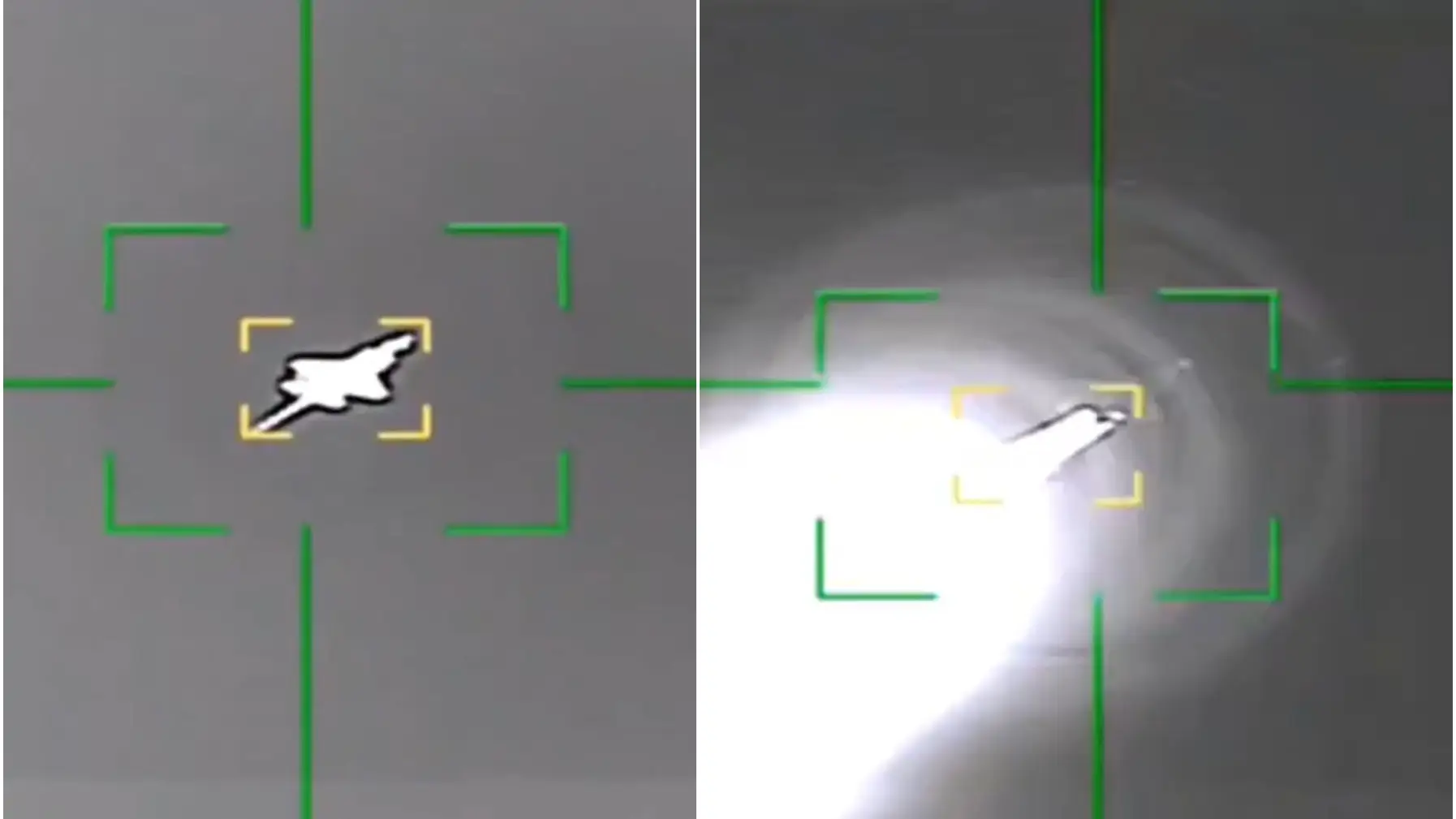
The informational dimension of the incident has been equally significant. Videos and images began circulating on social media and pro-Iranian channels claiming to show the aftermath of a strike against the aircraft. Independent open-source analysts have not yet authenticated these materials through geolocation, timestamp verification, or technical forensics. In modern conflicts, such visual narratives often emerge rapidly and can shape perceptions before official investigations conclude. As a result, analysts emphasize caution in treating these claims as established fact.
Even in the absence of definitive conclusions, the episode has already triggered serious discussion within military and strategic circles. The mere possibility that a fifth-generation stealth aircraft encountered meaningful resistance during operations over Iran is seen as a signal that advanced air defense capabilities continue to impose real operational risks. For years, stealth platforms have been associated with the ability to penetrate defended airspace with reduced exposure. Any credible indication of vulnerability — even at the level of a single incident — can influence mission planning assumptions, cost-benefit calculations, and the scale of supporting assets required for deep-strike operations.
Importantly, this does not suggest a sudden collapse of stealth effectiveness. Low observability has never meant invisibility; rather, it reduces detection range and engagement probability. However, increasingly sophisticated and layered air defense ecosystems — integrating radar diversity, passive sensing, optical tracking, and electronic countermeasures — can gradually narrow the margin of advantage enjoyed by advanced strike aircraft. If combat damage is ultimately confirmed, this case could become one of the most visible real-world illustrations of how next-generation air power interacts with evolving defensive networks.
The financial and industrial implications have also been notable. Reports about the incident coincided with heightened volatility in the share prices of major defense contractors associated with advanced aviation programs. The F-35 remains the largest multinational defense project in history, involving dozens of partner nations and long-term procurement commitments. Any high-profile operational episode affecting the aircraft inevitably carries political, economic, and reputational weight beyond the battlefield itself.
From an operational perspective, the event has reinforced the view that airspace over Iran remains contested rather than permissive. Earlier public narratives often emphasized the feasibility of sustained deep-precision strikes using stealth aircraft and stand-off weapons. The current discussion increasingly reflects a more complex reality in which high-end air campaigns face adaptive defenses, dynamic threat environments, and the constant need for tactical evolution.
For now, the most accurate formulation remains cautious. The emergency landing of a U.S. F-35 after a combat mission has been confirmed. The theory that the aircraft may have sustained combat damage is widely discussed and considered plausible but has not been officially validated. Claims that the jet was shot down or destroyed are not supported by reliable evidence. Until the investigation is completed and technical findings are released, conclusions about a technological turning point or a fundamental shift in the balance of air power should be regarded as premature. Nonetheless, the incident has already become a meaningful indicator of how demanding and technologically contested modern aerial warfare has become.
Related Articles

Artificial Intelligence Enters a New Era
27 July 2026
Read more
Agentic AI: Why It Is Poised to Become the Defining Technology of the Coming Years
22 July 2026
Read more
Саммит G7 во Франции: мировые лидеры перед лицом новой эпохи глобальных вызовов
17 June 2026
Read more
China Against the System: How Beijing Is Preparing for an Era of Great Global Confrontation
23 May 2026
Read more