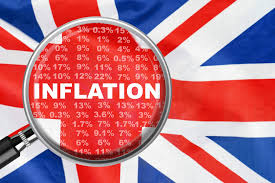
UK Inflation Accelerates to 3.4%

UK Inflation Accelerates to 3.4%: What Lies Behind the Increase and What It Means
The acceleration of inflation in the United Kingdom to 3.4% year on year in December has attracted close attention from markets and policymakers. However, the composition of the increase suggests that it reflects temporary factors rather than the emergence of a new, broad-based inflationary surge. A closer look at the data points to a complex, but for now manageable, outlook for demand, businesses, public finances, and the Bank of England.
According to the Office for National Statistics, the consumer price index (CPI) rose by 3.4% in December 2025 compared with a year earlier, up from 3.2% in November, while month-on-month inflation stood at 0.4%. At the same time, core CPI remained unchanged at 3.2%, and services inflation increased to 4.5%. This combination indicates that the rise in headline inflation was not accompanied by a broad strengthening of underlying price pressures across the economy.
The main drivers of the December increase were alcohol and tobacco, transport, and food. Higher tobacco prices were linked to tax and excise changes, while transport costs were influenced by seasonal factors, most notably higher airfares during the Christmas period. Food prices also contributed, with bread and cereals singled out. Such components are typically associated with seasonal or fiscal effects and often reverse once those factors fade.
The December CPI uptick does not, by itself, prove a weakening of consumer demand. Nevertheless, indirect indicators point to a fragile economic backdrop. The Bank of England and many analysts expect inflationary pressures to ease in 2026 amid subdued economic growth and lower energy costs. Inflation expectations among households have also declined: a Citi/YouGov survey showed one-year inflation expectations falling to 3.6% in December, suggesting that inflation psychology remains contained.
The most sensitive indicator remains services inflation, which reached 4.5%. This measure captures domestic price pressures related to wages, rents, and service-sector costs. Even if seasonal components such as airfares or tobacco prices ease, elevated services inflation could keep overall inflation well above the Bank of England’s 2% target. This explains the central bank’s continued caution.
From a monetary policy perspective, the December data have reduced the likelihood of rapid interest-rate cuts at the start of 2026. Market reactions and analyst commentary suggest that the unexpected pickup in inflation complicates the case for an aggressive easing cycle. In the near term, policy rates are likely to be held steady, with any future cuts dependent on clear evidence of disinflation, particularly in services and wages. As a result, mortgage and corporate borrowing costs are likely to decline more slowly, and financial conditions for businesses may remain tight for longer.
Business confidence remains a weak point in this environment. Surveys by the Institute of Chartered Accountants in England and Wales showed confidence falling in the fourth quarter of 2025 to its lowest level since late 2022. Polls by the British Chambers of Commerce also indicate deteriorating sentiment, with tax burdens and cost pressures cited as major concerns and a growing share of firms expecting to raise prices in 2026. Although some surveys point to a slight improvement in optimism following the budget, overall sentiment remains negative and well short of a sustained recovery.
This combination of high borrowing costs, subdued demand, and external uncertainty has weighed on investment decisions. While the government has outlined ambitious plans for public capital spending and boosting potential growth, private investment has been slow to respond. Elevated financing costs, pressure on project profitability, and regulatory and trade-related uncertainty continue to restrain business investment, a dynamic also highlighted in parliamentary briefings.
Looking ahead, three indicators will be critical in assessing whether the December inflation spike proves temporary: the trajectory of services inflation, the pace of wage growth, and inflation expectations. A sustained cooling in services inflation would give the Bank of England greater scope to ease policy. For now, however, the 3.4% reading appears more consistent with a seasonal and fiscal episode than with the start of a renewed inflationary cycle.
Overall, the December data delivered an unwelcome surprise but stopped short of signaling a fundamental shift in the inflation outlook. The key question is not the headline CPI figure itself, but how quickly domestic price pressures ease and whether business confidence can recover under still-tight financial conditions.
Related Articles

Саммит G7 во Франции: мировые лидеры перед лицом новой эпохи глобальных вызовов
17 June 2026
Read more
Mounting Pressure on UK Prime Minister Keir Starmer and the Emerging Political Crisis in London
10 February 2026
Read more
Donald Trump, the United Kingdom, China and Cuba: How Trade Pressure Is Becoming Washington’s Universal Tool
30 January 2026
Read more
UK and China Enter a New Phase of Engagement
29 January 2026
Read more