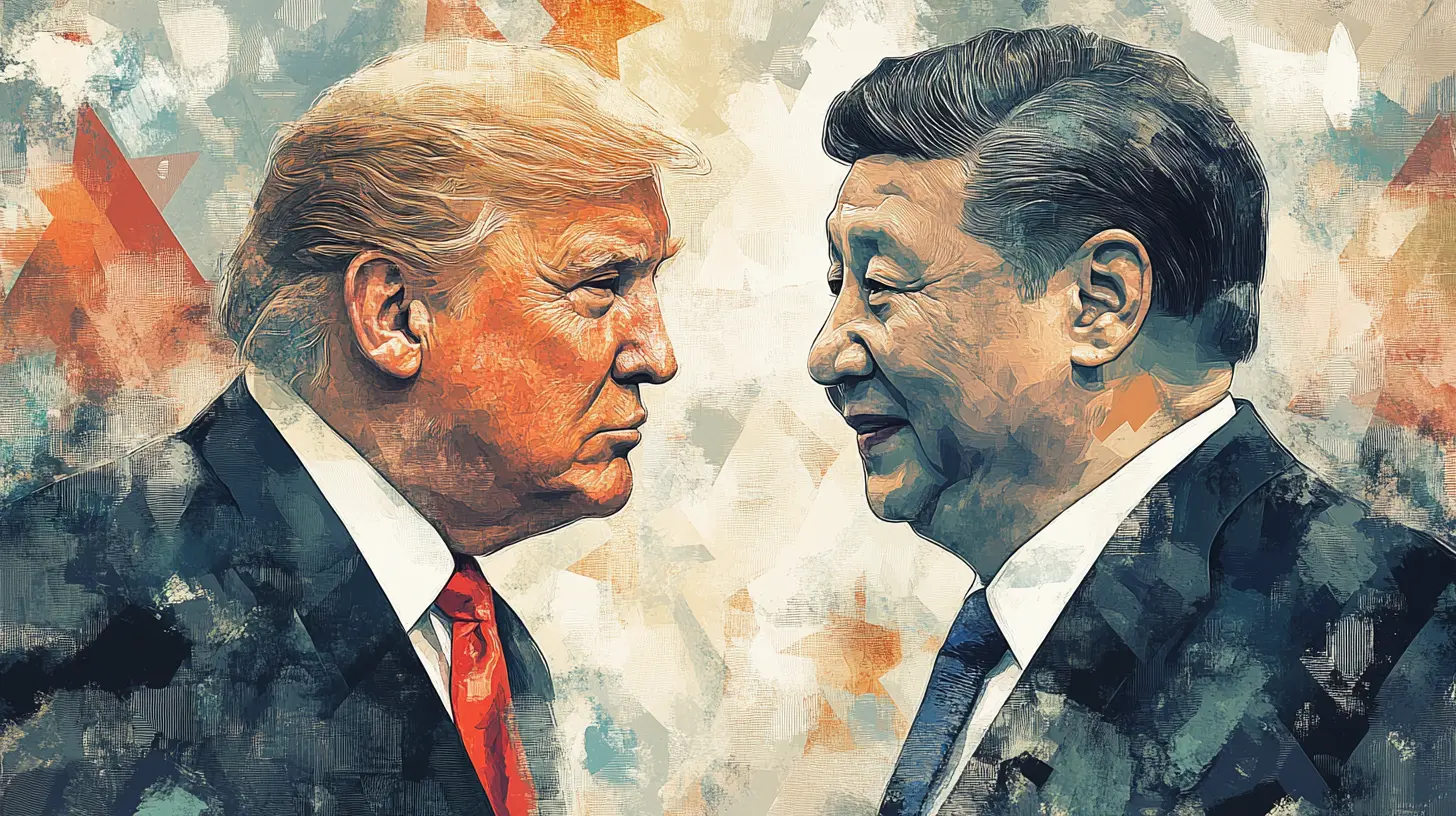
Donald Trump, the United Kingdom, China and Cuba: How Trade Pressure Is Becoming Washington’s Universal Tool
The latest statements from U.S. President Donald Trump point to a clear and increasingly coherent shift in American foreign policy: economic leverage is no longer a secondary instrument of diplomacy but a central mechanism for shaping the behavior of both allies and adversaries. Over the past hours, Washington has delivered two signals that, taken together, reveal a single strategic logic. One was directed at the United Kingdom, warning against deeper economic engagement with China. The other targeted the Caribbean, where the United States announced its intention to impose tariffs on countries supplying oil to Cuba.
At first glance, these developments concern different regions and unrelated issues. In reality, they form part of the same framework. Trade, tariffs and access to the U.S. market are being openly used as instruments of geopolitical discipline. The message is straightforward: economic decisions will be treated as political choices, and they will carry consequences.
Britain Between Strategic Loyalty and Economic Calculation
The immediate trigger for the White House’s reaction was the visit of British Prime Minister Keir Starmer to Beijing. London has recently signaled a more pragmatic approach toward China, emphasizing trade, investment and economic engagement. Against a backdrop of slowing growth, fiscal pressure and post-Brexit recalibration, the British government sees China as a potential source of economic opportunity and market access.
This approach, however, has raised concerns in Washington. Donald Trump publicly described closer business ties between the UK and China as “very dangerous.” While he did not spell out specific punitive measures, the political meaning of the warning was unambiguous. It was not a technical disagreement but a strategic judgment about where the limits of acceptable behavior lie for a close U.S. ally.
This reaction should not be viewed as impulsive rhetoric. It fits into a broader American assessment of China as a systemic rival whose economic influence carries strategic risks. From Washington’s perspective, deeper engagement with Beijing creates vulnerabilities: in technology, data, infrastructure and long-term political leverage. When allies expand such ties, the United States increasingly views this not as neutral economic activity but as a potential security liability.
London, for its part, insists that engagement with China does not come at the expense of transatlantic relations. Starmer has emphasized transparency with Washington and framed the China policy as strictly pragmatic. Yet Trump’s warning underscores a growing reality: the space for balancing between economic interests and strategic expectations is shrinking.
China as a Tool of Alliance Discipline
The China factor is now doing more than defining U.S.–China relations. It has become a mechanism for regulating behavior within the Western alliance itself. Washington’s message to London was also a message to other capitals — Berlin, Paris, Rome and Brussels. Economic rapprochement with Beijing is no longer treated as a sovereign choice free of consequences. Instead, it is increasingly interpreted as a test of alignment.
In this framework, China becomes a benchmark for loyalty. The extent to which allies are willing to limit or recalibrate their ties with Beijing signals how closely they are prepared to follow the U.S. strategic line. This does not necessarily translate into immediate sanctions or open confrontation, but it creates a persistent atmosphere of pressure and uncertainty.
Cuba and Secondary Pressure Through Trade
At the same time, Washington has intensified its pressure in the Caribbean. Trump announced that the United States is prepared to impose tariffs on countries that supply oil to Cuba. Formally, this is framed as a trade measure. In substance, it is a classic example of secondary pressure: punishing third parties for maintaining economic relations with a targeted state.
Cuba remains highly vulnerable due to chronic energy shortages and structural economic problems. Oil supplies are critical to maintaining electricity generation and basic services. By threatening tariffs against suppliers, the U.S. is not only pressuring Havana but also seeking to isolate it economically by raising the cost of cooperation for external partners.
Notably, the White House has avoided naming specific countries or tariff levels. This ambiguity is deliberate. It forces governments and companies to assess the risks themselves, often leading them to scale back cooperation preemptively. In this sense, uncertainty becomes a powerful instrument of coercion.
From Sanctions to an Architecture of Economic Coercion
Taken together, the warnings to the UK and the tariff threats related to Cuba illustrate a broader evolution in U.S. policy. Washington is moving away from narrowly targeted sanctions toward a more expansive system of economic coercion built on several principles:
- Strategic ambiguity — leaving details undefined to maximize deterrent effect.
- Secondary impact — extending pressure beyond the immediate target to its partners.
- Public signaling — using high-level statements to shape expectations and behavior.
- Politicization of trade — treating economic engagement as an indicator of strategic alignment.
Under this model, trade is no longer a neutral domain governed primarily by market logic. It becomes a field of geopolitical contestation, where access to the U.S. economy functions as leverage.
Implications for Allies
For U.S. allies, this shift narrows the room for independent maneuver. Even long-standing partners such as the United Kingdom are now openly cautioned that their economic strategies will be judged through a geopolitical lens. This fuels debates in Europe about strategic autonomy and the risks of excessive dependence on any single external power.
At the same time, the structural weight of the U.S. market, the dollar-based financial system and American trade networks ensures that these warnings carry real force. The effectiveness of pressure does not depend on immediate enforcement; the anticipation of consequences often suffices.
The Caribbean as a Demonstration Zone
Cuba illustrates how this approach plays out in regions Washington considers strategically sensitive. The Caribbean has long been viewed as a zone of special interest for the United States, and economic engagement with governments at odds with U.S. policy is treated as a challenge. By targeting energy supplies through trade threats, Washington signals its readiness to escalate pressure while remaining within the formal boundaries of economic policy.
Conclusion
The convergence of these developments points to a clear conclusion: U.S. foreign policy is entering a phase in which economic instruments and geopolitics are fully fused. Trade, energy and investment are increasingly deployed as tools of influence and discipline. Allies and adversaries alike are expected to internalize U.S. strategic priorities in their economic decisions.
In this environment, the international system moves further away from predictable rules and closer to a reality shaped by power, leverage and situational pressure. The United Kingdom and Cuba represent different ends of the spectrum, but both cases illustrate the same underlying trend — a world in which economic choice is inseparable from political alignment, and where the costs of divergence are made increasingly explicit.
Related Articles

Artificial Intelligence Enters a New Era
27 July 2026
Read more
Agentic AI: Why It Is Poised to Become the Defining Technology of the Coming Years
22 July 2026
Read more
Саммит G7 во Франции: мировые лидеры перед лицом новой эпохи глобальных вызовов
17 June 2026
Read more
China Against the System: How Beijing Is Preparing for an Era of Great Global Confrontation
23 May 2026
Read more