Why a U.S. Strike on Iran Is Unlikely
And Why, If It Happens, the Result Will Be the Opposite
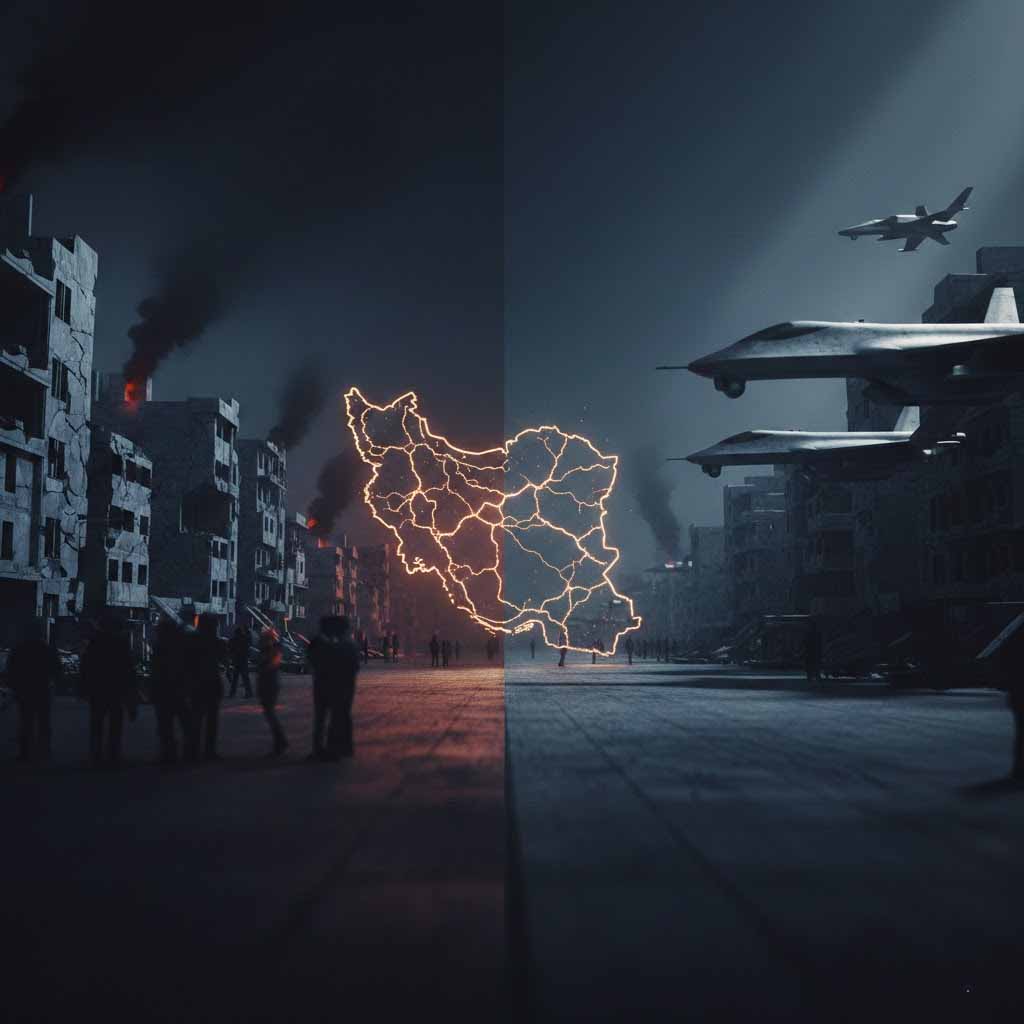
The situation in Iran is rapidly deteriorating, and it is precisely this internal crisis that makes an external military strike increasingly unlikely. The country is no longer facing isolated economic protests or short-term unrest. What is unfolding is a systemic crisis that affects power, society, and the very mechanisms of governance.
Across multiple regions, clashes with security forces have been reported, administrative buildings have been set on fire, and symbols of state authority have been attacked. The government has responded with force, restricting communications and internet access and tightening security controls. This is not a temporary disturbance. It is a deep and unresolved internal tension that has yet to reach its final stage.
At first glance, such instability might seem to create an opportunity for outside intervention. One might assume that external pressure or even a military strike could push an already weakened system toward collapse. In reality, the opposite logic applies.
Iran today is not a structure that can be dismantled through a limited external blow. Internal crisis does not automatically produce a unified alternative to power. Public discontent is fragmented, protest movements lack coordination, and no clear political force is positioned to replace the current system in the short term. Under such conditions, an external strike would not open a path to transition; it would produce chaos.
Moreover, a foreign attack would fundamentally change the nature of the crisis. What is now an internal confrontation would instantly be reframed as a struggle against an external enemy. Even citizens critical of the authorities would be forced to choose between opposing the government and defending the country itself. History shows that in moments like this, regimes tend to consolidate rather than collapse.
From Washington’s perspective, the timing is also deeply unfavorable. The United States is not seeking another major conflict in the Middle East. Its strategic focus has shifted elsewhere, and diverting political attention, military resources, and long-term planning toward an unpredictable and potentially prolonged confrontation does not serve its broader interests.
Allies are another restraining factor. European governments have shown caution and restraint, fully aware that a large-scale conflict with Iran would bring regional instability, economic disruption, and migration pressures that would affect Europe first and most severely. There is no appetite for escalation.
There is also a practical calculation. Even a limited strike on Iran would not remain limited for long. Asymmetric responses would be inevitable, regional tensions would escalate, and control over the situation would quickly erode. The risks are difficult to measure and even harder to contain.
For these reasons, the absence of a strike should not be interpreted as weakness or hesitation. It reflects a recognition that military action under current conditions would not solve existing problems but multiply them.
If a strike were to occur, the outcome would likely be the reverse of what its proponents expect. Internal fragmentation would give way to mobilization. Protest would not disappear, but it would be postponed. The region would not stabilize; it would enter a more dangerous phase.
This is why there are so many harsh statements and so few concrete actions. Words are being used as instruments of pressure. Real decisions are being delayed because the cost of miscalculation is simply too high.
Related Articles

Artificial Intelligence Enters a New Era
27 July 2026
Read more
Agentic AI: Why It Is Poised to Become the Defining Technology of the Coming Years
22 July 2026
Read more
Саммит G7 во Франции: мировые лидеры перед лицом новой эпохи глобальных вызовов
17 June 2026
Read more
China Against the System: How Beijing Is Preparing for an Era of Great Global Confrontation
23 May 2026
Read more