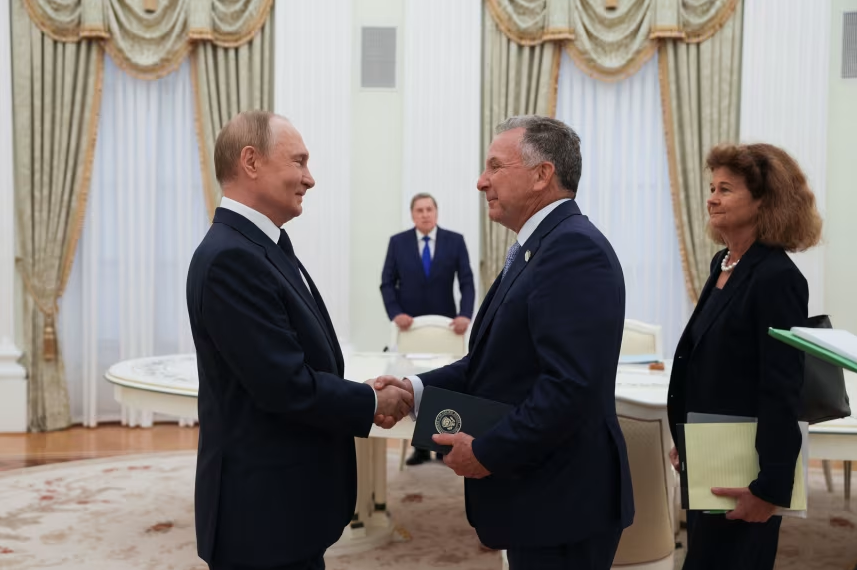
Talks in Moscow and a New Diplomatic Framework. Outcomes of Putin–Witkoff Meeting
A meeting between Russian President Vladimir Putin and US Special Envoy Steve Witkoff took place in Moscow and lasted approximately three and a half hours. The duration and format of the talks suggest that the discussion went well beyond protocol exchanges and focused on substantive political issues and potential avenues for further negotiations.
The most immediate practical outcome was an agreement to hold trilateral talks involving Russia, the United States, and Ukraine later today in Abu Dhabi. The choice of venue reflects an effort to move discussions outside traditional European frameworks and into a more neutral diplomatic setting, one that allows for flexibility and reduced public pressure. The very fact that a trilateral format was agreed indicates recognition by all sides that a direct and structured dialogue on the conflict is unavoidable.
During the Moscow meeting, Russia and the United States articulated a shared assessment regarding the core political dimension of the conflict. Both sides acknowledged that a settlement is impossible without addressing the territorial issue. This formulation is significant because it marks a shift away from abstract discussions about ceasefires or procedural steps and toward recognition of concrete parameters that would need to be resolved in any lasting agreement. By explicitly identifying territory as central, the talks established a clear frame for the upcoming discussions in Abu Dhabi.
A separate but notable part of the meeting focused on the initiative of the Council of Peace regarding the Gaza sector. The Russian side confirmed its readiness to allocate 1 billion dollars to the organization from its frozen assets. This commitment carries multiple implications. On one level, it signals Moscow’s willingness to participate in emerging international mechanisms aimed at conflict management and postwar recovery. On another level, it represents a political gesture designed to reinforce Russia’s role as a key actor in shaping a new framework for conflict resolution in the Middle East.
The fact that Gaza was discussed alongside Ukraine highlights the broader context of the talks. Regional conflicts are increasingly being treated as interconnected elements of a wider global balance. For Moscow, this creates an opportunity to link different diplomatic tracks and to demonstrate that its engagement is not confined to a single theater. For Washington, it serves as a test of Russia’s readiness to take concrete steps within newly proposed formats such as the Council of Peace.
Overall, the Putin–Witkoff meeting suggests that Russia–US dialogue is entering a more pragmatic and focused phase, despite ongoing confrontation and deep disagreements. Agreement on trilateral talks, acknowledgment of the territorial dimension of the conflict, and discussion of Russian financial participation in Gaza-related initiatives together point to an emerging diplomatic framework grounded less in rhetoric and more in negotiated realities.
The forthcoming talks in Abu Dhabi will be the first test of whether the understandings reached in Moscow can evolve into a sustained negotiation process. While expectations remain cautious and the issues involved are highly sensitive, the launch of this dialogue indicates that key actors are beginning to search for a way out of the current impasse through direct, multi-layered engagement.
Related Articles

Artificial Intelligence Enters a New Era
27 July 2026
Read more
Agentic AI: Why It Is Poised to Become the Defining Technology of the Coming Years
22 July 2026
Read more
Саммит G7 во Франции: мировые лидеры перед лицом новой эпохи глобальных вызовов
17 June 2026
Read more
China Against the System: How Beijing Is Preparing for an Era of Great Global Confrontation
23 May 2026
Read more