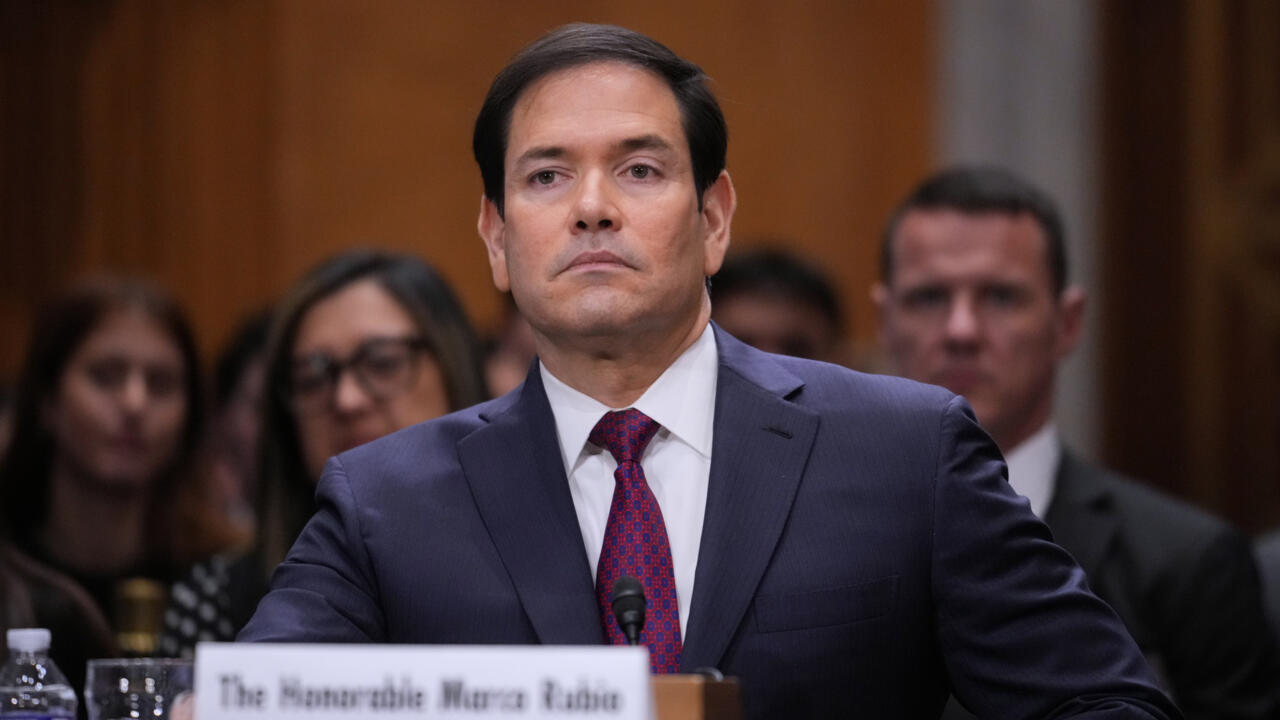
Marco Rubio Lays Out Framework for Managing Venezuela’s Oil Income
US Secretary of State Marco Rubio: Washington to Place Venezuela’s Oil Revenues Under Temporary Oversight
US Secretary of State Marco Rubio told the Senate Foreign Relations Committee that the United States will retain temporary oversight of Venezuela’s oil revenues to ensure they are used to stabilise the country during the post-Maduro transition.
Rubio said Venezuela’s interim leadership will be required to submit a detailed monthly budget outlining its financial needs. Proceeds from oil sales will be deposited into a dedicated account subject to US oversight, with the process administered by the US Treasury Department. He stressed that the funds legally belong to Venezuela and must be spent solely for the benefit of the Venezuelan people.
According to Rubio, the mechanism provides a structured framework for managing revenues generated from tens of millions of barrels of oil from a country holding the world’s largest proven crude reserves. The objective, he said, is to ensure transparency and prevent a repeat of past practices in which oil income was diverted to corrupt elites and external beneficiaries.
Addressing Washington’s broader post-Maduro transition strategy, Rubio said the United States is seeking to shape Venezuela’s recovery through financial safeguards rather than direct control of the oil industry. He emphasised that the US will not subsidise investment in Venezuela’s energy sector and described the oversight arrangement as a temporary measure designed to prevent systemic economic collapse during the transition period.
“This is simply a way to divide revenue so that there isn’t a systemic collapse while we work through recovery and transition,” Rubio said.
Lawmakers from both parties questioned the fairness and transparency of the approach. Senator Chris Murphy of Connecticut warned that US control over oil sales and revenue allocation could lead to accusations of political favouritism and undermine the legitimacy of the transition in a country of roughly 30 million people.
Responding to the criticism, Rubio said that under Nicolás Maduro Venezuela’s oil system primarily benefited corrupt officials and foreign buyers, including China, which purchased Venezuelan crude at discounted prices. He added that Venezuela’s interim authorities are now cooperating with US agencies to seize illegal oil shipments and reassert control over export flows.
Rubio said Washington will issue binding instructions governing how oil revenues may be spent and will conduct regular audits to ensure compliance. Permitted uses include funding for policing, procurement of medicines, support for the healthcare system and other essential public needs.
He also revealed that the fund holding Venezuela’s oil revenues was initially established in Qatar to protect the assets from seizure by US creditors and to address legal complications stemming from Washington’s refusal to recognise Maduro’s government as legitimate. Hundreds of millions of dollars have already been set aside, Rubio said, with total proceeds potentially reaching several billion dollars.
Earlier this month, Venezuela’s acting president Delcy Rodríguez said oil revenues would be channelled into two sovereign wealth funds — one aimed at supporting the country’s crisis-hit healthcare system and another focused on restoring critical public infrastructure, including the electricity grid. Venezuela’s hospitals remain severely under-equipped, forcing patients to supply basic medical items themselves and pay privately for many laboratory and diagnostic services.
In closing remarks, Rubio also addressed broader security issues, highlighting the significant US military presence in the Middle East. He said between 30,000 and 40,000 American troops are stationed across multiple facilities in the region and remain within range of Iranian drones and ballistic missiles. Maintaining a baseline level of US military power, he argued, is necessary to deter potential threats and protect American interests and allies.
Related Articles

Artificial Intelligence Enters a New Era
27 July 2026
Read more
Agentic AI: Why It Is Poised to Become the Defining Technology of the Coming Years
22 July 2026
Read more
Саммит G7 во Франции: мировые лидеры перед лицом новой эпохи глобальных вызовов
17 June 2026
Read more
China Against the System: How Beijing Is Preparing for an Era of Great Global Confrontation
23 May 2026
Read more