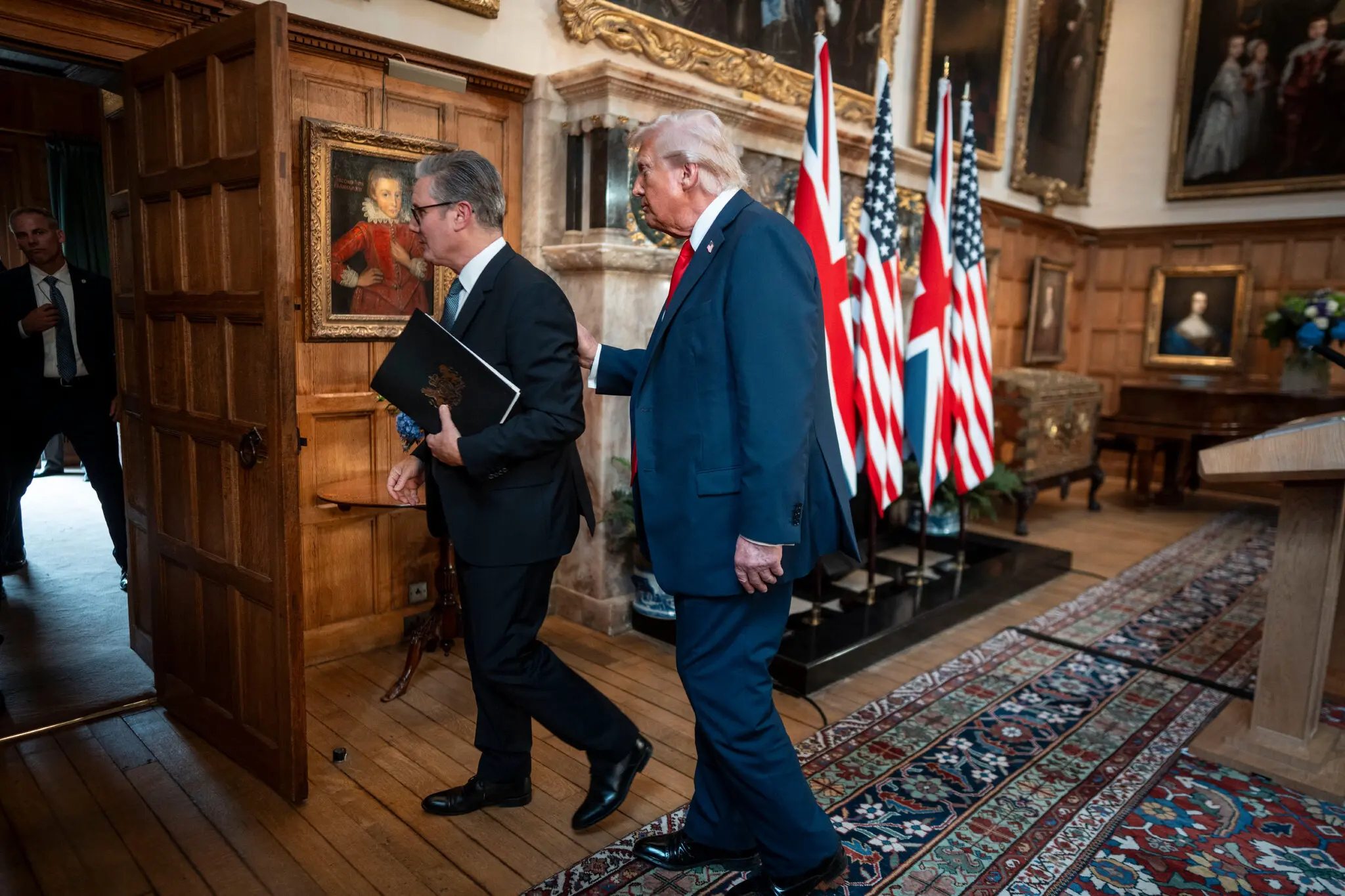
London Draws a Line. Britain’s Political and Economic Posture Amid Trump’s Statements
In the United Kingdom, a noticeable shift has emerged across several dimensions at once, from foreign policy rhetoric to market dynamics and public sentiment. At the center of attention are relations with the United States, and personally with Donald Trump, alongside the broader question of NATO’s role and the recognition of Britain’s contribution to allied military operations. Taken together, these strands point to a single conclusion: London is increasingly prepared to pursue its own course, even when it diverges from Washington’s position.
Prime Minister Keir Starmer has, for the first time, responded sharply and publicly to Donald Trump, drawing a clear political distinction between London and a potential future US administration. This was not a passing rhetorical exchange, but a deliberate signal. Starmer stressed the need to defend European interests and uphold NATO’s collective security framework, making it clear that Britain does not intend to align automatically with American positions if they undermine alliance commitments. For British foreign policy, this marks a significant moment. Historically, London has often positioned itself as a bridge between the United States and Europe. That bridge is now being used less as a conduit for unconditional alignment and more as a platform for an independent stance.
This political message coincided with positive movements in the financial markets. The FTSE 100 closed the week higher, supported by gains in the energy and defense sectors. Investor interest in these areas reflects expectations of sustained defense spending, long-term contracts, and Britain’s strategic role in an increasingly uncertain international environment. The strengthening of the pound, which moved above the 1.35 dollar level, added further momentum. This currency movement was more than a technical adjustment; it signaled a degree of confidence in the UK’s economic outlook and political stability amid global volatility.
Against this backdrop, reactions in Britain to Trump’s comments on NATO and the war in Afghanistan were particularly intense. His claim that NATO forces had not fought “on the front lines” was met with widespread criticism across the UK. For a country that suffered significant losses and spent years fighting alongside US forces, such remarks were perceived as deeply disrespectful. Veterans, serving personnel, politicians, and major media outlets were quick to point out the scale and seriousness of Britain’s military engagement, recalling the sacrifices made and the fact that the UK’s role in Afghanistan was never merely symbolic.
This public backlash carries a deeper significance than a response to a single statement. It reflects growing frustration within the British political class and society at attempts to rewrite the history of allied conflicts and to diminish the role played by European partners. Combined with Starmer’s firm tone, it contributes to a broader political framework in which Britain seeks to maintain transatlantic ties while firmly defending its own credibility, decision-making autonomy, and standing within the collective security system.
The resulting picture is multilayered. Politically, London is increasingly explicit that it will not follow Washington by default. Economically, markets have not punished this posture; if anything, they appear to view it as a sign of strategic clarity and predictability. At the societal level, there is a strong demand for recognition of Britain’s role and sacrifices in international missions. Together, these elements suggest that the UK is entering a phase of more assertive self-positioning, anchored in Europe, NATO, and its own national interests, even if that entails open disagreements with the current or future occupant of the White House.
Related Articles

Artificial Intelligence Enters a New Era
27 July 2026
Read more
Agentic AI: Why It Is Poised to Become the Defining Technology of the Coming Years
22 July 2026
Read more
Саммит G7 во Франции: мировые лидеры перед лицом новой эпохи глобальных вызовов
17 June 2026
Read more
China Against the System: How Beijing Is Preparing for an Era of Great Global Confrontation
23 May 2026
Read more