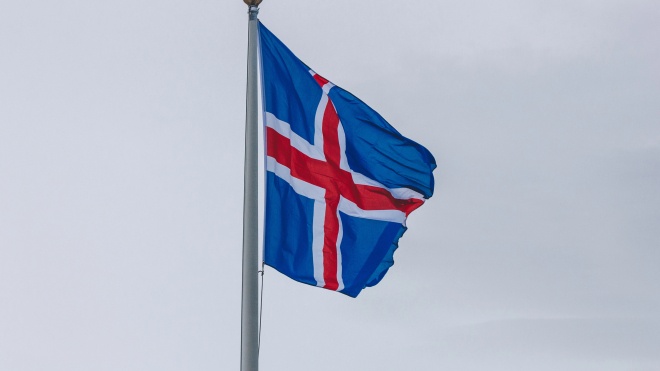
Iceland Reopens the EU Question: National Referendum on Restarting Accession Talks Scheduled for 2026
On February 25, 2026, Iceland’s Prime Minister Kristrún Frostadóttir formally announced that a national referendum will be held in the coming months to decide whether the country should resume negotiations on joining the European Union. The statement was made in Warsaw during a joint press conference with Polish Prime Minister Donald Tusk. While no exact date has yet been confirmed, the timeline indicates an acceleration of the political schedule, moving the vote forward from a previously anticipated 2027 horizon.
It is essential to clarify the scope of the referendum. The vote will not concern immediate EU membership. Instead, Icelandic citizens will decide whether to reopen formal accession negotiations with Brussels. Even if the outcome is affirmative, this would merely initiate a structured diplomatic and legal process. Full membership would require extensive negotiations across multiple policy chapters, potential transitional arrangements, and eventual ratification of an accession treaty.
Iceland’s EU trajectory is well documented. The country submitted its formal application in July 2009. Accession negotiations were officially launched in July 2010. In December 2013, talks were suspended at Reykjavik’s request. In March 2015, Iceland asked not to be considered a candidate country, and the EU Council took note of that position. The upcoming referendum therefore represents a potential reactivation of a process that has remained dormant for over a decade.
Despite not being an EU member, Iceland is already deeply integrated into the European economic and legal framework. It participates in the European Economic Area (EEA), granting access to the EU single market. It is part of the Schengen Area, a member of the European Free Trade Association (EFTA), and also belongs to NATO. As a result, a significant degree of economic integration already exists without formal EU membership. This hybrid status has long shaped domestic debates, as many economic benefits are present while political obligations associated with full membership remain under discussion.
Several factors appear to have influenced the government’s decision to advance the referendum. These include rising living costs and domestic economic pressures, the broader security transformation in Europe following the war in Ukraine, and increasing geopolitical tension in the North Atlantic and Arctic region. Developments concerning Greenland and renewed strategic competition in the Arctic have sharpened Iceland’s awareness of its geopolitical positioning. For a country of approximately 390,000 people, strategic alignment has direct implications for economic stability and security policy.
Should voters approve the reopening of negotiations, the government would need to establish a formal negotiating mandate and engage with EU institutions to relaunch accession chapters. Historically sensitive areas include fisheries management, marine resource control, and agricultural regulation. These sectors were central points of contention during the previous negotiation phase and would likely resurface as key bargaining areas.
The accession process typically spans several years and culminates in a treaty requiring ratification by all EU member states. It is probable that a second referendum would be held in Iceland once final terms of membership are negotiated, giving voters a decisive say on the completed agreement.
The announcement of a referendum in 2026 therefore represents more than a procedural adjustment. It signals a strategic reconsideration of Iceland’s long-term European alignment. After more than ten years outside the formal accession framework, Reykjavik is once again placing its relationship with the European Union at the center of national debate. The outcome of the vote will not only define Iceland’s foreign policy trajectory but may also reflect broader shifts in Northern European geopolitics amid an evolving security landscape.
Related Articles

Artificial Intelligence Enters a New Era
27 July 2026
Read more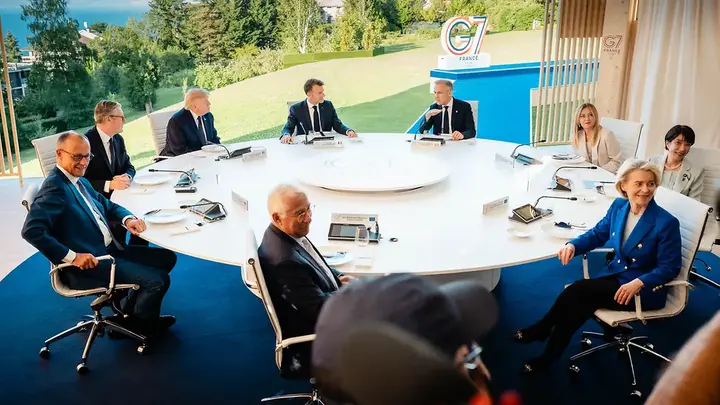
Саммит G7 во Франции: мировые лидеры перед лицом новой эпохи глобальных вызовов
17 June 2026
Read more
The AI Tsunami: What Dario Amodei Warned About — And Why the Numbers Matter
26 February 2026
Read more
Munich Security Conference 2026
10 February 2026
Read more