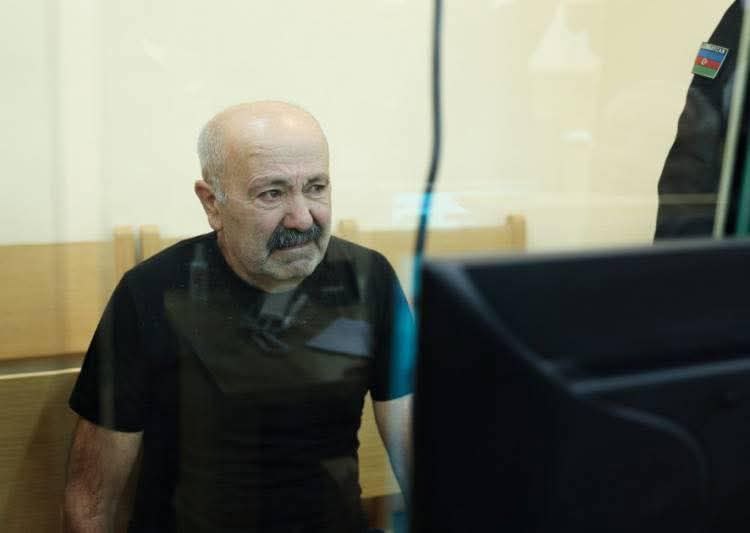
The Ramiz Mehdiyev Case

The Ramiz Mehdiyev Case: Reconstruction of Events, Competing Versions, and Unanswered Questions
The criminal case against Ramiz Mehdiyev, one of the most influential figures in Azerbaijan’s recent political history, has become one of the most high-profile political and legal developments of the past years. Charges related to treason and actions aimed at seizing state power affect not only Mehdiyev personally but also raise broader questions about internal power dynamics, elite realignments, and a sensitive international backdrop involving relations between Baku and Moscow.
This article seeks to reconstruct the chronology and internal logic of the case, clearly separating confirmed facts from media versions and highlighting the key questions that remain unanswered.
Mehdiyev as a Systemic Figure of the Old Power Architecture
For nearly a quarter of a century, Ramiz Mehdiyev occupied central positions within Azerbaijan’s state system. From 1995 to 2019, he served as Head of the Presidential Administration, shaping the institutional, ideological, and кадровый framework of the state during the post-Soviet period. After leaving this post, he retained significant symbolic and institutional influence, later becoming President of the National Academy of Sciences and remaining a member of the Security Council.
Even after his formal political retirement, Mehdiyev was widely perceived as a representative of the “old school” of governance — a custodian of institutional memory and informal networks, including external contacts.
International Background: The AZAL Crash and Tensions with Russia
A crucial external context for the unfolding events is the crash of an Azerbaijan Airlines aircraft on 25 December 2024. The tragedy triggered a serious diplomatic crisis between Baku and Moscow, marked by sharp public statements, conflicting interpretations of the causes, and Azerbaijan’s demands for recognition of responsibility, apologies, and compensation.
For several months, the issue remained politically charged. In October 2025, the presidents of Azerbaijan and Russia met in Dushanbe, after which both sides publicly expressed an intention to stabilize dialogue and provide a legal assessment of the incident.
According to a number of Azerbaijani media outlets, it was precisely this period — when external tensions overlapped with internal processes — that created the conditions for the subsequent domestic political developments.
The Criminal Case: Procedural Facts
On 14 October 2025, the Sabail District Court of Baku placed Ramiz Mehdiyev under house arrest for four months. The investigation brought charges under the following articles of the Criminal Code:
- actions aimed at seizing state power;
- high treason;
- legalization of property obtained through criminal means.
The existence of the criminal case and the preventive measure imposed are confirmed by multiple independent sources and are not publicly disputed. At the same time, the detailed substance of the charges, the evidentiary base, and the procedural logic of the investigation have not been made public.
The “Coup Plot” Narrative: What the Media Claim
According to the APA news agency, citing unnamed sources, Mehdiyev allegedly prepared a plan for a violent seizure of power and proposed it to the Russian side through his own channels. As part of this alleged plan, a Temporary State Council was to be created during a transitional period, with Mehdiyev himself heading this body.
It is also claimed that information about these proposals was conveyed to the Azerbaijani leadership by Russian representatives during the presidents’ meeting in Dushanbe.
This narrative has been widely disseminated by pro-government media. However, it has not been corroborated by public statements from official institutions, court documents, or independent confirmations. At present, it exists solely as a media version attributed to anonymous sources.
The Letter to Russia: Document or Political Argument?
Media reports also mentioned a letter allegedly sent by Ramiz Mehdiyev to Russian structures. APA published photocopies of a document presented as evidence of such contacts.
The published materials, however, raise a number of questions:
- the available copies do not clearly indicate an addressee;
- there are no incoming or outgoing registration numbers;
- the channel of transmission and the date of dispatch cannot be established.
In terms of content, the text resembles a political and administrative memorandum discussing models of governance and institutional reform. On its own, it does not contain explicit calls for violence. This makes a central question unavoidable: what additional materials does the investigation rely on to justify the qualification of “seizure of power”.
Political Consequences: Dismantling of Status
Following the initiation of the criminal case, a series of rapid institutional decisions followed:
- Ramiz Mehdiyev was removed from the Security Council of Azerbaijan by presidential decree.
- The leadership of the National Academy of Sciences publicly stated that the actions attributed to Mehdiyev are incompatible with the status of an academician.
- Mehdiyev’s son, Major General Teymur Mehdiyev, was dismissed from his post as Deputy Minister for Emergency Situations.
These measures do not constitute proof of guilt, but collectively they indicate a political decision to fully dismantle the institutional and symbolic resources associated with the former official.
Expansion of the Case: Opposition and Related Proceedings
Parallel to the Mehdiyev case, law enforcement actions were taken against several opposition figures. International news agencies reported searches, detentions, and arrests that were officially or semi-officially linked to the same investigation.
Defense lawyers deny the allegations and describe the actions as politically motivated pressure. Investigative bodies, in turn, have not disclosed details regarding alleged financial or organizational links.
Key Unanswered Questions
Despite the scale of the case, several fundamental questions remain unresolved:
- What exactly constitutes the evidentiary basis for the treason charge?
- Are there procedurally documented confirmations of contacts with a foreign state?
- What is the legal status of the published “letter,” and has it been formally recognized as evidence?
- Was information about an alleged plot indeed transmitted through the Russian side, or is this a political interpretation based on the timing of events?
The answers to these questions will determine whether the Mehdiyev case remains a strictly legal process or becomes part of a broader narrative of elite transformation.
Conclusion
At present, it can be stated that the criminal case against Ramiz Mehdiyev has a solid procedural framework. However, its political and international dimensions largely rest on interpretations and media narratives rather than on publicly disclosed evidence.
Definitive conclusions will depend either on court rulings on the merits of the case or on the disclosure of investigative materials. Until then, the Mehdiyev case remains not only a legal matter but also a symbolic indicator of shifting power configurations in Azerbaijan.
Sources
- APA
- Report
- Trend
- Reuters
- Associated Press
- OCCRP
- Official statements of Azerbaijani state bodies
- Public statements by the President of the Republic of Azerbaijan