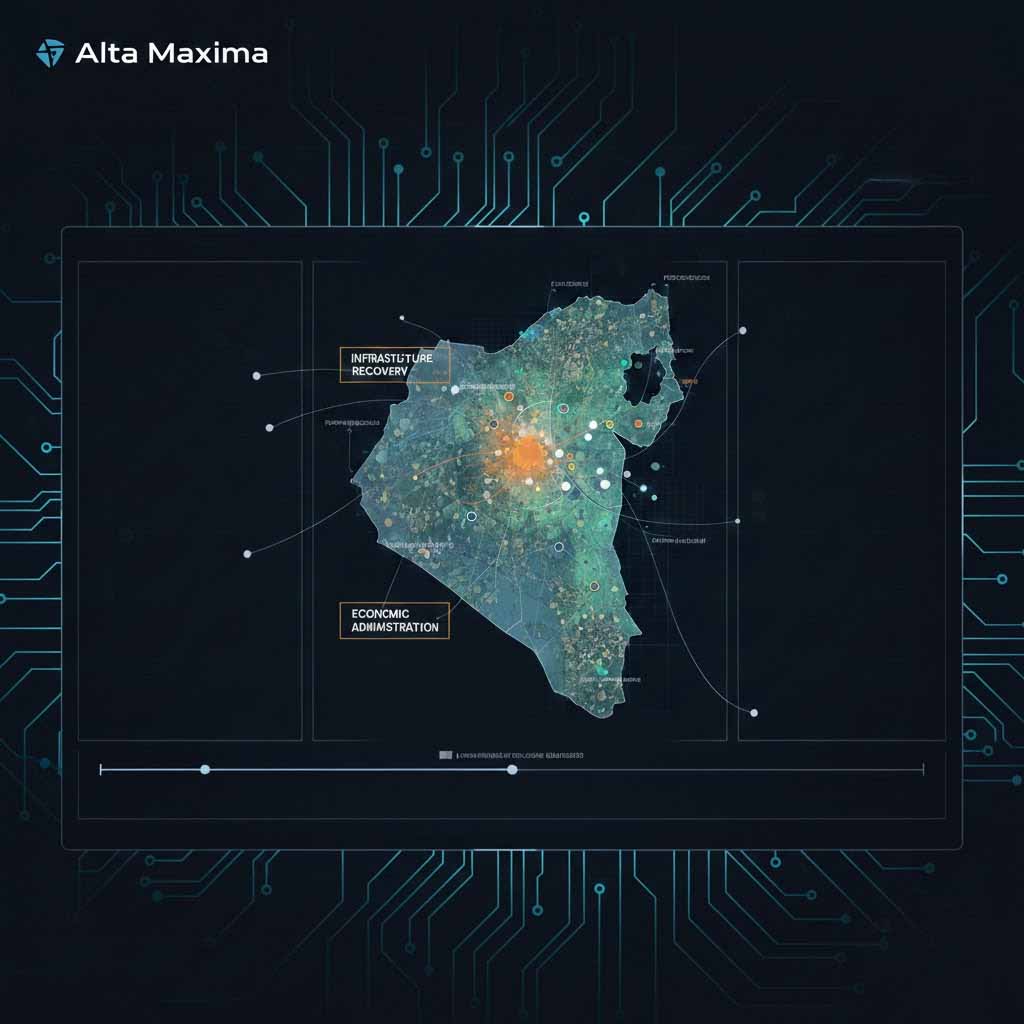
Trump Announces Composition of Gaza Peace Council
U.S. President Donald Trump has announced the composition of the Peace Council, which is intended to oversee the implementation of the American initiative for governing the Gaza Strip during a transitional period. The decision was unveiled in Washington and presented as part of the next phase of the White House’s plan aimed at shaping a new political and administrative framework for the enclave following the end of the active phase of hostilities.
According to information released by the U.S. administration, the Peace Council will address issues related to security, infrastructure recovery, economic administration, and coordination of international assistance. The mechanism is expected to serve as a platform for decision-making on the disarmament of armed groups, the establishment of temporary civilian governance institutions, and the formulation of parameters for a future political process.
The Peace Council will be chaired personally by President Donald Trump. Its members include U.S. Secretary of State Marco Rubio, Special Presidential Envoy Steve Witkoff, Trump’s son-in-law Jared Kushner, American businessman Marc Rowan, World Bank President Ajay Banga, former UK Prime Minister Tony Blair, and U.S. Deputy National Security Advisor Robert Gabriel. U.S. officials note that all members of the council have experience in international politics, diplomacy, economic management, and conflict-related processes.
It has also been reported that senior advisers have been appointed to support the council’s day-to-day work and to coordinate engagement with international partners. Nikolay Mladenov has been designated as a liaison between the Peace Council and the emerging administrative structures in Gaza, drawing on his previous experience in Middle East-related international roles.
In parallel, an Executive Committee has been formed with the participation of representatives from several countries and international institutions. According to U.S. media reports, this body includes representatives from Turkey, Qatar, and the United Arab Emirates, along with international officials tasked with coordinating humanitarian programs, reconstruction efforts, and external financial support for Gaza.
The White House emphasizes that the establishment of the Peace Council is intended to facilitate a shift from military confrontation to a phase focused on stabilization and recovery. U.S. officials describe the proposed governance model as temporary, aimed at ensuring public order, maintaining basic civilian functions, and preparing the groundwork for subsequent political decisions regarding the territory’s future status.
At the same time, the initiative has prompted mixed reactions internationally. Some observers point to the absence of Palestinian political representatives in the announced structure and note that the format has not received formal endorsement from the United Nations. Washington, however, maintains that consultations with relevant parties and international partners will continue as the process develops.
U.S. officials state that the next steps taken by the Peace Council will depend on conditions on the ground, the security environment, and the willingness of the international community to participate in Gaza’s recovery. Consultations with donor countries and international financial institutions are expected in the near term, alongside work on mechanisms for delivering humanitarian assistance and launching reconstruction projects.
Sources:
Reuters
RBC
Meduza
Related Articles

Artificial Intelligence Enters a New Era
27 July 2026
Read more
Agentic AI: Why It Is Poised to Become the Defining Technology of the Coming Years
22 July 2026
Read more
Саммит G7 во Франции: мировые лидеры перед лицом новой эпохи глобальных вызовов
17 June 2026
Read more
China Against the System: How Beijing Is Preparing for an Era of Great Global Confrontation
23 May 2026
Read more